
- What do you need to know about peppers before planting?
- Agricultural technology for germinating seeds for seedlings
- Timing of sowing pepper seeds
- Choosing a location and preparing the soil for growing peppers
- Stratification and sowing of seed material
- Optimal conditions for seed germination
- Preparing pepper seedlings for planting in open ground
- Hardening off seedlings before planting
- How to choose the best location for peppers
- Preparing a bed for peppers
- Caring for peppers in open ground
- Schemes and rules for planting in open ground
- Planting
- Pruning, shaping and tying peppers
- Irrigation frequency
- Loosening and mulching the soil
- Top dressing
- Pleasant and not so pleasant neighborhood
- Pests and diseases of pepper
- The nuances of planting and caring for plants under film
- Harvesting bell peppers
Bell peppers are a healthy and tasty vegetable that's essential in cooking, so many gardeners create several beds in their gardens to grow them. Planting and caring for peppers outdoors is easy. By following all the proper agricultural practices, growing a bountiful harvest by fall is a breeze.
What do you need to know about peppers before planting?
When planting sweet peppers, it's important to know a few nuances that will ensure a good harvest. Here are some key points to consider when growing this vegetable:
- Pepper does not tolerate sudden temperature changes during the day and night.
- If the plant experiences a lack of sunlight during bud formation, this will negatively affect the formation of ovaries.
- There are regular and hybrid varieties. Hybrid varieties are usually more productive.
- Preparatory work should be carried out in the autumn, after harvesting.
- It's not recommended to plant bell peppers in the same area for more than two years in a row. Planting locations should be rotated regularly to ensure consistent yields.
Bell peppers are a relatively easy crop to grow. However, if planting recommendations are not followed, the plants will develop poorly and produce few berries.
Agricultural technology for germinating seeds for seedlings
When growing bell peppers, it's important to follow proper agricultural practices. It's also a good idea to decide on a planting location in advance and choose the right time for planting.
Timing of sowing pepper seeds
The timing of sowing seeds depends on the growing region. In southern regions, planting begins in early February. In central regions and the Volga region, sowing occurs from late February to the first half of March. In northern latitudes, planting bell peppers can be done slowly and delayed until the second half of March.

Choosing a location and preparing the soil for growing peppers
To plant pepper seeds, prepare the soil in advance. The most common mistake gardeners make is taking soil from their own plot. However, such soil is often contaminated with fungal spores and harmful insect larvae. If using soil from your own plot, it should first be calcined and then disinfected. The easiest way is to buy a ready-made soil mix for vegetable crops.
If this is not possible, then to plant pepper seeds, mix soil with sand, then add wood ash.
Pepper seedlings require good light, so containers with seedlings are placed on south-facing windows. If natural light is insufficient, additional lamps are installed and turned on for several hours a day.
Take a look Also


Stratification and sowing of seed material
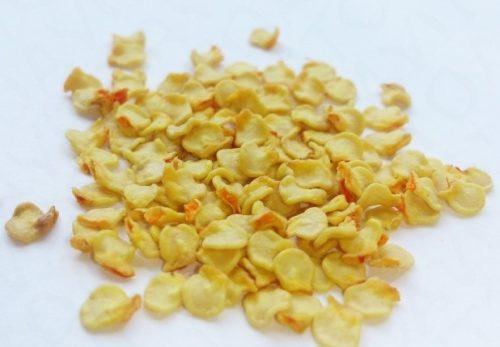
Stratification is the process by which seeds emerge from dormancy. This process lasts from 1 to 6 months. Bell pepper seeds Place them in the refrigerator. At a temperature of +2…+4 degrees, they will keep until spring.
The process of planting the planting material:
- fill containers with soil;
- make several furrows in the soil or several holes;
- two seeds are poured into the holes;
- lightly cover with soil and water with warm water.
When sowing, it's important to know how deep to plant bell pepper seeds. Making furrows too deep will cause problems with germination. Therefore, the depth should be no more than 1 cm. At the end of planting, cover the seeds with a small amount of soil, just a few millimeters deep.
Optimal conditions for seed germination
To ensure that bell pepper seeds thrive, they need favorable conditions. After sowing, cover the containers with plastic wrap and place them on a south-facing window. The greenhouse effect will help the seeds germinate faster.
Remove the film regularly to allow the soil to breathe, and water. Failure to do so can lead to mold, which will prevent the seeds from sprouting.
Preparing pepper seedlings for planting in open ground
Before planting pepper seedlings outdoors, they need to be prepared. A sudden change in climate can be quite stressful for still-fledged seedlings.

Hardening off seedlings before planting
The most effective way to prepare seedlings for transplanting outdoors is to begin hardening them off in advance. One to two weeks before transplanting, bring the containers outside. The first time, expose the containers to the cold for 30 minutes. Then gradually increase the time. Two weeks before transplanting, increase the time the peppers are exposed to the cold to 1 hour. If it's extremely cold outside or there's a sudden frost, it's best to leave the seedlings inside.
Hardening off the seedlings will make the process of transplanting them outdoors less painful, and they will adapt to the new conditions more quickly.
How to choose the best location for peppers
The most favorable locations for growing pepper seedlings are those with full sun for most of the day. It's also best to choose locations protected from cold winds.

Seedlings need to be transplanted to a permanent location in areas where cabbage or cucumbers previously grew.
Preparing a bed for peppers
Selecting a suitable location and preparing the soil for seedlings is one of the most important stages in crop cultivation. Soil preparation for any agricultural crop begins approximately six months before the expected planting date.
Preparing the beds begins in the fall, after the harvest. The soil is dug to a depth of 10-15 cm, and all weeds are removed. Then, the soil is watered with a potassium permanganate solution to disinfect it. A few days later, rotted manure is added, and the soil is dug again. The soil is left in this condition until spring. In the spring, the soil is dug again, and beds are created for the bell peppers.

Caring for peppers in open ground
Sweet peppers require care after planting. It's difficult to grow a good harvest if you don't devote time to it.
Schemes and rules for planting in open ground
Pepper seedlings are transplanted after sunset in cool weather.

How to plant seedlings correctly:
- First, you need to decide how far apart the holes will be. A minimum distance of 40 cm is recommended.
- Make holes 15 cm deep.
- After this, we plant the pepper in the holes and cover them with soil, lightly compacting the soil near the stem.
At the end of planting, water the beds generously with warm water.

An unusual method for planting peppers is in barrels. A thick layer of manure, wood ash, soil from the garden, and superphosphate are placed at the bottom of the barrel. To increase yield, peppers require "warm" soil, and this method ensures the soil is always warm for the roots.
Planting in a square-nest manner:
- With this method, 2-3 seedlings are planted at a distance of 15-25 cm from each other.
- The distance between nests is 70 cm-1 m.
- The seedlings are covered with soil and compacted near the stem.
At the end of planting, water the beds generously with warm water.
Planting
You can plant various greens near peppers to save space. For example, you can plant parsley or cilantro in the beds. And planting marigolds nearby will help prevent insects, as their scent repels pests.

Pruning, shaping and tying peppers
As the bushes grow, remove the lower leaves. You can also pinch the tops to prevent them from becoming too tall. Staking the peppers is not necessary unless the variety is tall or if the stems bend under the weight of the fruit.
Irrigation frequency
The soil in the beds should be kept constantly moist. Peppers do not tolerate drought. Water the beds daily if the weather is hot. Reduce the frequency of watering during rainy or cloudy weather. Water the plants after sunset.

Loosening and mulching the soil
Pepper cultivation requires regular weeding. The soil is loosened and weeded several times a month. Loosening is best done before watering. To prevent weeds and soil drying out, pepper beds are mulched. Peat moss is used as mulch. The mulch layer should be at least 15 cm thick.
Top dressing
The yield depends on the amount and frequency of fertilizer applied. When planting, add rotted manure or bone meal to the hole. Fertilization then depends on the plant's growing season. During the first half of the season, peppers are fed with nitrogen-containing fertilizers. Nitrogen has a positive effect on growth and fruit set. These include ammonium sulfate, ammonium chloride, sodium nitrate, or urea.
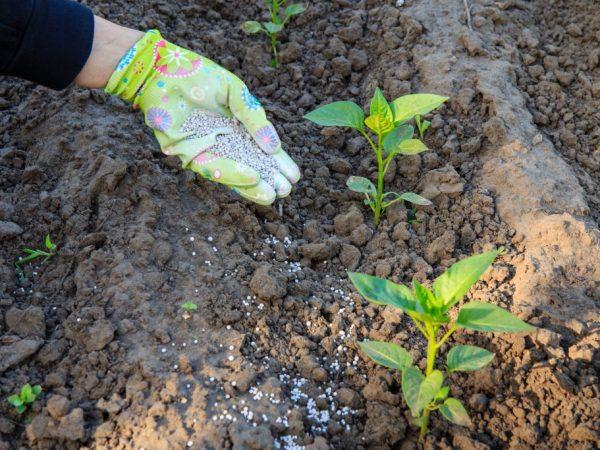
During the flowering and fruiting periods, phosphorus and potassium are added to the soil. These fertilizers increase yields and improve the taste of the fruit. Phosphorus fertilizers used include superphosphate and diammonium phosphate. Potassium fertilizers include potassium sulfate, potassium nitrate, and potassium magnesium sulfate. Organic matter is also added to the soil.
Organic fertilizers are applied along with mineral fertilizers. Organic fertilizers used include manure, compost, bone meal, or wood ash.
Pleasant and not so pleasant neighborhood
Many gardeners neglect the fact that it is best to plant crops that are compatible with each other next to each other, and they plant everything in a row next to each other.
What crops are best to plant with bell peppers?
- basil;
- thyme;
- parsley;
- marigold;
- nasturtium;
- zucchini;
- celery;
- tansy;
- lovage;
- coriander;
- radish;
- spinach;
- salad;
- carrot.

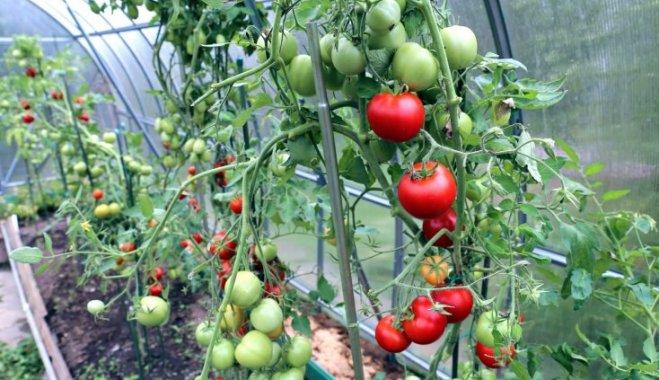
It is not recommended to plant nearby plants such as:
- fennel;
- tomatoes;
- potato;
- dill;
- legumes;
- eggplants.
Planting peppers and eggplants next to each other in garden beds, for example, won't cause any problems. Both plants will produce a good harvest. However, if the plot size allows, it's best to plan the beds so that the peppers are planted only with plants that thrive on them.
Pests and diseases of pepper
Blackleg is a common problem on bushes. At the very onset of the disease, water the plants with a weak solution of potassium permanganate. If the disease appears on seedlings, reduce the frequency of irrigation.

Spraying with Skor and Fundazol helps against gray mold. If the bushes are severely affected, they are dug up and destroyed. Late blight can be treated with Ridomil Gold, Fitosporin-M, and Gamair.
Spider mites are the most common pest when growing peppers. They can be controlled by spraying the plants with a garlic or dandelion decoction. A soap solution also helps. The same method can help get rid of aphids. Slugs may also be seen on the plants. Spraying with the chemical "Strela" helps eliminate these pests. If there are not many, they can be collected by hand.
The nuances of planting and caring for plants under film
How to get a good harvest if you grow the crop in a greenhouse:
- The soil in a greenhouse is not as fertile as in the open field. Therefore, it is recommended to apply fertilizer to the soil more frequently.
- When growing peppers in a greenhouse, you'll need to consider how the plants will be pollinated. You can set up beehives for a few weeks, though you'll have to remove them afterward. You can also open the greenhouse doors and windows to encourage bees to fly in. You can attract them by planting strongly scented flowers in the peppers.
- When growing peppers during the cold season, it is necessary to install many lamps with artificial lighting.
Bell pepper seedlings are planted in the same way as in open ground. Caring for mature plants is also no different from the procedures used for growing them outdoors.
Harvesting bell peppers
The fruits begin to ripen towards the end of July, or a few weeks earlier in warmer regions. Ripe fruits are cut off along with the stems. It's best to harvest in the evening, when the weather has cooled. Harvested peppers are stored in the refrigerator. They have a shelf life of about one week at temperatures between 4 and 6 degrees Celsius.
Related posts:
 Planting, growing, and caring for peppers in open ground in the Moscow region: the best varieties
 The best eggplant varieties for growing in a polycarbonate greenhouse: planting and care
 How to grow peppers from seeds at home: choosing a variety, planting, and care
 Why are pepper leaves turning white? What to do and how to feed them in a greenhouse and in the ground.
 Growing and caring for hot peppers in open ground, shaping and harvesting
 Causes of pepper diseases in greenhouses, their description and treatment
 What to do if your pepper's leaves turn yellow, watering and fertilizing rules, and disease control
 Planting, growing, and caring for pepper seedlings in the Urals and Siberia