
- Characteristic signs
- The seedlings are growing poorly and turning yellow.
- The cotyledon leaves change color
- The lower and upper leaves have turned yellow
- The seedlings on the windowsill turned yellow.
- The plant is shedding its leaves
- The main causes of yellowing: how can you help?
- Unsuitable soil composition
- Deficiency or excess of moisture
- Cold water temperature for irrigation
- Too bright or too shaded area
- Temperature fluctuations
- Excess or lack of fertilizers
- Nitrogen deficiency
- Potassium deficiency
- Deficiency of manganese, iron, boron and zinc
- Mechanical damage to roots
- Reaction to transplantation to a permanent location
- Pests and diseases
- Deep planting
- High soil acidity
- Failure to observe crop rotation
- Harmful effects of toxins
- How to prevent pepper leaves from turning yellow
When growing bell peppers, you may encounter various problems that can reduce yield. For example, what to do if your pepper leaves are turning yellow and what could be the possible causes.
Characteristic signs
Sweet peppers often experience yellowing leaves during cultivation. Although bell peppers are easy to grow, they require constant care. There can be many reasons for yellowing leaves.
The seedlings are growing poorly and turning yellow.
Bell pepper seedlings turn yellow for a number of reasons. The main factors that contribute to poor seedling growth include:
- improperly organized watering;
- lack of nutrients in the soil;
- insufficient amount of sunlight;
- low temperature in the room with containers.
Pepper seedlings are often weak and in order for them to develop normally, they need to be provided with favorable conditions for growth.
The minimum temperature for peppers to grow well is at least 11 degrees Celsius (52 degrees Fahrenheit). The seedlings should be exposed to at least 14 hours of sun. Avoid overwatering and watering the plants with cold water.
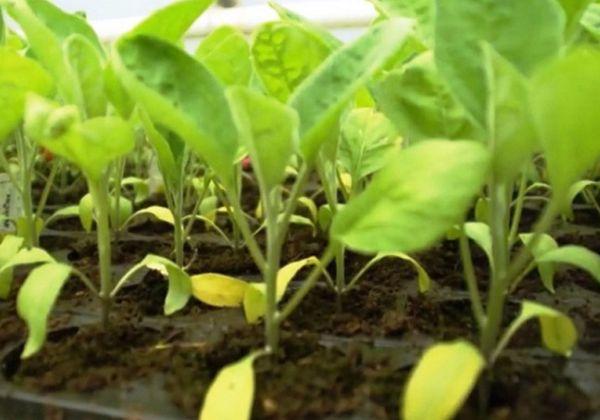
The cotyledon leaves change color
If cotyledon leaves start to change color, the causes are the same as if the foliage starts to turn yellow. Place the peppers in a sunny spot and add mineral fertilizer to the soil. Also, make sure the containers with the plants aren't exposed to drafts. This will also negatively impact seedling growth.
The lower and upper leaves have turned yellow
When growing bell pepper seedlings, a common problem is when the tips or edges of the seedlings begin to turn yellow. In this case, the yellowing is caused by improper care.
- waterlogged soil;
- lack of fertilizers in the soil;
- boxes with seedlings are in a draft;
- lack of sunlight;
- infected seeds were planted.
This problem can be solved by creating favorable conditions for the growth of bell pepper seedlings.
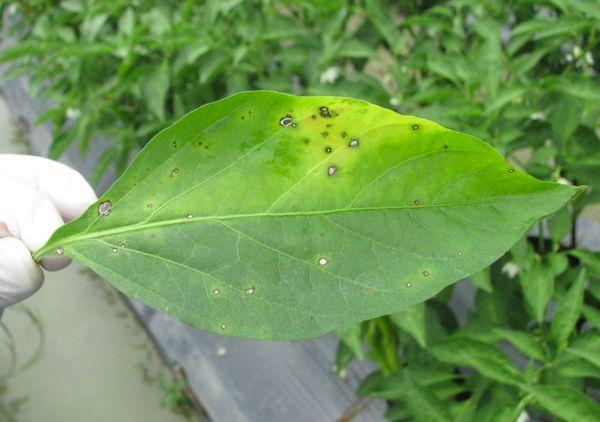
The seedlings on the windowsill turned yellow.
One of the main reasons why pepper plant leaves dry out on a windowsill is because the plants are over-chilled. If seedlings are left in a drafty or draughty area for long periods of time, watering with cold water or in the evening negatively impacts their growth. The upper leaves begin to actively absorb nutrients from the soil, leaving the lower leaves with nothing to absorb and drying out.
Another reason is that the root system has become overgrown and tangled. This happens if the seedlings were grown too close together or if they weren't pricked out at the right time.
The plant is shedding its leaves
The plant's leaves dry out due to watering with cold water or overwatering the soil. They can also fall off due to a lack of sunlight. If the soil from the garden was used for sowing and wasn't treated, it may harbor insect larvae that feed on the plant's root system, causing the pepper to drop its leaves.
The main causes of yellowing: how can you help?
If your bell pepper seedlings suddenly start to dry out and drop leaves, it's important to figure out why. If the problem isn't addressed promptly, the seedlings may die.
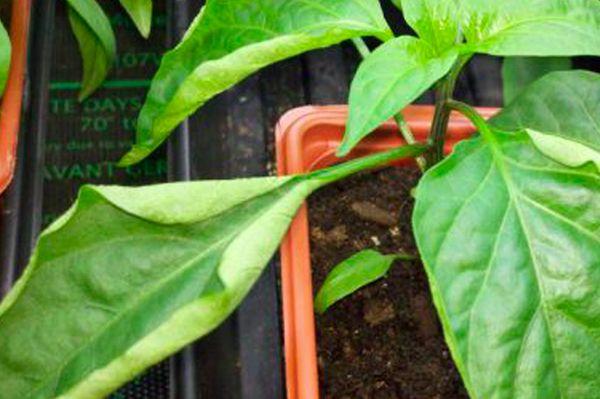
Unsuitable soil composition
The easiest way is to buy a ready-made soil mix for vegetables. But if this isn't possible, it's best to prepare the soil for peppers several months in advance. In the fall, add rotted manure to the soil to make it fertile. Fresh manure is not recommended, as it saturates the soil with nitrogen, and peppers don't like excess nitrogen. To make the soil lighter and looser, mix it with wood ash before planting.
Deficiency or excess of moisture
You can help peppers grow by watering them in advance. Avoid spraying the plants with cold water. Watering in the evening is also not recommended. Watering should be done as the soil dries out. Avoid overwatering, or allowing the soil to dry out completely. Overwatering promotes the development of fungal and bacterial diseases. Insufficient water can cause the seedlings to dry out and prevent normal development.
Cold water temperature for irrigation
Irrigating all agricultural crops with cold tap water is contraindicated. Cold water promotes disease. For this purpose, use water at room temperature or warm it slightly before irrigation. The water temperature should not be below +25 degrees. The main thing is that during irrigation there is no sudden change in the temperature of water, soil and air.
Too bright or too shaded area
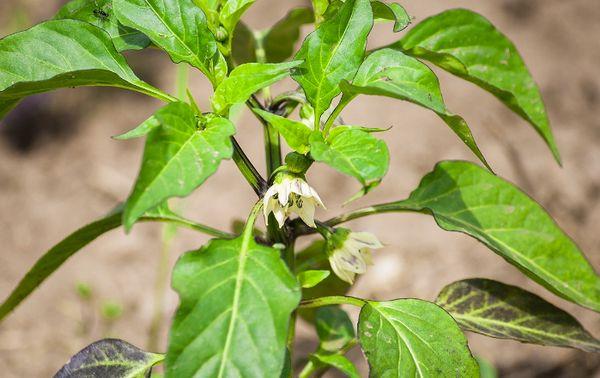
At growing peppers at home or in a greenhouse There may not be enough sunlight. Due to insufficient light, the bushes shed their leaves. Plants need at least 14 hours of sun per day.
However, too much light can burn the foliage. This problem occurs if the seedlings are constantly exposed to the south.
Temperature fluctuations
After transplanting seedlings to their permanent location outdoors, fluctuations in air temperature can be a problem. Daytime temperatures, especially in May, can be very hot, while nighttime temperatures drop sharply. Such fluctuations can damage the still-fledged seedlings. To prevent this, cover the beds with a warm cloth at night.
Excess or lack of fertilizers
Mineral and organic fertilizers should be regularly added to the soil. However, not only a deficiency but also an excess of nutrients can negatively impact peppers.
Nitrogen deficiency
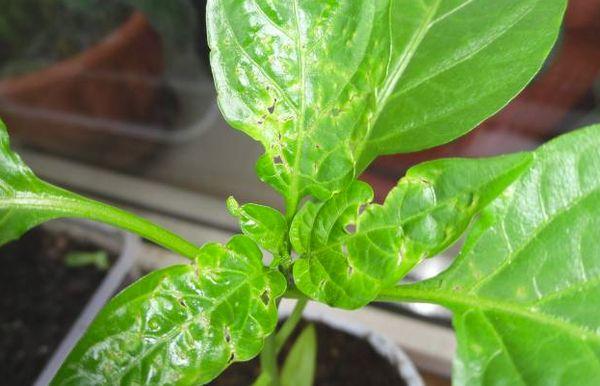
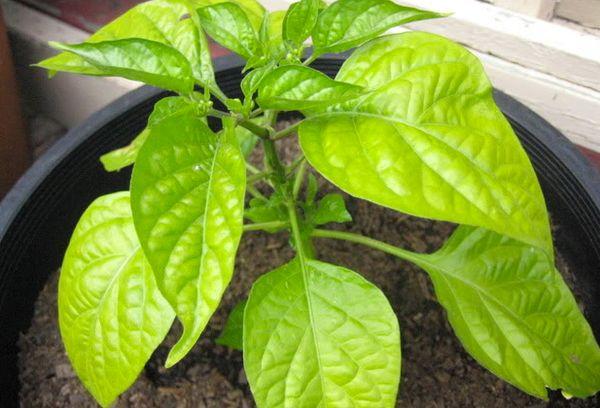
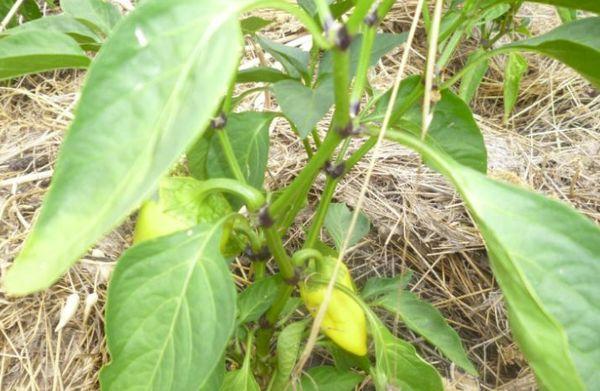
Nitrogen deficiency causes foliage to turn yellow and lifeless, and stems to become thin. Nitrogen deficiency is most often observed in seedlings, when plants are growing in cramped pots. The lower leaves begin to turn yellow first. Gradually, all the foliage turns yellow.
To solve this problem, first of all, you need to add nitrogen-containing fertilizer to the soil. Second, transplant the bushes into spacious pots where they will have enough space.
Potassium deficiency
You can tell your pepper is potassium deficient by the yellowing that appears on the leaves. The leaves then turn brown and dry out. The green skin of the peppers becomes unevenly colored. To replenish the deficiency, add urea and a mixture of potassium and phosphorus to the soil.
Deficiency of manganese, iron, boron and zinc
With a boron deficiency, foliage stops growing, and shoots develop more slowly. Peppers almost completely stop blooming, and the ovaries fall off. A zinc deficiency causes leaf dieback. Leaves turn yellow or become spotted.
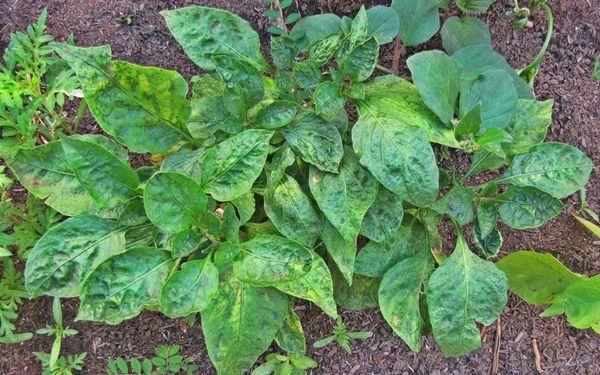
Signs of iron deficiency include yellowing of the foliage near the veins. The leaf surface becomes pale yellow or light green. The more severe the iron deficiency, the lighter the spots. Manganese deficiency is characterized by the leaf becoming very light in color. Spots of dead tissue appear on the leaves.
Mechanical damage to roots
When transplanting mature seedlings to a new location, the root system is damaged, especially if the transplantation was not carried out according to agricultural practices.
Reaction to transplantation to a permanent location
Transplanting to a new location is stressful for seedlings. Newly transplanted plants in a greenhouse or open ground may begin to turn yellow. This occurs if the root system has been damaged.
When planting, seedlings are planted together with the soil ball they grew in after transplanting. This will make the process less painful.
Pests and diseases
Foliage turns yellow and dries out due to aphids and thrips. A soapy solution with wood ash helps against aphids. Insecticides are effective against thrips. A decoction of onion peels can also help get rid of pests. Add 1 cup of onion peels to 2 liters of water and bring to a boil for 10 minutes. Dilute the decoction with water before watering.
Garlic tincture also repels pests. Grind 1 head of garlic in a blender and add water. Let it steep for 24 hours. Dilute it in water before spraying.
As soon as signs of disease begin to appear—yellowing foliage, spots on fruit, or deformed or underdeveloped fruits and leaves on the bushes—action must be taken. To prevent disease, spray the beds with a solution of Bordeaux mixture or copper sulfate.
Deep planting
When transplanting to a permanent location, some gardeners are guilty of planting seedlings too deeply. This causes them to grow poorly. Seedlings should be planted 1-1.5 cm deeper, starting from the point where the roots begin to grow.
High soil acidity
To ensure proper planting, it's important to select the right soil for the seeds. Peppers prefer soil with a neutral pH. Acidic soil should be limed before planting to reduce its acidity.
Failure to observe crop rotation
Peppers shouldn't be planted in the same area for several years in a row. The soil there will become depleted and unsuitable. The best predecessors for peppers are:
- onion;
- cabbage;
- perennial herbs.
It is not advisable to plant bell peppers after nightshade crops.
Harmful effects of toxins
Even when following all agricultural practices and creating favorable conditions for plant growth, pests still appear. It's not always possible to spot them early, when the population is still small. And if the insect population is already overwhelming, chemicals have to be used. As you might expect, these are absorbed into the soil and plant tissue, thereby poisoning them, especially during the fruit formation stage.
To avoid having to resort to such drastic measures, it is important to prepare the soil for planting in advance and carry out preventative spraying with Bordeaux mixture and copper-containing preparations.
How to prevent pepper leaves from turning yellow
To prevent yellow leaves from appearing on pepper plants, water the plants with warm water, avoid leaving the seedlings in drafts, and plant the seeds in fertile soil. Also, ensure the plants are exposed to at least 14 hours of sun per day. Treat the seeds with a fungicide before sowing. Disinfect the soil as well.
Related posts:
 What to do if your pepper's leaves are curling, proper care and treatment
 Why are pepper leaves turning white? What to do and how to feed them in a greenhouse and in the ground.
 Planting, growing, and caring for bell peppers in open ground
 Why do pepper leaves turn purple and what can be done to treat it?
 Sweet pepper pests and how to control them, what to do and how to treat them
 Causes of pepper diseases in greenhouses, their description and treatment
 Planting, growing, and caring for peppers in open ground in the Moscow region: the best varieties
 The best eggplant varieties for growing in a polycarbonate greenhouse: planting and care