
- History of variety selection
- Pros and cons: is it worth planting?
- Description of the grape variety Gift to Irina
- Appearance of the bush
- Fruiting and characteristics of berries
- Flowering and pollination
- Ripening time and yield
- Taste qualities and scope of application of berries
- What are the characteristics of grapes?
- Resistance to sub-zero temperatures and drought
- Immunity to diseases
- Specifics of planting in open ground
- Choosing a location
- Preparing the planting hole and seedling
- Period and rules of planting work
- Agricultural technology and care of the variety
- Watering frequency
- What fertilizers do grapes need?
- We trim and tie up the vines
- Preventive treatments
- Mildew and oidium
- Phylloxera
- Protect from birds and wasps
- Covering the vines for the winter
- Methods of reproduction
- Reviews of the Irinka variety
The development of new varieties is constantly evolving. Every year, new varieties appear on the market, described by sellers as the very best. Unfortunately, however, in practice, gardeners are often disappointed. As a result, the vines are mercilessly uprooted, leaving only regret for the wasted time and money. By choosing the grape variety "Irina's Gift," gardeners will be assured of delicious, large berries for years to come.
History of variety selection
The variety was developed by the talented Ukrainian breeder Nikolai Vishnevetsky, who has created many grape "hits" beloved by gardeners. As a result of his work, already proven varieties were crossbred. These include the popular large-fruited Kesha-1 (Talisman), Glasha, and the early grape Elegant.
Pros and cons: is it worth planting?
Every grape variety, no matter how hard breeders try to perfect it, has its strengths and weaknesses. But, to Irina's credit, the advantages far outweigh the disadvantages.
Pros:
- the early start of fruiting of the variety, the grape vine has time to ripen without problems even in the climate of the middle zone;
- bunches of grapes that are not harvested on time hang until the frost, without crumbling or falling off;
- the fruits of this grape variety are strong, massive, and the skin is resistant to cracking;
- the berries do not become smaller and maintain a consistently high size throughout the season;
- resistant to dangerous grape diseases such as gray rot and mildew;
- good shelf life and transportability, fruits retain a presentable commercial appearance for a long time;
- the versatility of the variety's fruits, and they are also suitable for sale in both retail and wholesale fresh produce markets;
- the agricultural technology is standard, as for grapes, and does not require any extraordinary knowledge or skills from the gardener;
- the variety tolerates cool, damp weather well, and does not experience sudden outbreaks of fungal diseases;
- the variety is characterized by large berries and high yields;
- The fruits have excellent taste qualities and contain a balanced amount of sugar and acid.
Disadvantages:
- Mandatory shelter and insulation for the winter when growing in many regions of the country;
- "popular" with birds and wasps, which damage berries;
- When growing the Podarok Irina variety, there is a risk of phylloxera infection;
- The variety has high growth force and requires timely pruning.
Description of the grape variety Gift to Irina
To give gardeners a complete picture of a variety, they need to carefully examine the plant's appearance, ripening time, fruit taste, and yield.
Take a look Also

Appearance of the bush
The bush has an open habit, but the shoots are densely foliated. The foliage is medium-sized, dense, and a rich, dark green. The vine itself is medium in diameter, but the variety grows vigorously, so timely pruning is essential.
Fruiting and characteristics of berries
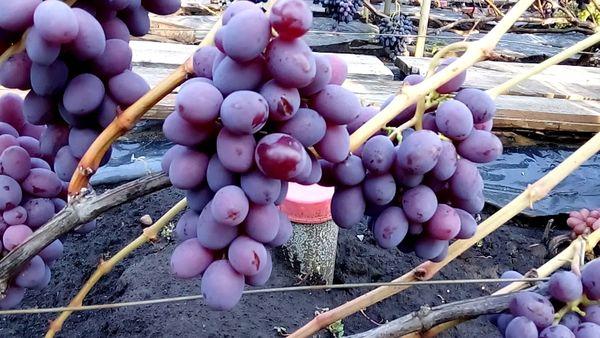
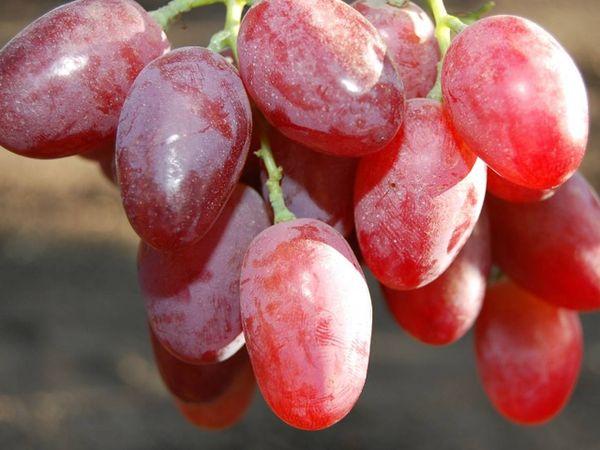
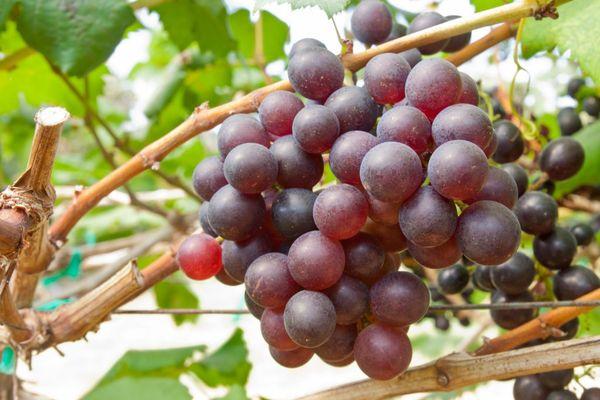
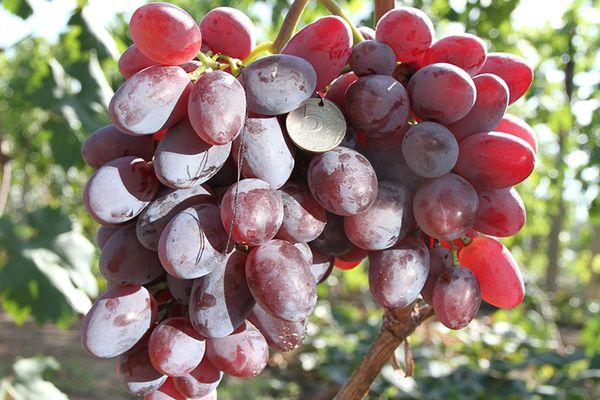
The berries of "Podarok Irina" are elongated, cylindrical, and oval in shape, reminiscent of the well-known "Damskiy Finger" variety, but shorter and plumper. The fruit's color begins as a soft pink, gradually shifting to a reddish-purple. The berries are fleshy and firm, yet with juicy, not watery flesh. They have a supple, pleasantly crisp skin that doesn't detract from the overall flavor.
The berries are large, weighing up to 15-20 grams.
Flowering and pollination
The flowers of this variety are self-pollinating (bisexual), and a single plant growing in the garden is sufficient for the fruit to set. Therefore, gardeners won't need to implement mandatory agricultural practices aimed at pollination. However, additional stimulation will only be beneficial; for this purpose, growth regulators can be used, and, if possible, bee or bumblebee hives placed nearby.
Ripening time and yield
Irina's Gift is an early-ripening grape variety, ripening in 120-130 days. In the central climate, it will ripen as early as the second ten days of August, and in southern regions, as early as the second half of July.
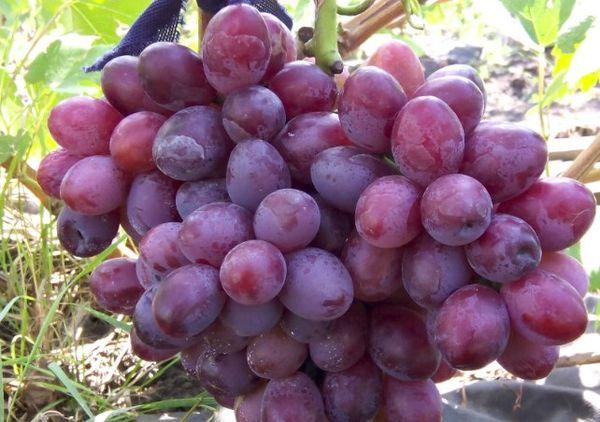
This variety is characterized by large, beautiful, "pot-bellied" clusters weighing between 0.8 and 1.5 kilograms. They are dense, the berries are tightly packed together, and have a beautiful, elongated conical shape. "Irina's Gift" boasts consistent and high yields, with a single bush yielding up to 12-15 kilograms.
Taste qualities and scope of application of berries
The berries of this variety are juicy, sweet, with a pleasantly slight tartness, fleshy, and gelatinous. The thin, crisp rind further enhances the full range of flavors. Importantly, the fruits are sweet without being cloying, with a rich, pleasant, traditional grape aroma without any muscat notes.
Its fruits are used to make juices, compotes, jams, and preserves of amazing flavor and color, and are also eaten fresh. The fruits are also successfully used to decorate desserts and in refreshing, healthy fruit salads. Due to its commercial characteristics, this variety is suitable for sale at both wholesale and retail fresh fruit and vegetable markets.
What are the characteristics of grapes?
This variety is characterized by high indicators, in particular, in terms of resistance to diseases and adverse weather conditions.
Resistance to sub-zero temperatures and drought
Irina's Gift has good frost resistance; the vines will survive temperatures down to -23°C (-23°F). However, in regions with harsh winters, and even in the temperate climate, it's recommended to grow this variety under cover. Irina's Gift is also highly resistant to adverse weather conditions. It successfully withstands hurricane-force winds and hail, and, of course, tolerates drought and high temperatures.
Take a look Also
Immunity to diseases
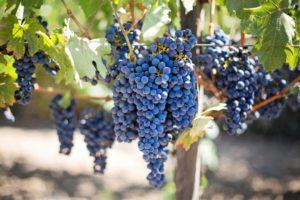
This new variety has good resistance to major grape diseases and pests. High humidity and cool weather prevent severe fungal infections. However, for prevention, especially during fruiting and during periods of frequent precipitation, it is recommended to cover the vines, and especially the grape clusters, with tarpaulin or film.
Specifics of planting in open ground
Properly choosing the location of the vineyard on the plot, as well as planting healthy, strong seedlings in pre-prepared holes, will guarantee rapid growth and good fruiting.
Choosing a location
This moment plays a crucial role in the subsequent development and health of the bush. It is advisable to choose warm, sunny, open locations, but not exposed to strong winds.
Preparing the planting hole and seedling
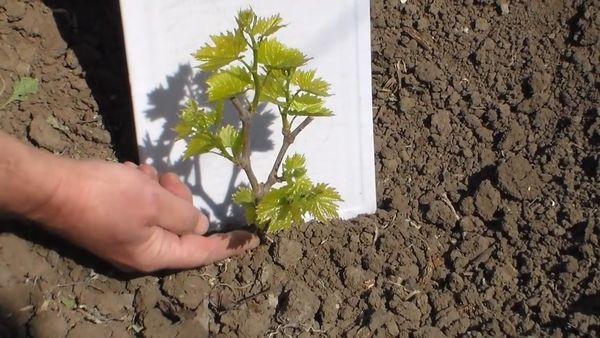
Properly preparing planting holes will provide the grapes with nutrients and promote rapid root development. This directly impacts the growth of the vine, the size of the berries, and the yield. It's best to prepare the planting hole in the fall for spring planting, and in the spring or summer for fall planting.
It is filled with well-rotted manure (horse manure is the best option), chicken manure, non-acidic peat, and also mature compost, and a few tablespoons of granulated mineral fertilizers are added.
It is important to complete the work no earlier than 2 weeks immediately before planting.
When purchasing seedlings with a closed root system, it is advisable to choose grafted ones - they have higher vitality and resistance to diseases.
They should have strong, brown stems and be at least 40-50 centimeters tall. When purchasing open-root seedlings, first and foremost, look at the condition of the roots. They shouldn't be black, thin, or weak, and it's also important to ensure there's no putrid odor.
Period and rules of planting work
Grapes can be planted in both fall (in regions with long, warm autumns) and spring, in absolutely all areas. For bare-root seedlings, it's important to plant them before bud break.
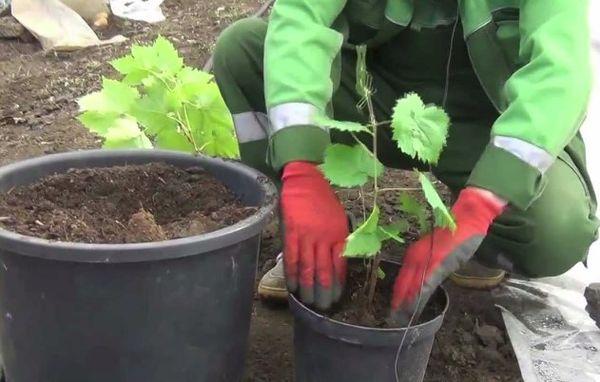
When growing grapes in closed root systems (in containers, cups, or pots), they can be planted at any time. However, it's best to do this before the onset of intense heat. When planting, seedlings are planted slightly deeper to prevent the roots from being too close to the soil surface.
Agricultural technology and care of the variety
To maintain the variety's high yield, as well as to prevent diseases and ensure the overall health of the bush, various agricultural measures are carried out.
Watering frequency
Grapes begin to be watered in the spring, when the buds begin to open. During hot weather in southern regions, the plant is watered 1-2 times a week, depending on soil type and weather conditions. In other regions, watering is done 3-4 times a month.
What fertilizers do grapes need?
When new leaves begin to emerge on grapes in spring, apply 50 grams of nitrogen, 40 grams of phosphorus, and 30 grams of potassium fertilizers, along with various organic matter. It's helpful to combine foliar spraying with root fertilization.
During flowering, as well as fruit setting and filling, the bush requires more phosphorus-potassium fertilizers; for example, Master 13.40.13 is applied under the root, and the fertilizer is sprayed with Plantafol, with formulas NPK 5.15.45 and 0.25.50.
We trim and tie up the vines
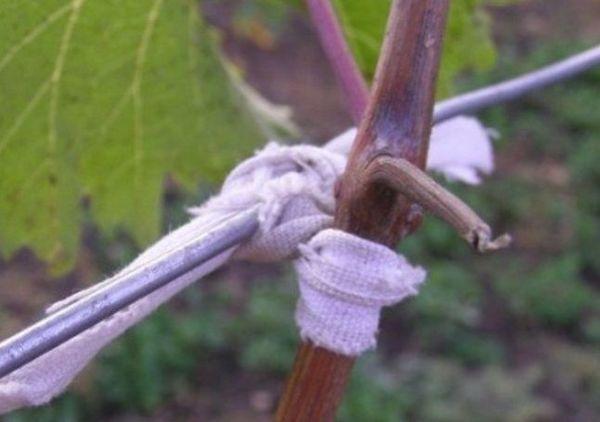
Pruning helps control the load on the entire vine. All old, weak, and diseased shoots are removed, and young shoots are pruned back to just a few buds. Fall pruning helps stop the vine from growing and accelerates the ripening process. Fruiting shoots are usually tied at a 45- or 90-degree angle.
Preventive treatments
To prevent the occurrence of diseases to which the variety has weak resistance, preventive spraying is carried out.
Mildew and oidium
To protect grapes from these diseases, fungicides are used: Strobi, Acrobat MC, Cabrio Top and Ridomil Gold.
Phylloxera
This is a dangerous disease that ultimately destroys the affected vineyard. To prevent phylloxera, purchase clean, treated planting material. Planting parsley between the rows will help repel the pest. If the grapevines are severely infested, fumigate the plantings and treat them with strong insecticides such as Fastak and Actellic.
Protect from birds and wasps
To protect the grapes from wasps, traps (filled with kvass, jam, or beer) and treatments with biological preparations, garlic, and onion infusions are used. Bags or nets are also placed over the grape clusters. This will also help protect the berries from birds; equipping the vineyard with sound or light repellents is also a good idea.
Covering the vines for the winter
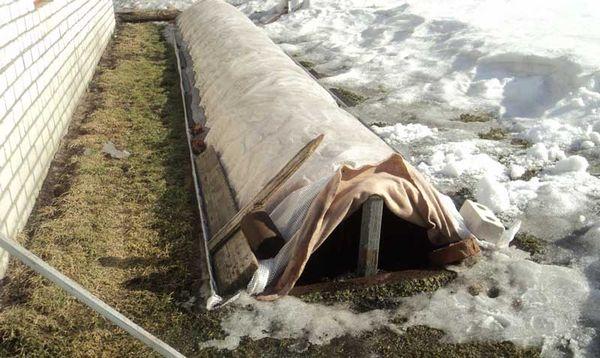
The procedure is carried out in dry weather, from mid-October to the first ten days of November, depending on the region. The vines are covered after the first autumn frosts to harden off the stems. Before this, the vines are pruned and treated with a fungicide. Then, they are bent to the ground and a shelter is constructed, covered with burlap, several layers of dense agrofibre, tarpaulin, pine branches, and reed mats.
Methods of reproduction
The variety is propagated by burying vines while they are still growing, as well as by another effective method, especially for mass propagation. This involves rooting woody cuttings. A greenhouse or hotbed with regular fine-mist irrigation (creating a mist) is used.
Reviews of the Irinka variety
Victor Stepankov, Samara.
"A delicious grape variety with a high yield. I've been growing it for four years now, and I'm not going to give it up!"
Alexandra Shovkunenko, Armyansk.
"I especially love the yield and color of Irina's Gift. The delicious, plump, plump grape 'fingers' have become a family favorite."
Related posts:
 How to grow grapes in the Moscow region in open ground without a greenhouse
 Description of the Julian grape variety, planting and care instructions
 The ripening time of grape vines by variety, how to speed up the process, and what to treat the plant with
 Description of the Krasotka grape variety, planting and care technology
 Description of 30 varieties and types of Muscat grapes, planting, cultivation and care
 Beginner's Guide to Growing Grapes in Open Ground in Central Russia
 Description of 30 grape varieties for Siberia, planting and care for beginners
 The best grape varieties for growing in the Urals, planting and care rules in summer