
- Advantages of using PVC pipes
- Step-by-step instructions for installing the structure
- Consumables
- Selecting a site
- Installation instructions
- Vertical method
- Horizontal method
- Specifics of planting and growing
- Suitable strawberry varieties
- Transplanting
- Care instructions
- Irrigation
- Fertilization
- Pest and disease control
- How to prepare bushes for winter
- Tips and advice from experienced gardeners
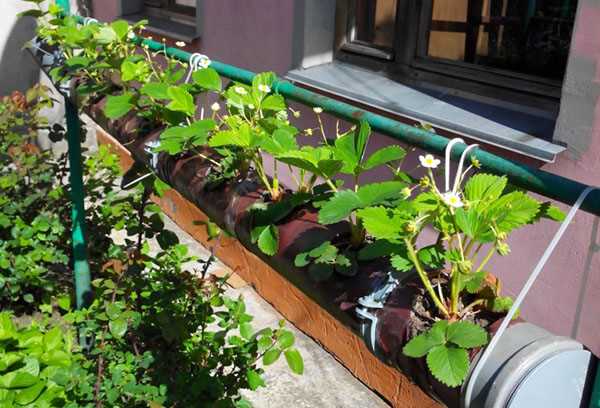
Strawberries are easily the most beloved berry of both children and adults. To enjoy a bountiful harvest for years to come, you need to know the tricks of growing them and have a large garden plot. For those who don't have a large plot but really want to plant berries, growing strawberries horizontally in PVC pipes is recommended.
Advantages of using PVC pipes
This planting method is very popular among experienced and amateur gardeners. It has many advantages:
- The design is transportable. The beds can be relocated and moved from one place to another without damaging the berries.
- Soil preparation requires minimal time. Horizontal beds are free of soil, while vertical beds don't touch it. Disease susceptibility is minimal.
- There's no need for a large plot, as with standard cultivation. The key is to carefully place vertical and horizontal structures and optimize the space.
- Harvest purity. The beds do not come into contact with the soil, allowing for the growth of beautiful, clean berries.
- By saving time on weeding and loosening, you can increase the time for harvesting.
The only negative aspect is the cost of consumables and the need for any skills to assemble the structures.
Step-by-step instructions for installing the structure
You can understand the correct sequence of actions with the help of advice from experts:
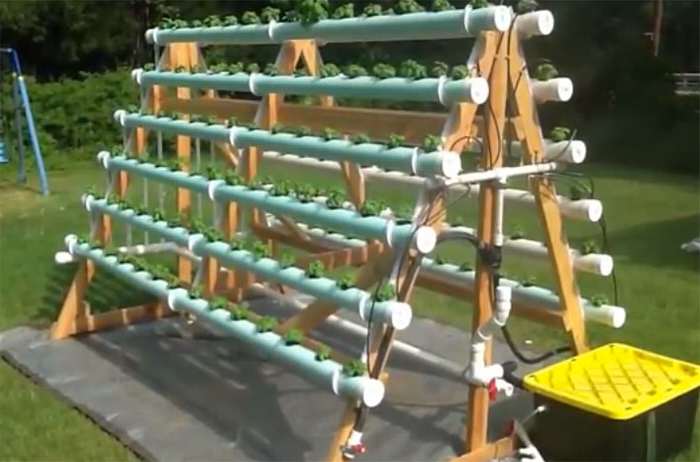
- Gather the necessary materials and tools. First, decide on the dimensions and design details. Wide sewer or downspout pipes are most commonly used.
- The structure will be airtight if plugs are installed on both sides of the pipes. For effective watering, thin pipes are needed, placed near the seedlings.
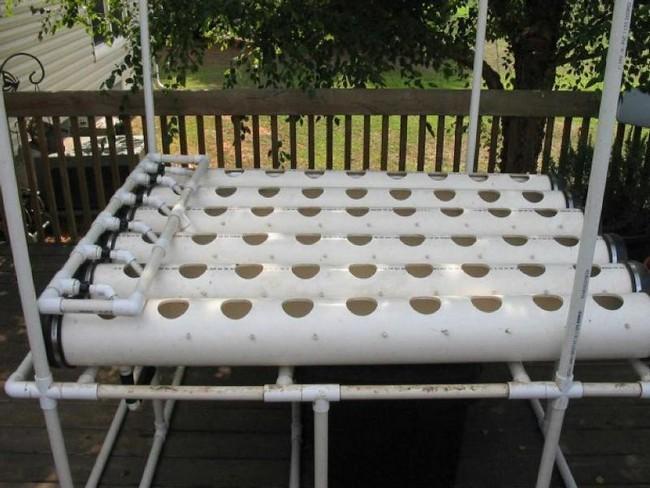
- Next, you need to make holes 15-20 cm apart. The holes should be smaller in diameter than the containers holding the seedlings. Pots or nutrient-rich soil are needed for planting the seedlings.
Expanded clay, coconut fiber, or peat moss deliver nutrients directly to the root system. Excess moisture is returned to the pot, establishing a waste-free cycle.
Consumables
Before starting work, you need to prepare all materials and tools. In addition to a thick sewer pipe with a diameter of 15-20 cm, you'll need the following:
- supports for flower beds, wall fasteners;
- end caps;
- thin PVC pipes for irrigation;
- hoses for water drainage;
- water containers;
- soil or substrate;
- covering material for wintering;
- agrofibre.

Drainage can be done with expanded clay or fine gravel. A shade net is essential; it will protect the plants from the sun and birds. Plastic water pipes should be 2.5-3 cm in diameter. Complete installation of the beds is impossible without a drill, drill bits, a jigsaw, pliers, clamps, tape, a knife, a tape measure, a pencil, scissors, and electrical tape.
Selecting a site
When choosing a site, the following nuances should be taken into account:
- seedlings need to be planted from August to September;
- Strawberries are heat-loving plants and require a lot of light. Garden trees should not be planted nearby;
- The area should be protected from the wind. The best option would be to plant berries next to gooseberries and currants;
- It is better to place seedlings on the southeast side. The beds should be level or slightly elevated;
- It is preferable to choose sandy-loamy soil. The use of a sandy substrate enriched with humus is permitted;
- You cannot plant seedlings in places where eggplants, tomatoes, potatoes, cucumbers, peppers, or cabbage were previously grown;
- It is better not to place pipe beds next to bird cherry, rose hips, plum, cherry, apricot, or apple trees.
 The best neighbors include radishes, carrots, corn, celery, and dill.
Installation instructions
Vertical and horizontal beds have several differences.
Vertical method
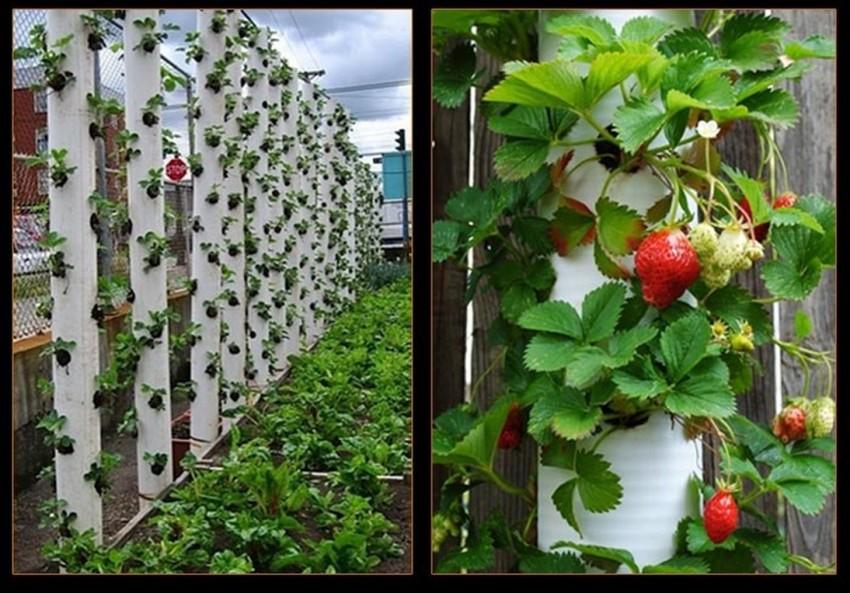
For easy maintenance, the thick pipe should be shorter than a person's height. A small hole is drilled using a screwdriver or drill. The thin pipe should be inserted into the center of the thick one and secured with soil or expanded clay. Soil should be added periodically. After the pipe is completely filled, the seedlings are planted. Next, a watering hose is inserted into the narrow pipe.
Horizontal method
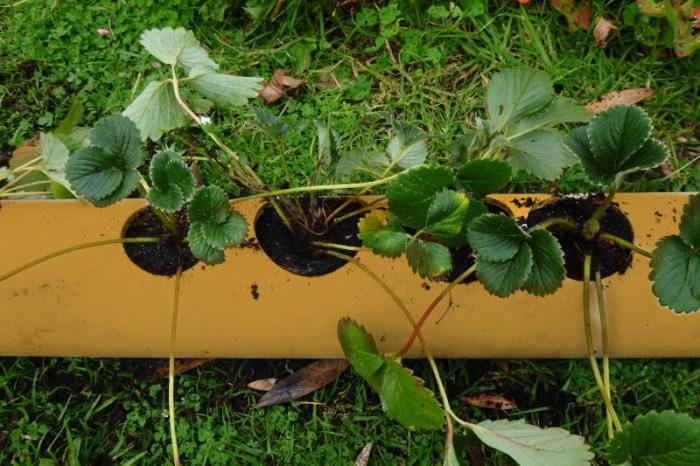
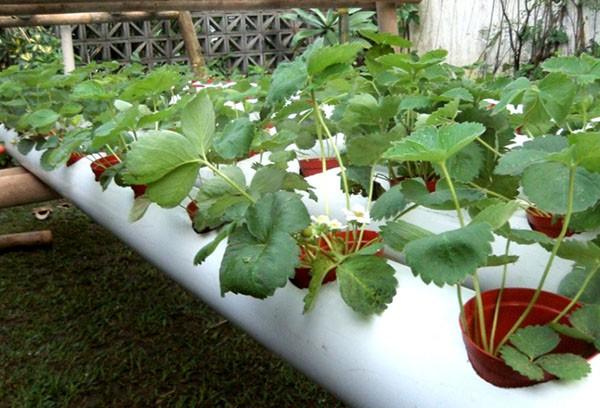
A horizontal garden bed requires cutting a hole and installing plugs on both ends of the pipe. A small hole should be made in the center of the pipe at the bottom to drain excess moisture, which will be sealed with a plug. Half of the pipe is filled with expanded clay, on which the irrigation tube is placed, and the top is filled with fertile soil.
Specifics of planting and growing
It's advisable to plant the beds with everbearing varieties, as common strawberry varieties are difficult to grow this way. The first step is to inspect the seedlings and disinfect the soil and root system. The soil should be heat-treated; you can warm it in the oven or pour boiling water over it. The dried soil is ready for use.
The seedlings are soaked in a solution of water and potassium permanganate. Expanded clay can increase the alkali concentration in the soil.
Therefore, before use, it should be soaked in water with citric acid. Growing berries using plastic pipes is no different from standard cultivation. Strawberries still need watering, disease and pest control, and feeding, but weeding and soil loosening are not necessary.
Suitable strawberry varieties
It's advisable to grow varieties that will bear fruit for a long time. These include everbearing varieties such as Albion, Queen Elizabeth II, Moskovsky Delikates, Evi, Diamant, and Temptation. They ripen early, are resistant to diseases and pests, and produce a large harvest twice a season.
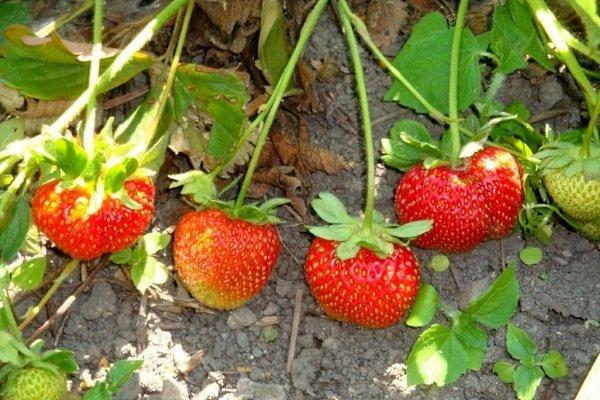
The best option is trailing varieties. These are everbearing strawberries with long tendrils that anchor themselves in the soil even without roots. A strawberry bed is a cascade of leaves and stems with berries. In addition to a bountiful harvest, such plants make excellent garden decoration.
Transplanting
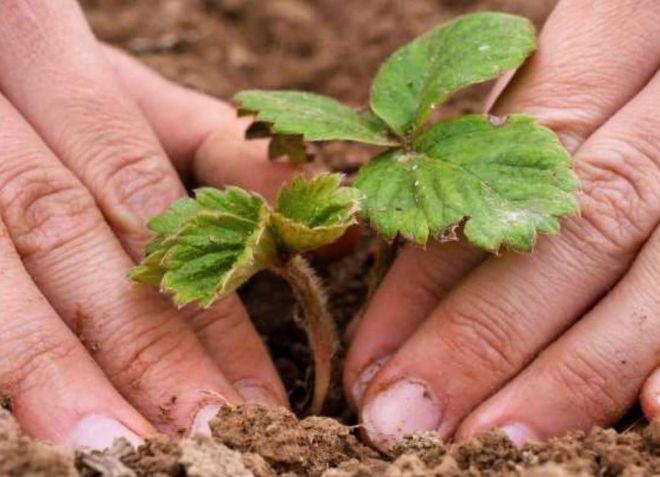
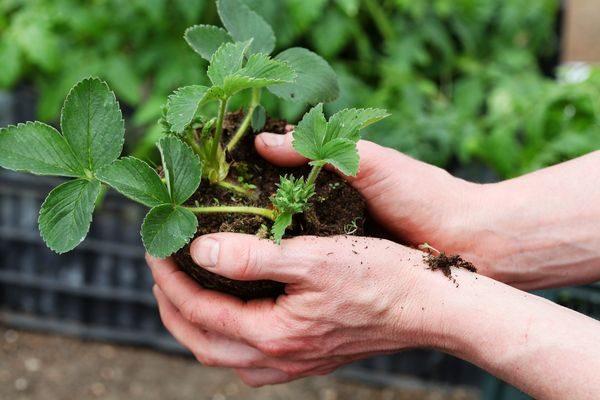
After selecting the seedlings, their rhizomes are dipped in a mixture of clay and mullein. This will enhance the plant's water-retention capacity. Make a small hole in the soil, carefully place the rhizomes in the center, add soil, and lightly compact the plant. You can plant the strawberries in individual planting holes—this will improve rooting, new shoot formation, and renewal.
Care instructions
Caring for horizontal beds in PVC pipes differs from standard care. A comfortable temperature range is 18-23°C. Before wintering, the berries are moved to a warm room; they will freeze outdoors. Sunlight and humidity (no higher than 70%) are essential.
Irrigation
The frequency of watering is determined by the soil condition. The soil dries out quickly, so watering should be frequent. A narrow pipe is needed for irrigation. The soil should not be overwatered, as this can lead to fungal growth.
Fertilization
Due to rapid soil depletion, strawberries require frequent, effective fertilization. Plants should be fertilized once every 7 days. Liquid fertilizers combined with irrigation are preferred. The nutrient solution is delivered to the rhizomes through a watering pipe. For liquid fertilization, use a fertilizer complex or a water-organic solution.
Pest and disease control
Berries are often attacked by parasites such as:
- Colorado potato beetle;
- weevil;
- whiteflies;
- strawberry mite;
- slugs;
- snails;
- centipedes.
These pests can be prevented by providing adequate light and moderate watering. If pests are widespread, treat the berries with metaldehyde. A solution of malathion (Karbofos) can eliminate strawberry mites, weevils, and whiteflies.
If your strawberries are attacked by Colorado potato beetles or cockchafers, it's best to pick them by hand. The use of chemicals is not recommended, as they remain in the plant for a long time, which is detrimental to the rapidly ripening berries.
How to prepare bushes for winter
Overwintering is the most difficult issue for pipe beds. Everbearing varieties don't tolerate frost well, so leaving the berries outside can doom them to death. Year-round cultivation is possible in greenhouses, but not all gardeners have access to one.
If possible, you can move the beds to a warm room, providing them with adequate watering and sunlight.
After the cold weather sets in, the pipe beds should be wrapped in two or three layers of agrofibre. If severe frosts and temperatures drop to -20-25°C, they should be covered with mulch and wrapped in two more layers of lutrasil or spabondex.
Tips and advice from experienced gardeners
Often, novice gardeners, due to ignorance, make a number of mistakes:
- disrupt the water regime. This disruption can lead to rhizome rot and the death of the bush;
- Irrigation technology is not followed. It is highly undesirable to irrigate leaves, trunks, tendrils, berries, and inflorescences;
- do not comply with planting deadlines;
- The bushes are treated during fruiting. All chemical treatments should be performed after the berries have been picked.
According to experienced gardeners, filling pipes with soil is a rather time-consuming and difficult process, and it's crucial to prevent soil contamination. To minimize the risk of contamination, it's essential to grow your own seedlings. Ninety-nine percent of specialized agricultural enterprises grow plants in contaminated soil. Diseases can spread throughout the garden along with the seedlings.
It is also recommended to disinfect packaged substrates with industrial disinfectants. If disease is detected, the plant should be removed along with the soil.
Pruning of bushes should be selective, preserving healthy leaves.
With properly constructed structures, growing strawberries is possible even in a summer house, balcony, loggia, or veranda. Structures placed along a fence can be decorated with flowers, which will perfectly complement the overall design.
Related posts:
 How to properly grow a peach tree from a seed at home, planting and care
 Carrot care guidelines for outdoor cultivation to ensure a good harvest
 Is it possible to grow an apricot tree from a seed in your garden? How to plant and care for it?
 The best ways and methods for properly covering grapes for the winter
 How and whether it is possible to graft an apricot, the choice of rootstock, timing and methods of budding
 The best grape varieties for growing in the Urals, planting and care rules in summer
 Description of unusual methods for planting and growing cucumbers
 Methods for planting and propagating cherries at home