
- Advantages and disadvantages
- Planting dates
- Selecting a variety
- Early
- Frost-resistant
- The best choice
- Nantes 4
- Vitamin 6
- Losinoostrovskaya 13
- Research Institute of Oncology and Microbiology 36
- Beautiful maiden
- Crop rotation rules
- Soil preparation
- We sow correctly
- Preparation of seed material
- Planting diagram
- Fertilizer
- Caring for seedlings
- Regional features
- Moscow region
- Ural
- Siberia
- Adviсe
Carrots are interesting because they can be grown in a variety of ways: sowing seeds in May, July, and fall. Each method has its pros and cons. In some cases, you'll get the maximum yield, while in others, you'll lose it due to the vagaries of nature. In any case, sowing carrot seeds before winter is the oldest method, producing hardened carrots that won't spoil during storage. Today, we'll explain the advantages of this method, taking into account all the nuances.
Advantages and disadvantages
The traditional time for planting carrots is in the spring, but in some regions with a short warm period, they plant them under the snow.
Advantages:
- The harvest can be obtained two to three weeks earlier. The seedlings begin to emerge with the first sunny days. This advantage is especially important for commercial carrots. Furthermore, by the time of winter harvesting, early carrots will be ready to use.
- Root vegetables tend to be juicier and sweeter because the main growing season is characterized by minimal heat and maximum moisture from melting snow.
- Early carrots are better suited for winter storage in the cellar.
- After harvesting, there is free space for planting early vegetables: dill, radishes, lettuce and basil.
- In the fall, gardeners have more free time, and can focus all their energy on sowing carrots, unlike in the spring, when they need to tackle many other vegetables.
Flaws:
- Spring seedlings survive only if the spring is warm and humid. If the temperature outside is regularly below freezing, you may lose part of your harvest.
- When sowing in the fall, you will need to plant an order of magnitude more seeds and make the crops denser to compensate for winter losses.
- Only hybrid seeds are suitable for winter sowing, and they cost an order of magnitude more than varietal seeds.
Considering all the disadvantages, many gardeners prefer to sow carrots in winter and do not accept other methods.
Planting dates
Autumn planting dates for carrots "The term 'seasoning' is vague and imprecise. The key here is to get it right. The weather can be quite unpredictable, and the seeds may germinate before winter, before the severe frosts, meaning you'll have to say goodbye to your early carrots."
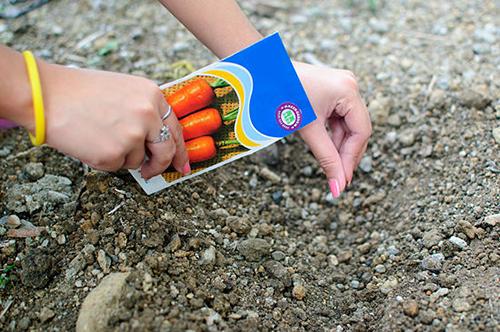
In autumn, you need to choose a day with favorable sowing conditions:
- the temperature should be stable for several days, within the range of 2-3 degrees above zero;
- night frosts – not lower than -5 degrees, and no precipitation during the day;
- Do not plant during heavy rains, as the seeds may germinate and subsequent frosts will destroy the seedlings.
Taking into account weather forecasts, you should plan to sow carrot seeds for the end of October, the first ten days of November, but a week before the onset of permanent frosts.
Important! If summer temperatures persist for several weeks in the fall, between 5 and 8 degrees Celsius, you may see seedlings before winter; it's best to wait until then.
Selecting a variety
Not all carrot varieties Suitable for winter sowing. Avoid seeds on tape or in protective coatings, as some varieties rely on sparse plantings for germination, while others are used to protect against pests and diseases. Regular loose seeds are suitable. What varietal characteristics should you pay attention to?
Take a look Also
Early
Early-ripening and winter-hardy varieties are suitable for winter planting; this is indicated on the packages. After winter stratification, these seeds will quickly begin to swell after the snow melts and under the early spring sun.
Frost-resistant
This carrot characteristic allows for late planting, under snow. Frost-hardy carrots are resistant to low subzero temperatures. The seeds will retain their viability even after prolonged storage in the soil over winter.
The best choice
The following varieties are early maturing and frost-resistant (the packages must indicate: “for winter planting” or “for winter planting”).

Nantes 4
This hybrid thrives in any soil, even heavy, infertile ones. The first green shoots will appear with the first warmth of spring. In addition to the early maturity of the carrots, the frost-resistant seeds are also worth mentioning.
During the winter, a small amount of planting material perishes, mainly empty and unripe seeds.
Nantes carrots are juicy, sweet, and have a firm texture, allowing them to be stored until the next harvest. The fruits are cylindrical, without any distortions, and weigh up to 100 grams. The only drawback of this variety is its weak resistance to gray and white rot.

Vitamin 6
A large-fruited carrot suitable for any sowing, including winter sowing. The roots, with their sweet and crisp flesh, store well. The flesh is a distinct orange color, free of green. The fruits are susceptible to cracking but are resistant to some types of rot. Fruit weight ranges from 70 to 160 grams.
The growing season lasts up to 110 days. Harvesting can begin in July, if planted before winter. The fruits are high in carotene and sugar. Suitable for dietary use.
Losinoostrovskaya 13
A mid-late variety, ripening in 120 days. The fruits are cylindrical and smooth, and do not warp or crack even in heavily compacted soil. They contain up to 21 milligrams of carotene.

Requires deep sowing in well-moistened, loose soil. Ideal for October planting, this ensures minimal winter losses. Seedlings emerge in the spring from the first thawed patches.
Research Institute of Oncology and Microbiology 36
This variety was specifically bred for northern latitudes and winter planting. It's very frost-resistant, with minimal losses at sub-zero temperatures. It doesn't even require dense plantings.
Beautiful maiden
The fruits of this variety are very juicy, making them highly sought after. The roots are used to make juices and purees. They are low in fiber. The variety is frost-resistant and well-suited for late sowing.

In addition to the varieties listed, there are others that thrive in winter: Tushon, Nesravnennaya, Shantane, Samson, Flake, Moskovskaya zimnyaya A-515, Biryuchekutskaya, Narbonne.
Crop rotation rules
The summer vegetable season is over, and there's plenty of space in the garden. But where should you plant carrots to ensure they're disease-free and produce a bountiful harvest? Crop rotation is key.
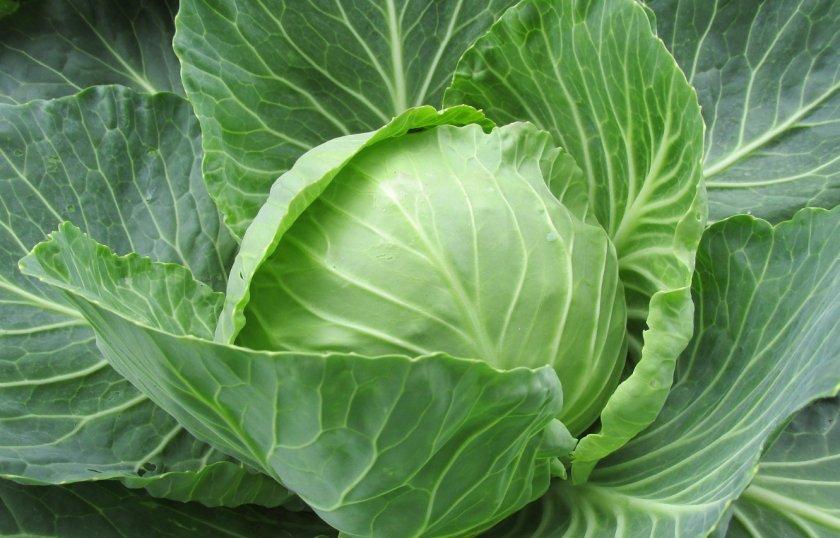
Carrots don't thrive in all soils. Soils suitable for planting winter carrots follow the following crops:
- cucumbers;
- tomatoes;
- pumpkin;
- zucchini;
- onion;
- potato;
- cabbage.
These crops don't completely deplete the nutrients in the topsoil during the growing season. And if you properly prepare the planting bed, including adding fertilizer, your carrots will thrive.
It is worth remembering that some garden crops have an adverse effect on carrot seedlings:
- parsley;
- legumes (beans, peas, beans);
- carrot.
These plants greatly deplete the soil, taking up all the micro- and macronutrients needed for carrot growth. You should only return to the carrot bed after four years, but if you properly fertilize the soil, you can sow seeds within a year.
Take a look Also

Soil preparation
How to prepare the soil for carrots at the end of the summer gardening season:
- Mark out the bed and dig the soil thoroughly, removing weeds.
- To reduce soil acidity, add wood ash and complex mineral fertilizer; otherwise, the root crops will be uneven.
- Furrows are made in the garden bed (transverse or longitudinal), as convenient.
- The surface of the bed is covered with covering material or film to prevent rain from washing away the strips and preventing weeds from growing.
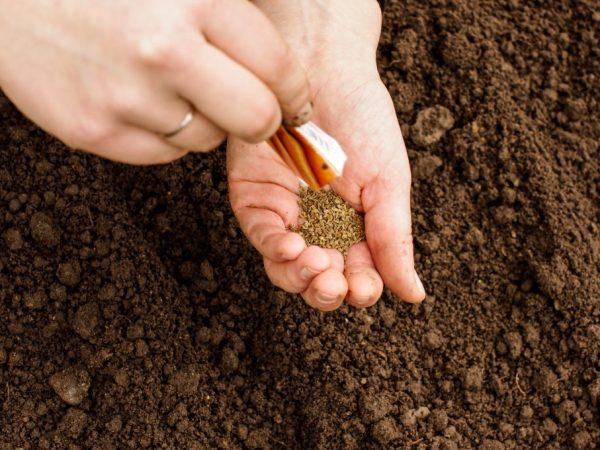
Some gardeners sow green manure (mustard, alfalfa), and before sowing carrots, they simply dig the young plants into the soil. This technique can replace mineral fertilizers. Some varieties carrots require deep loosening soil; to prevent it from becoming compacted later, sand is added to the soil.
Important! Since sowing is scheduled for a fairly cold time, the soil will already be frozen and form lumps. These lumps will make it difficult to plant the seeds. Many gardeners recommend filling a bag or large container with loose soil beforehand, from which the mixture will later be taken to fill the seed furrows.
We sow correctly
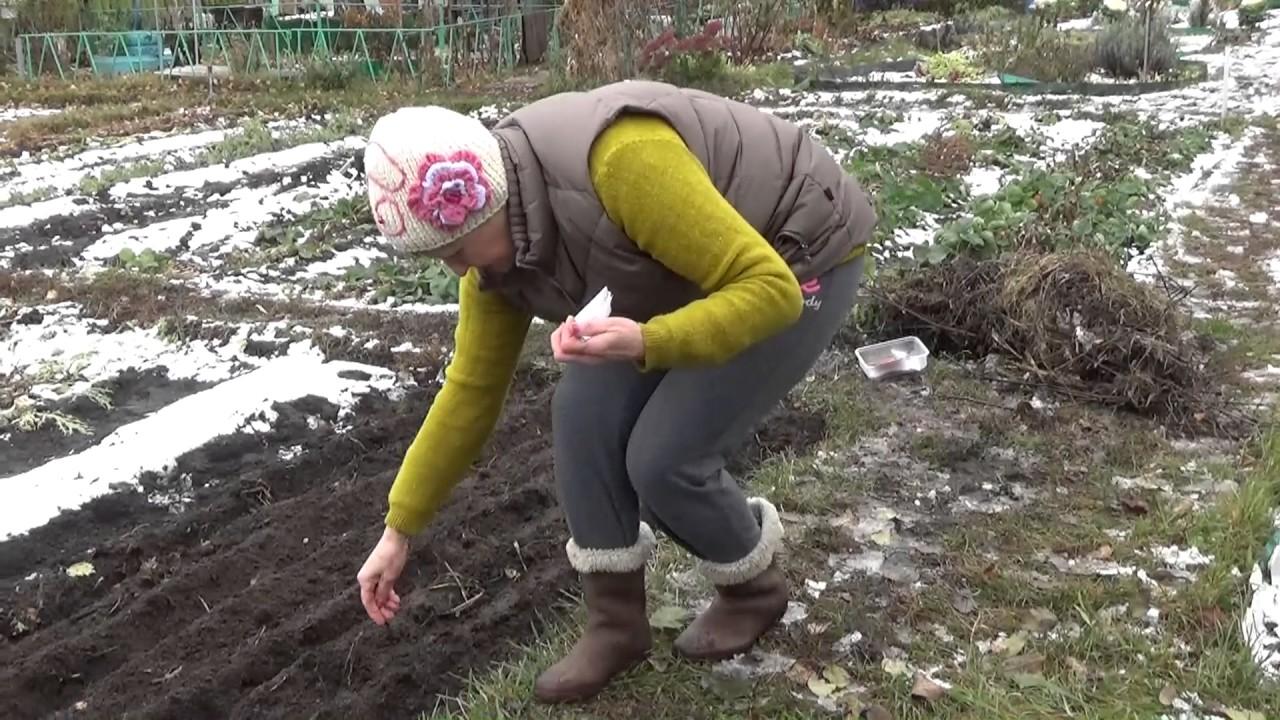
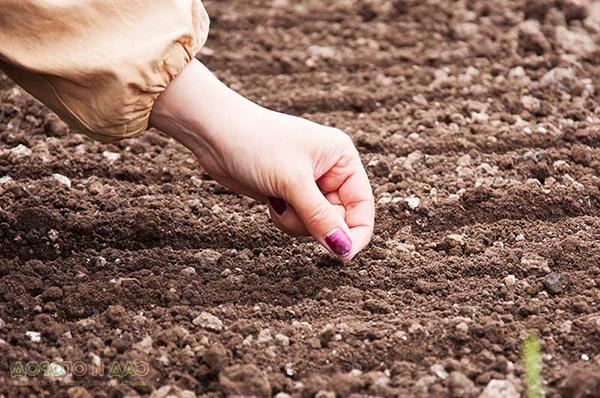
When October comes and all weather conditions are suitable for sowing, work begins.
Preparation of seed material
Carrot seeds are covered in a thick seed coat containing essential oils, which slows their germination. The average germination time is 18 to 25 days. To speed up the process and prevent viral and microbial contamination, the seeds are treated with the following solutions:
- Salt. Add 1 tablespoon of salt to 1 liter of water and mix thoroughly. Remove any empty seeds that float to the surface. Next, rinse the mixture with warm water and soak it in hot water (65 degrees Celsius) for 15 minutes. Place it on cheesecloth and dry.
- Etched in a 1% solution of potassium permanganate.
- Soak in hydrogen peroxide for 24 hours.
After each treatment, dry the seeds. There's no need to treat the planting material with all the solutions; just choose one.
Planting diagram
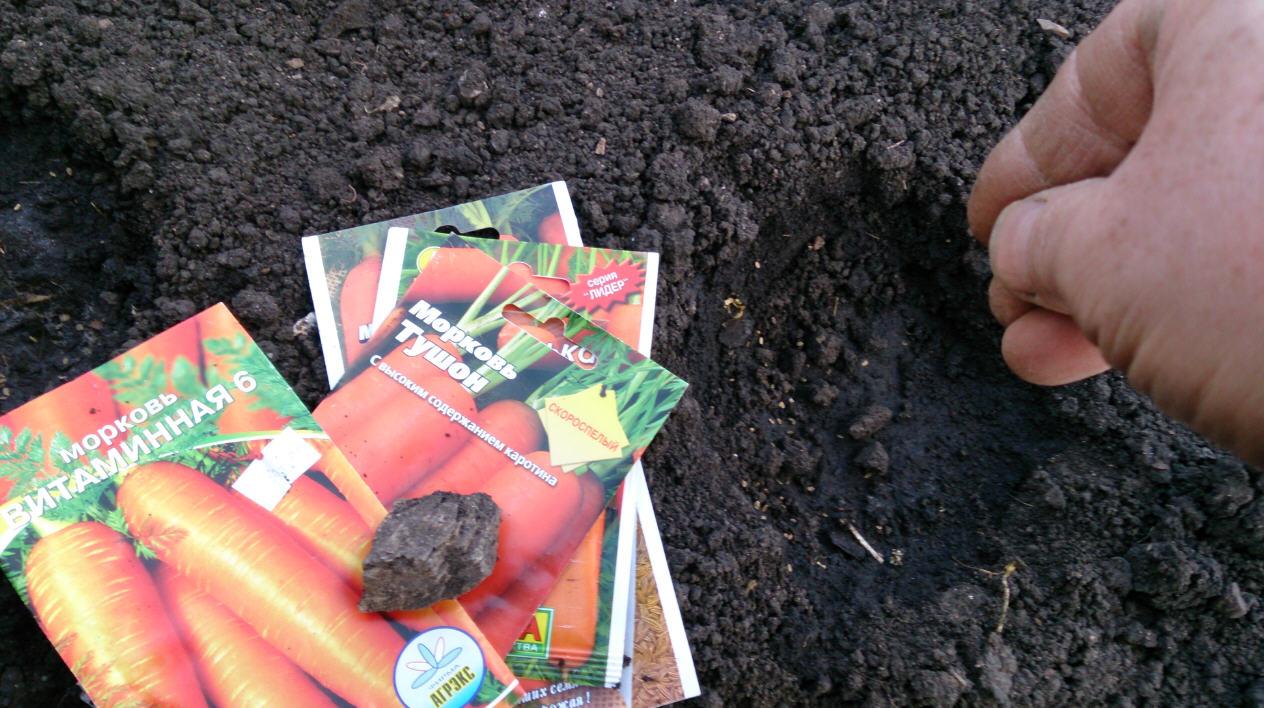
Taking into account the variety's characteristics, specifically the root size, it's important to mark out the planting bed. When cross-seeding, you can leave up to 30 centimeters between rows to ensure ease of maintenance (loosening and weeding).
When planting carrots longitudinally, you can leave up to 50 centimeters between the rows, and then plant onions between them to maximize the yield. When thinning the seedlings, leave up to 10 centimeters between adjacent carrots to ensure the plants have enough room to develop. The planting depth should be no more than 5 centimeters.
If prolonged heavy rains begin after sowing the seeds, cover the bed with plastic sheeting and lay bricks along the sides to compact the material and protect the shelter from the wind. This will prevent the soil from washing away, and minimize the amount of moisture reaching the seeds.
Fertilizer
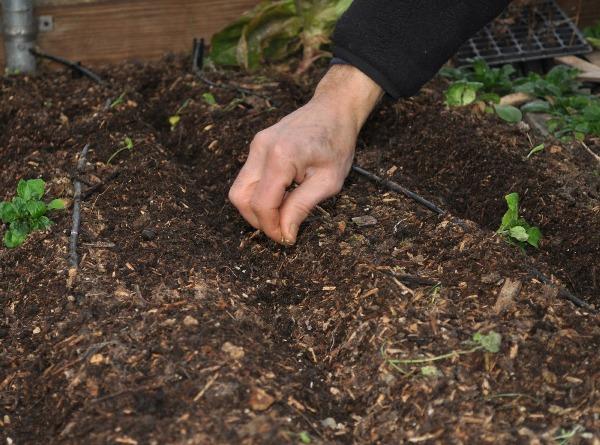
Fertilizer is applied in the spring, when the seedlings are thinned out. Young carrots are nourished with minerals:
- ammonium nitrate (25 grams);
- potassium salt (25 grams);
- superphosphate (40 grams).
Fertilizer is diluted in 10 liters of water and watered at the roots. This amount of fertilizer will be sufficient for good ovary formation and growth.
Caring for seedlings
In the fall, when there's no snow cover, the beds are covered with spruce branches to provide some insulation for the crops. When snow falls, it's piled on the beds and compacted to prevent it from being blown away by the wind.
Take a look Also


Caring for spring carrots is no different from traditional agricultural practices.
- As weeds appear, they are collected by small shoots, and adult shoots are pulled out by hand.
- During weeding, the soil is loosened to saturate it with oxygen.
- To prevent carrots from turning green and becoming bitter, the roots are hilled up.
- The beds are watered infrequently, only as the soil dries out. Watering is stopped before harvesting to preserve the carrot flesh's sweetness.
- In early spring, when the seeds sprout and the greens emerge, the carrot plantings are watered once a week to prevent a crust from forming on the soil surface, after which the soil is loosened. If the spring is wet, watering is not necessary.
To speed up the carrot seedling growth in the spring, the beds are covered with plastic. As soon as the first shoots appear, the film is removed to prevent the plants from becoming leggy and turning white.
Regional features
Carrots are planted in winter taking into account regional characteristics, and these are, first of all, climatic conditions.
Moscow region
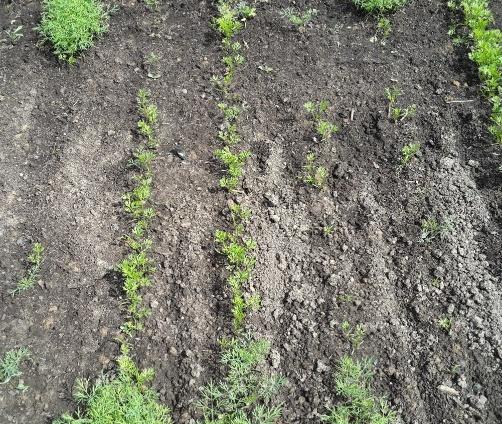
In this region, planting is best done between October 20th and November 10th. During this time, the weather stabilizes, and it becomes quite cool outside, with no further warming typically expected. Seeds should be planted at least 5 centimeters deep to prevent them from being washed away by meltwater and rain in the spring.
Ural
In this part of Russia, the same deadlines apply. And since the Urals are famous for their severe frosts, the beds should be covered with spruce branches or snow.
Siberia
In Siberia, planting can begin in early October. By this time, consistently cold weather has usually set in, accompanied by abundant snow and frost. Garden beds are placed at elevated sites to ensure rapid snow melt in the spring.
Adviсe
Experienced gardeners combine winter sowing of carrots with beets, onions, and even radishes. This root vegetable also thrives under snow. And by early July, fresh vegetables will be on your table. If carrot beds are covered for the winter, remove the covering in the spring, as soon as the snow melts, to allow the seeds access to air. Even the slightest freezing temperatures are not harmful to carrots.
In spring, you don't need to water the beds, as the meltwater saturates the soil sufficiently, causing the seeds to swell and germinate.
And one more piece of advice: you shouldn’t use fresh manure as mulch, as it contains weed seeds, which will make it difficult thinning and weeding carrots.Winter carrots are an excellent early vitamin supplement, when there are no vegetables in the garden other than greens and radishes. Early carrots are high in nutrients, carotene, fiber, and juice. The key to this sowing method is timing; the rest is as usual: weeding, watering, cultivating the soil, and fertilizing.
Related posts:
 Carrot care guidelines for outdoor cultivation to ensure a good harvest
 Is it possible to plant carrots in July or at the end of June? What are the best days and care instructions?
 How to control carrot flies with medications and folk remedies
 What is the best way to feed carrots? Fertilizers and preparations, using folk remedies.
 50 Best Carrot Varieties with Descriptions and Characteristics
 How to plant carrot seeds in open ground, timing and sowing methods
 Why didn't the carrots sprout and what should I do? How to plant them so they sprout quickly?
 How and when to thin carrots in open ground