
- Why thinning is necessary
- How to avoid
- Granulated planting material
- Planting with tape and paper
- Cells using an egg tray
- Planting with radishes
- Mixing seeds with river sand
- Sprouted seeds
- Use of a seeder
- Planting in paste
- When to perform the procedure
- First
- Second
- Rules
- Selecting time and weather
- Tools
- Soil preparation
- Carefully pull strictly vertically
- Tamping at the end
- Answers to questions
A good carrot harvest depends not only on soil quality and proper care; adequate space is also a crucial factor for root growth. Crowded seedlings will not develop properly and will complicate weeding and maintenance in the future. Learning the nuances of proper carrot thinning will significantly increase your chances of a bountiful harvest.
Why thinning is necessary
Sowing carrots often results in increased emergence in the beds. It's important to thin the shoots early in their growth for the following reasons:
- Reducing the number of plants increases access to sunlight.
- The large distance allows for the cultivation of large root crops.
- Thinning helps to preserve strong shoots by removing weak ones.
- Sparser plantings receive more nutrients.
- Carrot yields are halved after thinning.
How to avoid
Thinning can be avoided by sowing seeds in a manner that maintains a large distance between shoots. There are several ways to accomplish this:
- use specially prepared planting material;
- use various devices for sparse planting;
- sow carrots together with other crops.
Granulated planting material
Buying pre-prepared granulated seed coating will make planting very small carrot seeds easier. They appear larger due to a coating consisting of hydrogel and nutrients. You can also create the coating yourself by dipping the seeds alternately in paste and a mixture of micronutrients. However, this is time-consuming and requires checking the seeds for germination. It's much easier to purchase pre-prepared seed granules.
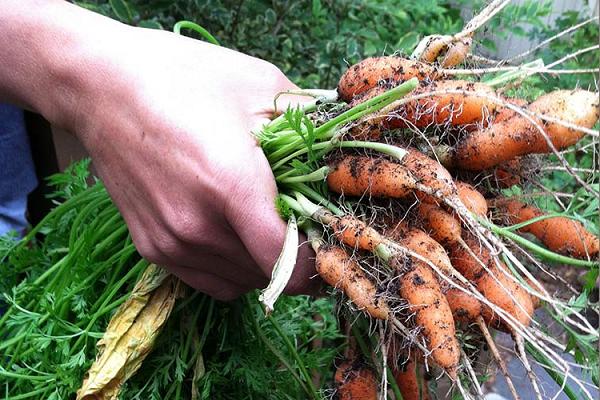 Pelleted carrot seeds can be planted in a longitudinal furrow or individual depressions. These are easily made using paper egg cartons.
Planting with tape and paper
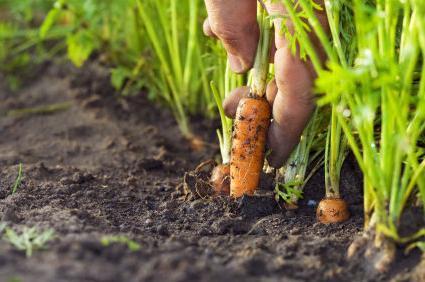
Carrots can be planted using ready-made seeding tape. It's placed in furrows in the beds, covered with soil, and watered thoroughly. You can make your own tape using the following method:
- Toilet paper is cut into long strips up to 3 cm wide.
- Lubricate the strips with warm paste.
- Place 2 carrot seeds every 3 cm.
- The strips are dried, after which they can be rolled up and stored until planting.
Cells using an egg tray
For this option, you'll need two paper egg cartons, stacked one on top of the other. Press them into the loose soil of the prepared beds to create even depressions. Roll carrot seeds in starch to make them more visible. Place one seed in each depression. Then bury them and water.
Planting with radishes
Carrot and radish seeds are mixed in equal proportions. This mixture is sown in furrows, buried, and watered. The advantage of this method is that the radishes ripen quickly. After harvesting, space is naturally created for root crop growth. Early varieties of spinach or lettuce are also suitable for this planting. To prevent soil depletion, it is necessary to fertilize and water the plants more frequently.
Mixing seeds with river sand
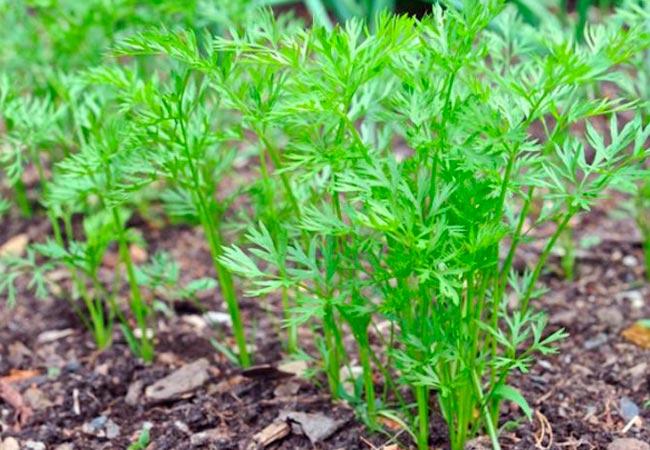
You can prepare carrot seeds in advance using fine river sand. This will not only speed up germination but also provide ample space for the roots to grow. Prepare the seedlings as follows:
- About 1-1.2 liters of fine clean sand is mixed with 60 ml of dry carrot seeds.
- Add some dry fertilizer.
- Moisten the mixture with water.
- A longitudinal depression is made in the garden bed, in which the mixture is evenly distributed and covered with soil.
- Water the bed generously.
Sprouted seeds
Using sprouted seeds allows you to plant viable plants that sprout quickly. Prepare the planting material according to the following procedure:
- The seeds are soaked in water for 2 hours.
- Wrap them in a damp cloth or paper.
- Leave the material until green sprouts appear, sprinkling it with water when it dries.
- The sprouts are hardened by placing them in a cool place for 10 days.
The advantage of such planting material is the rapid emergence of seedlings, however, germination of seeds requires a lot of time and attention.
Use of a seeder
Specialized manual seed drills are also used for planting carrots. This device consists of a container for seed, which is evenly distributed as the drill moves. A special part is located at the front of the device, which automatically forms a furrow. The seeds then fall into the furrow, and a wheel closes the hole in the soil and compacts it. After this, all that remains is to thoroughly water the plantings with warm water.
Advantages of this method:
- even beds;
- uniform sowing depth;
- maintaining an optimal distance between plants;
- rapidity.
There is only one drawback to this sowing option: the high cost of the seeder.
Planting in paste
For this method you will need a plastic bottle, flour, starch, water and carrot seeds:
- Mix 5 ml or 1 teaspoon of starch with 30 ml or 1 tablespoon of wheat flour.
- Brew the mixture in 500 ml of water.
- Carrot seeds are added to the paste cooled to +35 °C.
- The prepared planting material is placed in a plastic bottle with a hole in the lid.
- Squeeze the paste with seeds into a furrow in the garden bed.
- Cover with soil and water generously.

When to perform the procedure
Carrot thinning is carried out in two stages. Each time, the procedure is carried out at the beginning or end of the day, when the plants are damp from dew. This timing protects the crops from the attention of carrot fly, which is attracted by the distinctive aroma emitted by disturbed plants. Dew or heavy watering reduces the intensity of this odor.
First
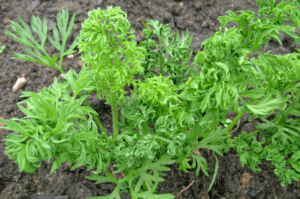
The first time you thin out a carrot bed is at the very beginning of the growing season. It's best to wait until the plants have sprouted their first few leaves. This is typically 28-35 days after planting the seeds.
Second
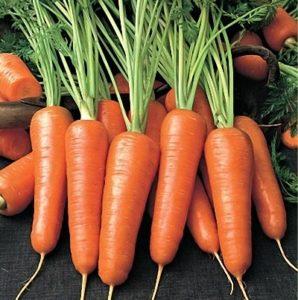
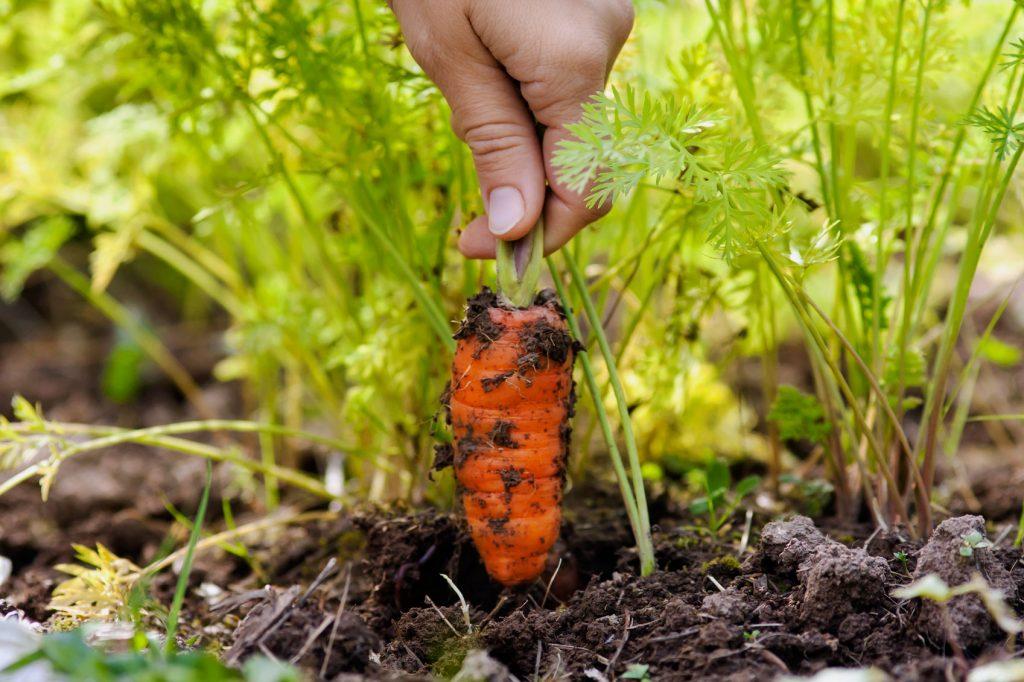
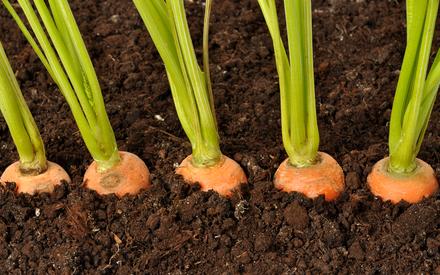
The second stage of thinning is used to adjust the spacing between plants. This is best done 21 days after the first. By this time, the carrots will have grown to 9-11 cm in height, and the small roots are suitable for edible use.
Rules
The first thinning is carried out to double the distance between plants. By the end of the procedure, the distance between plants should be between 1.5 and 3 cm. During the second stage, the distance between plants is increased again. This time, a distance of 6-7 cm is optimal. Increasing it further is not recommended, as this will not improve the quality of the harvest, but rather worsen it.
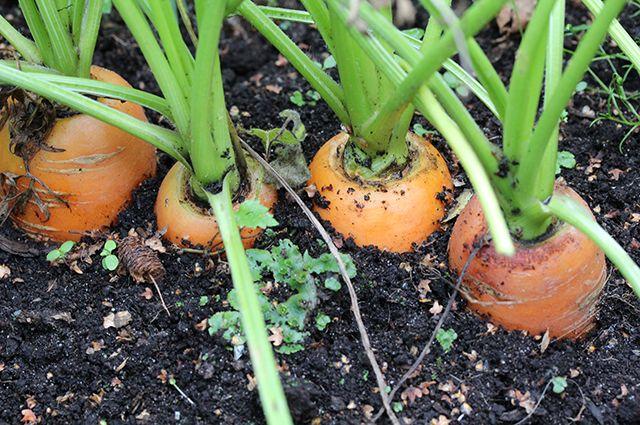
When thinning carrots, it's recommended to retain the strongest shoots and remove weak or pale ones. Removed plants should be destroyed or buried to prevent the carrot scent from attracting pests. Place them in compost, topped with soil or sawdust, which will help mask the aroma and distract carrot flies.
Pre- and post-watering of the beds should be done only with warm water. The temperature should be around 19°C, and the amount should be approximately 2.5 liters per square meter of plantings.
Thinning carrots are combined with weedingIt's important not only to remove excess root vegetables but also to clear the beds of weeds. Their roots interfere with growth, deplete the soil, shade the sprouts, and distort the carrots' shape.
Selecting time and weather
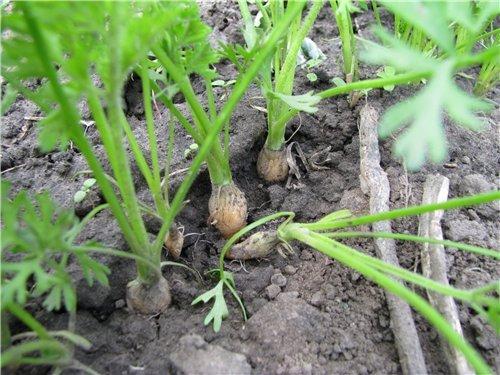
When growing carrots outdoors, it's important to choose the right time and optimal conditions. Factors that will positively impact subsequent root development include:
- high cloud cover;
- absence of heat;
- protection from direct sunlight.
You can choose a suitable day for thinning by consulting the lunar calendar. It is compiled annually and contains information on the best days for thinning.
Tools
To thin carrots quickly and efficiently, you need to use the right tools:
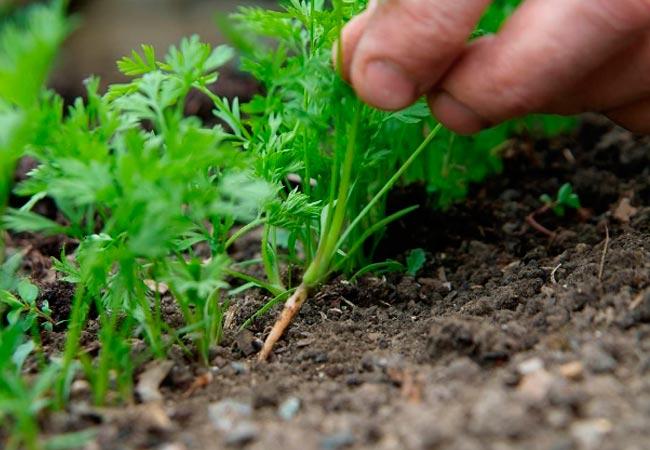
- Regular or garden tweezers are ideal for thinning. They ensure a high-quality process and help remove even the smallest leaves.
- Thinner plantings that aren't too dense can be done with scissors. They significantly speed up the process and allow you to prune several shoots at once.
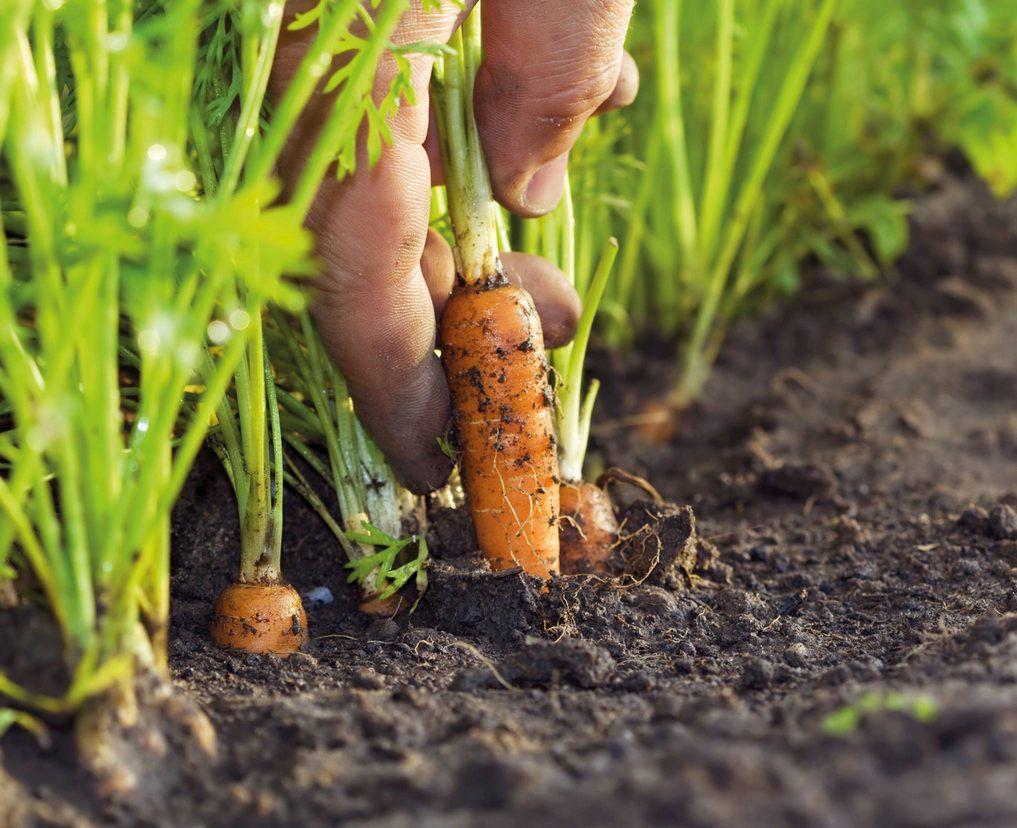
- You can thin carrots by hand. However, this method will take longer, and your fingers won't allow you to remove small shoots with precision.
Take a look Also
Soil preparation
The soil in the beds should be prepared for thinning. The soil should be thoroughly moistened so that the water softens it. This will help remove the sprouts more effectively while preserving the neighboring plants.
Carefully pull strictly vertically
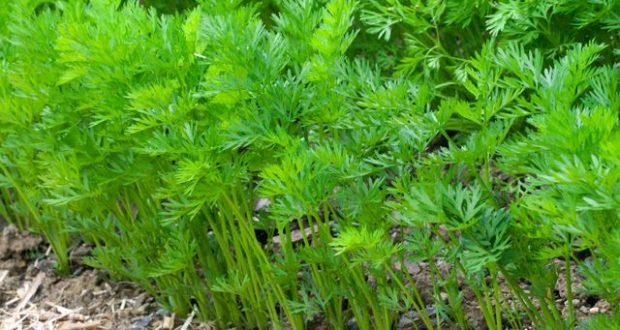
Proper thinning technique involves pulling the plant upward. Roots that lean sideways can damage the fine roots of neighboring shoots, negatively impacting future growth. Breaking these roots can trigger the growth of new lateral shoots, which in turn can deform the carrots, reducing their aesthetic appeal.
Tamping at the end
After thinning, it's important to restore the loose soil to its original structure. However, don't compact the soil with tools; it's much better to water the beds. Wet soil will become heavier and will settle naturally. If the beds remain too loose, you can gently compact them by hand and dig up the spaces between the rows.
Answers to questions
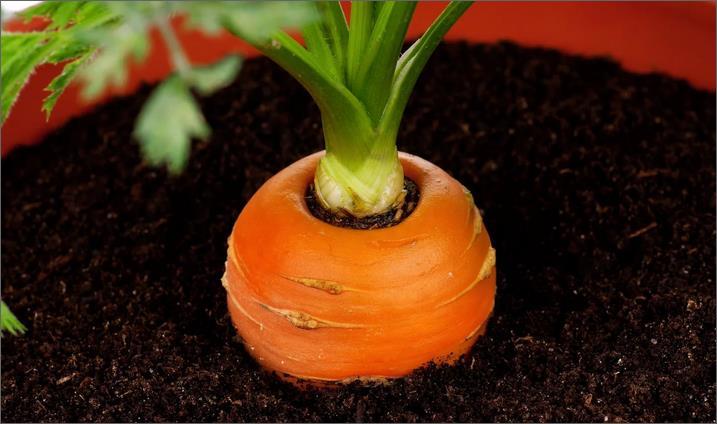
Can carrots be replanted after thinning? No, you shouldn't, as the plants pulled out of the soil will fail to re-establish themselves or will produce a small, poor-quality harvest. The roots removed during the second thinning stage are a few centimeters in size, orange in color, and suitable for culinary use.
Do fodder carrots need to be thinned? If the seedlings intended for livestock feeding have grown densely, thinning them is not necessary. Simply harvest the larger root crops as they grow, gradually making room for the remaining ones to develop.
Is it possible to trim carrot leaves with scissors without removing the underground part? This method is not recommended for very dense plants.
A large number of remaining roots begin to rot and become a breeding ground for the development of various diseases that can affect nearby root crops.
How can I protect my seedlings from carrot fly? To prevent worms from appearing on carrots, I recommend planting onions, marigolds, or pot marigolds near the seedlings. Tobacco dust, mustard powder, ground pepper, or a decoction of onion peels, zest, and wormwood will help eliminate the pest. I also recommend avoiding daily heavy watering and sowing carrot seeds in the shade.
Related posts:
 Carrot care guidelines for outdoor cultivation to ensure a good harvest
 Is it possible to plant carrots in July or at the end of June? What are the best days and care instructions?
 How to control carrot flies with medications and folk remedies
 Timing and rules for planting carrots in winter, which variety is best to choose
 How to plant carrot seeds in open ground, timing and sowing methods
 What is the best way to feed carrots? Fertilizers and preparations, using folk remedies.
 Why didn't the carrots sprout and what should I do? How to plant them so they sprout quickly?
 50 Best Carrot Varieties with Descriptions and Characteristics