
- Fusarium and Verticillium wilt of cucumbers: what is it?
- Verticillium wilt
- Fusarium
- Who is the causative agent of the disease?
- Causes of cucumber infection
- Signs of the disease
- What is the danger of infection for vegetable crops?
- How to save plants: methods and remedies for treating cucumbers
- Biological agents
- Chemicals
- Folk remedies for fighting
- The nuances of treating cucumbers in greenhouse conditions
- Prevention of the occurrence of the disease
- Proper care and timely processing
- We select varieties resistant to fusarium and verticillium wilt
- Conclusion
Farmers who grow cucumbers annually often encounter fusarium wilt on their plants. To quickly get rid of this disease, it's important to familiarize yourself with the basic methods for treating fusarium wilt in cucumbers.
Fusarium and Verticillium wilt of cucumbers: what is it?
Before you begin treating cucumbers, you need to understand the characteristic features of verticillium wilt and fusarium wilt.
Verticillium wilt
Verticillium wilt is a fungal disease that affects not only cucumbers but also other vegetable crops. The disease occurs in all climates, but it most often develops in southern regions.
Verticillium wilt progresses differently, depending on the age of the growing bushes. Young branches infected with verticillium wilt begin to turn yellow and dry out. On mature bushes, small yellow or brown spots initially appear, which eventually lead to the branches drying out. The main difference between this disease and fusarium is that on diseased plants, signs of wilting may appear only on one of the branches.
Fusarium
Fusarium wilt is a common infectious disease that affects both wild and cultivated plants. Both young seedlings and mature plants can be affected. However, wilt most often develops in weakened vegetables that have recently been transplanted.
Plants infected with the disease experience impaired root function and rot, leading to the drying out and death of the plants.
Who is the causative agent of the disease?
Many people who encounter fusarium wilt are interested in the vector and causative agent of this disease. The disease is caused by fungi belonging to the genus Furasia. Distinguishing features of fusarium pathogens include their ability to easily tolerate low temperatures and cope with adverse climatic conditions.
Fungi are activated by high humidity and temperatures around 25-30 degrees above zero. The pathogen penetrates the root system from the topsoil and gradually infects the cucumber plant.
Causes of cucumber infection
To understand why bushes are wilting, you need to familiarize yourself with the main causes of fusarium:
- Fungal spore infestation. The main cause of fusarium wilt is infection of the root system by fungal spores. When the fungus infects the plant, the plant becomes covered in yellow spots, and its leaves curl and dry out.
- Overheating of growing plants. Another cause of wilted foliage and the development of infectious diseases is overheating of cucumber seedlings. Signs of overheating appear if vegetables are grown at temperatures above 35 degrees Celsius (95 degrees Fahrenheit). Symptoms of fusarium also appear when the soil warms up to 25 degrees Celsius (77 degrees Fahrenheit).
- Increased soil moisture. Fusarium wilt develops when the soil in which the vegetable plant is grown is very moist. This moisture level is most often increased by frequent watering or prolonged rainfall.
- Infected seeds. Some gardeners plant undisinfected seeds. This results in plants becoming infected with fusarium wilt immediately after planting.
Signs of the disease
Before starting treatment, you need to understand the main symptoms of Fusarium wilt of seedlings:
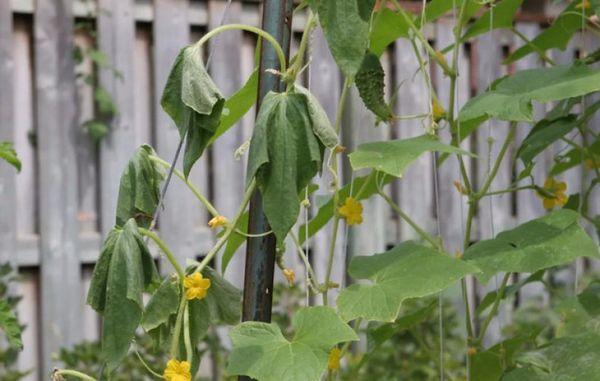
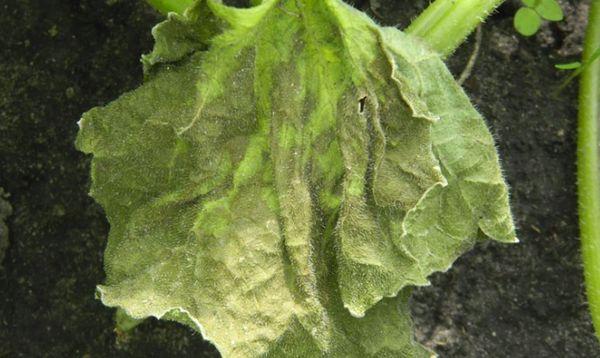
- Foliage discoloration. The leaves of diseased bushes turn brown. Yellowish spots appear on their surface, gradually increasing in size.
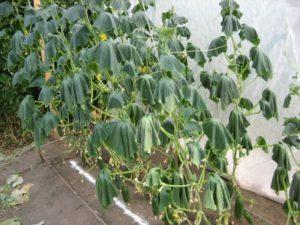
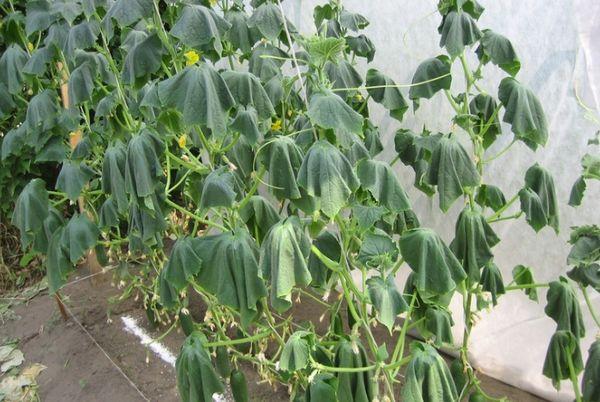
- Leaf deformation. If left untreated, the edges of yellowed leaves will begin to dry out and curl.
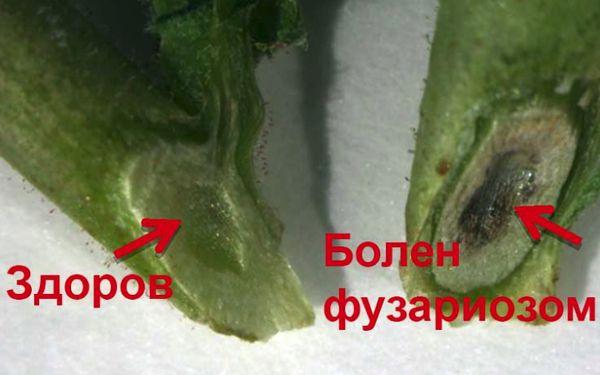
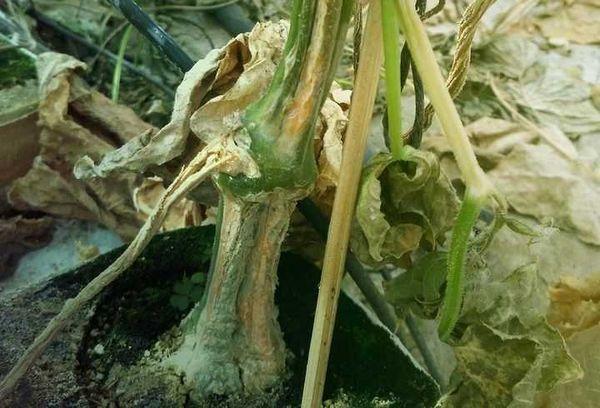
- Stem darkening. Dark stripes appear on the surface of cucumber plant stems. Gradually, cracks form in these areas, around which a pinkish coating can be seen. Fungal spores develop in the cracks and are carried by the wind to neighboring plants.
- Root system deformation. In the initial stages of fusarium wilt, the root collar darkens and takes on a burgundy color. Over time, it becomes more brittle and begins to rot.
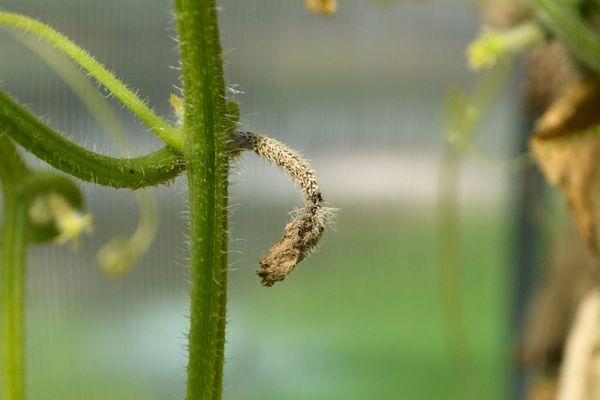
- Peduncle twisting. Eventually, fusarium attacks the cucumber peduncle, which stops growing and twists after infection.
What is the danger of infection for vegetable crops?
Some gardeners believe that fusarium wilt is harmless to cucumbers, but this is not true. If left untreated, infected plants stop growing, their leaves turn yellow, and their stems begin to wilt. This ultimately leads to the death of the plants.
How to save plants: methods and remedies for treating cucumbers
There are various ways to combat fusarium wilt on cucumbers. It's important to understand in advance what exactly is used to eliminate the symptoms of wilting.
Biological agents
Gardeners most often use biological products, which are considered the most effective against late blight. The most well-known anti-wilt treatments include:
- Trichodermin. A biological product available in the form of soluble granules. Before spraying plants, Trichodermin is dissolved in warm water. One liter of the mixture is used for each infected plant.
- Fitosporin. The product is produced as a powder mixture that must be dissolved in water. Among the advantages of Fitosporin is its long shelf life of 4-5 years. Bushes are treated with the biological product 3-4 times per month.
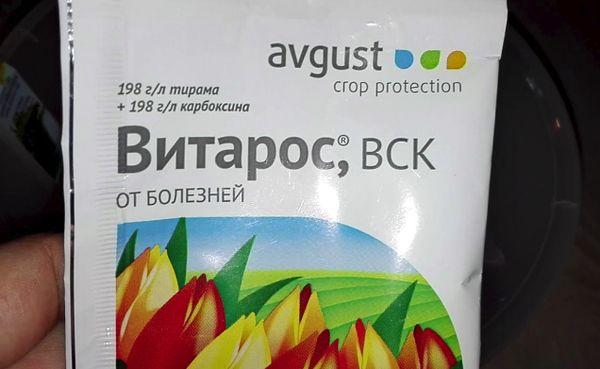
- Vitaros. A fairly popular product used for watering diseased seedlings. Vitaros contains components that destroy fusarium pathogens and prevent further progression of the disease.
Chemicals
Before flowering and fruiting, cucumbers can be treated with chemicals. Several products are most commonly used to combat fusarium:
- Fundazol is an effective fungicide used to treat and prevent wilting. To make a solution, mix 200 milliliters of Fundazol with ten liters of water. This is enough to treat 10-15 mature cucumber plants.
- "Maxim" is a contact fungicide solution used for treating potatoes and cucumbers. Before applying, mix "Maxim" with water at a ratio of one part to ten parts. Spray 2-3 times a week.
- Gliocladin. A chemical fungicide used to combat fungal diseases. To make your own spray solution, mix 150 milliliters of Gliocladin with 5-7 liters of water.

Folk remedies for fighting
Many vegetable growers refuse to use biological or chemical preparations and prefer to use folk remedies instead:
- A milk-soap solution. It's used to combat fusarium and other fungal diseases. To prepare the mixture, mix 50 grams of grated laundry soap with iodine and 200 milliliters of milk. Apply the resulting solution to the stems and leaves of diseased plants.
- Wood ash. A medicinal mixture made from wood ash helps eliminate fusarium wilt within 2-3 weeks. To prepare it, add 350 grams of ash and 50 milliliters of liquid soap to two liters of water. Spray the bushes with the mixture once a week.
- Onion peels. Pour 3-4 cups of dried onion peels into a bucket of water and boil the liquid for 40-45 minutes. Then strain the mixture through cheesecloth and cool.
The nuances of treating cucumbers in greenhouse conditions
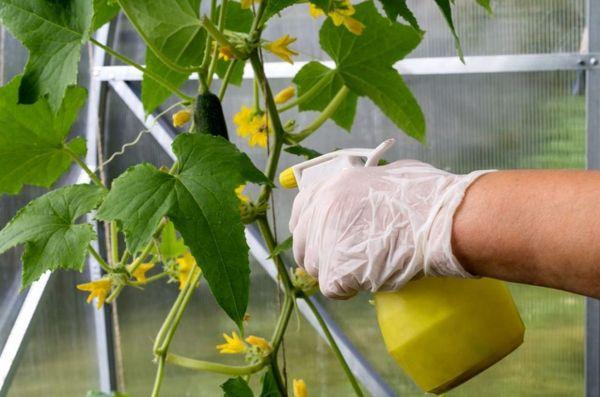
Vegetable growers sometimes encounter fusarium wilt when growing cucumbers in greenhouses. The following folk remedies are used in greenhouse conditions:
- Milk whey. Plants infected with fusarium wilt can be treated with milk whey. It is heated to 25-30 degrees Celsius and then mixed with water in a ratio of one part to seven parts.
- Sulfate mixture. When leaves begin to curl due to fusarium, copper sulfate is used. It is mixed with crushed hard soap and dissolved in warm water.
- Baking soda solution. This remedy helps restore rotted areas of cucumbers. To make the solution, mix 8-9 liters of water with 75 grams of baking soda.
Prevention of the occurrence of the disease
To ensure that your seedling never gets sick with fusarium, you need to take preventative measures against the disease.
Proper care and timely processing
The main preventative measure that will protect cucumber seedlings from wilting is proper care.
When caring for vegetables, the following procedures are performed:
- Watering. Cucumbers should be watered regularly, at least three times a week. During summer droughts, the plants should be watered daily. Soil moistening is done late in the evening, after sunset.
- Fertilizing. Plants that are regularly fertilized are much less likely to suffer from fusarium wilt. Cucumbers are fertilized 3-4 times per season. Superphosphate, mullein, bird droppings, and potassium sulfate are commonly used.
- Loosening the soil. After each watering, weed and loosen the soil around the bushes. This helps the soil absorb moisture better and allow oxygen to pass through.
We select varieties resistant to fusarium and verticillium wilt
Experienced vegetable growers recommend planting cucumbers that are resistant to wilt. Resistant cucumber varieties include:
- Rowanberry. A tall vegetable that is resistant to fungal diseases and frost. Rowanberry can be grown both outdoors and in a greenhouse.
- Dunyasha. A productive variety with juicy, sweet fruits. Dunyasha's immune system reliably protects it from powdery mildew, fusarium, and mosaic.
- Sudar. A plant with compact bushes that don't require staking. Sudar is resistant to fusarium wilt and insect attacks.
Conclusion
Cucumber gardeners often lose their harvest due to wilting. To prevent this, it's important to understand the specifics of fusarium wilt prevention and choose an effective chemical treatment for this fungal disease.
Related posts:
 Description of the best varieties of Chinese cucumbers, planting, growing and care
 Description of unusual methods for planting and growing cucumbers
 How to make a cucumber trellis with your own hands from scrap materials
 How to properly plant cucumbers in open ground with seeds, and at what depth
 How to care for cucumbers in open ground from planting to harvesting
 Types of fungicides for cucumbers in a greenhouse and instructions for use
 Causes of anthracnose in cucumbers and treatment with folk remedies and medications
 Is it possible to soak treated cucumber seeds before planting and how to do it correctly?