
- General information about white cucumbers
- The main differences from green ones
- Main positive and negative properties
- The most popular varieties
- White Angel F1
- White Crunch F1
- White Italian (Bianco Lungo)
- Squirrel F1
- Staff Captain F1
- White sugar F1
- Martini F1
- Chinese white
- Snow leopard
- Snow White
- Bride
- Bidigo-Lungo
- The intricacies of growing white cucumbers
- Soil preparation
- Choosing a location
- Preparation of planting material
- Planting technology
- Nuances of crop care
- Weeding
- Topping
- Top dressing
- Watering
- Protection from diseases and pests
- Harvesting and storage of crops
- Feedback from our readers
It's hard to imagine cucumbers being any color other than green. But breeding advances, and white cucumber varieties are now available on the market. Although growing these varieties is quite unusual. Because of their skin color, many gardeners avoid these varieties. However, the taste of white-fruited hybrids isn't much different from regular ones.
General information about white cucumbers
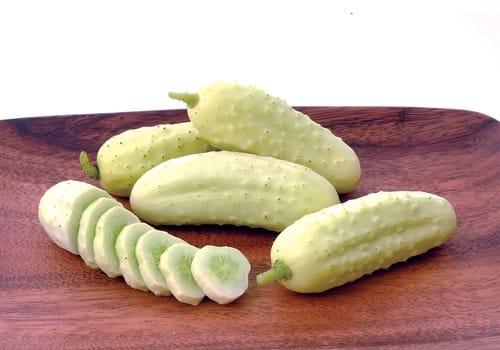
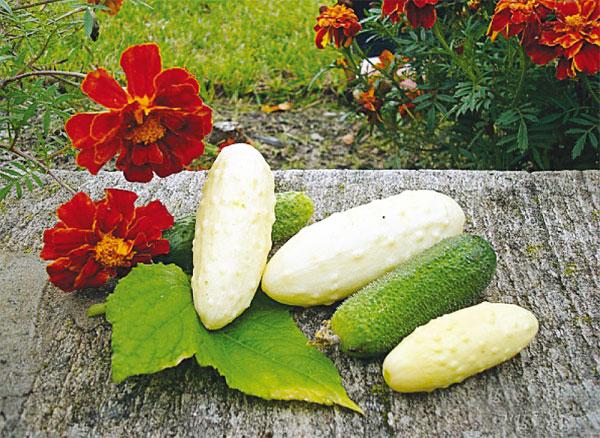
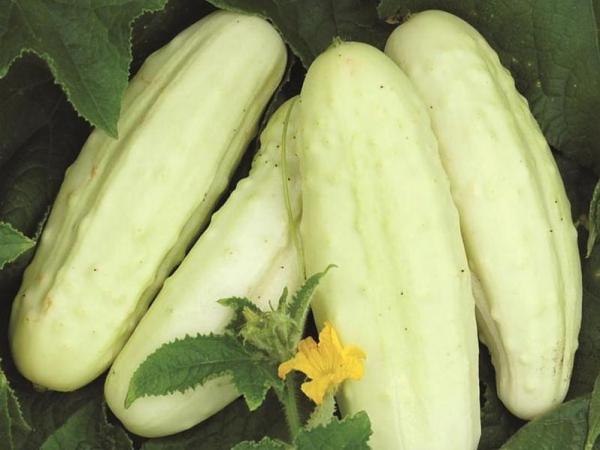
White cucumbers are characterized by a white skin and fruit. These varieties haven't yet become popular, and seeds are not readily available in stores. The first white-fruited variety was bred in the 1960s and became especially popular in Central Asia. These hybrids have numerous advantages that distinguish them from green varieties.
The main differences from green ones
The most important difference is the fruit's color. White varieties have a nearly white skin. Some varieties have a slightly greenish tint near the stem. Another difference is their relative drought tolerance. While regular cucumber varieties require daily watering, white cucumbers do not. This quality makes them suitable for growing in the garden, and even if frequent trips to water the beds aren't possible, the harvest will still be there.
Main positive and negative properties
Positive characteristics of white-fruited varieties:
- Unusual shade of fruits.
- Drought resistance.
- Ability to withstand severe cold.
- Unpretentious in planting and care.
- Productivity.
- Cucumbers can be stored for a long time after picking.
- Having immunity to diseases.
No significant disadvantages have been found in such varieties. The only thing is, it's best to pick cucumbers when they're small. The longer they're left in the garden, the worse the flavor becomes. The skin hardens, and the flesh becomes less juicy.
The most popular varieties
There aren't as many white cucumber varieties as green ones. But even among them, you can find some worthy ones for planting in your garden.
White Angel F1
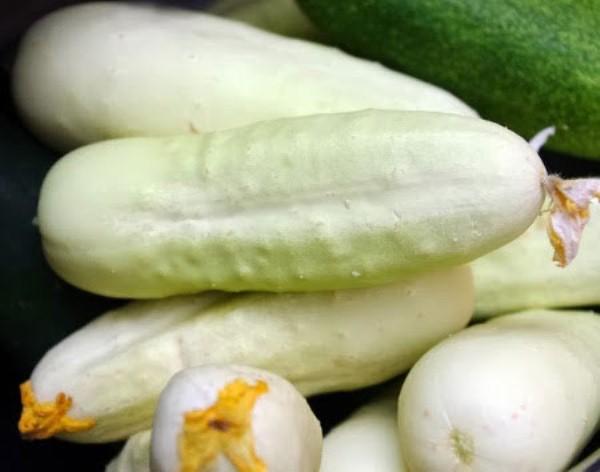
A variety with white skin and small spines. The main advantage of the White Angel hybrid is that the fruits never taste bitter. The yield is high. The variety is suitable for pickling for the winter and eating fresh. It can be grown both in a greenhouse and in the open field.

White Crunch F1
This hybrid is early maturing, with fruits ripening 45-50 days after germination. The inflorescences are predominantly female. The cucumbers have smooth skin, reach a length of up to 17 cm, and weigh approximately 180 g. The fruits are juicy and crisp.
White Italian (Bianco Lungo)
This variety was developed by Italian breeders. The fruits are long, 15-25 cm. The skin is white-green, thin, and thornless. The flesh is juicy, without bitterness.
Squirrel F1
An early-ripening hybrid. The inflorescences are female. The cucumbers are oval-shaped. The skin is milky-green, with a few spines. The fruits are small, 9-13 cm long.
Staff Captain F1
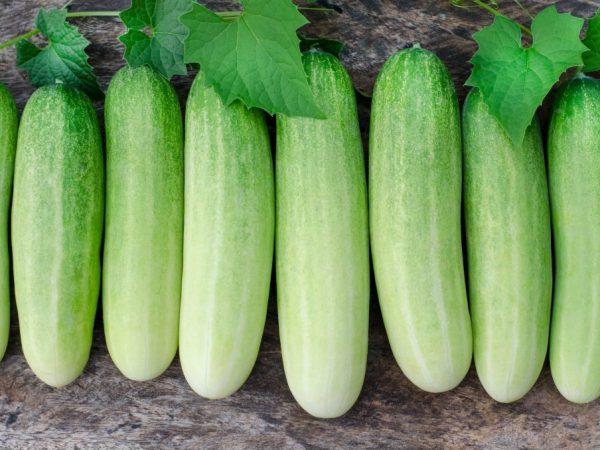
A mid-early hybrid with cucumbers. It takes 40-50 days from planting to fruiting. The inflorescences are pollinated by bees. The fruits are elongated and small in diameter. The cucumbers are 30-35 cm long. The skin is white-green, covered with thick spines.
White sugar F1
A mid-early hybrid with gherkins. The cucumbers are milky-green in color, with a spiky skin. They are small in size, 8-13 cm long. The flesh has a delicate flavor and a pleasant cucumber aroma.
Martini F1
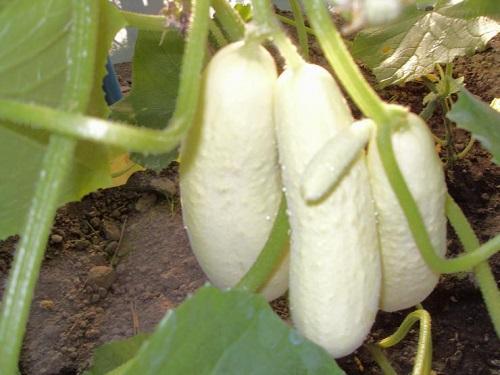
The skin is yellowish with a green tint. The cucumbers are small, 7-14 cm long, and oval-shaped. There is no bitter taste in the flesh, even if overripe.
Chinese white
A variety from China. The cucumbers are 20-25 cm long. The skin is white and covered with spines.
Snow leopard
The skin is milky, the fruits are about 20 cm long. The flesh is juicy, with no noticeable bitterness. A productive variety.
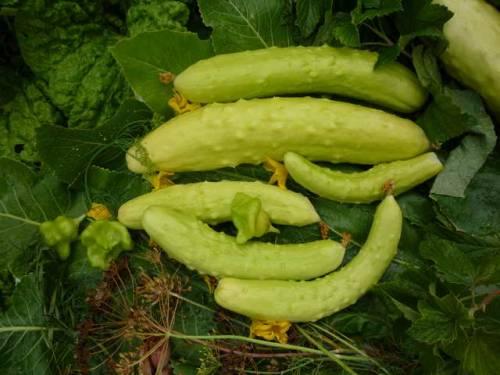
Snow White
It is characterized by its undemanding nature in terms of climate change. The cucumbers are oval-shaped and elongated. The hybrid is considered an early ripening variety.
Bride
Among the white-fruited hybrids, this is the most demanding and capricious. It requires constant fertilization. Growing a good harvest can be difficult.
Bidigo-Lungo
A variety intended for greenhouse cultivation. The cucumbers are small and oval. Fruiting begins 50 days after sowing.
The intricacies of growing white cucumbers
Growing white cucumbers is similar to any other variety. Paying more attention to soil preparation before planting will help them produce better results.
Soil preparation
The soil should be prepared for planting 2-3 weeks in advance. The soil is dug to a depth of 15-20 cm, and all weeds are removed. Manure is added and the soil is dug again. The soil should be left undisturbed for several weeks.
Then, create the beds using any conventional method. Seedlings are planted closer to May, once the weather warms up. You don't have to prepare the soil, but taking the time will help the seedlings grow better and produce a larger harvest.

Choosing a location
Cucumbers prefer to grow in open, sunny areas. Planting seedlings in shade or partial shade is not recommended.The bushes will not receive enough sunlight, which will negatively impact the yield.
Preparation of planting material
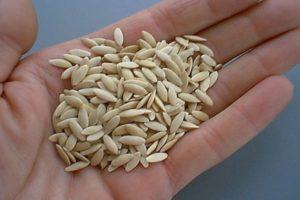
Before planting outdoors, cucumbers need to be hardened off. To do this, place the seedlings in the boxes outside. The first time, the seedlings are left outside for 20 minutes. Gradually increase the time until the seedlings have been outside for 2 hours.
After hardening, cucumbers will have less difficulty adapting to new outdoor conditions.
After planting, it's recommended to cover the beds overnight. Frosts in May are common in many regions, and cucumbers aren't the most frost-hardy crop.

Planting technology
Cucumbers are planted outdoors in early May. If the spring is too cold, it's best to delay planting until mid-May.
The process of planting seedlings:
- In the beds, make holes 20 cm deep and 30 cm wide.
- The distance between holes is left at 50 cm.
- The seedlings are planted together with the root ball they were growing in when they were in containers. If the seedlings were growing in peat pots, they are planted together with them.
- Fill the hole with soil and compact the soil lightly.
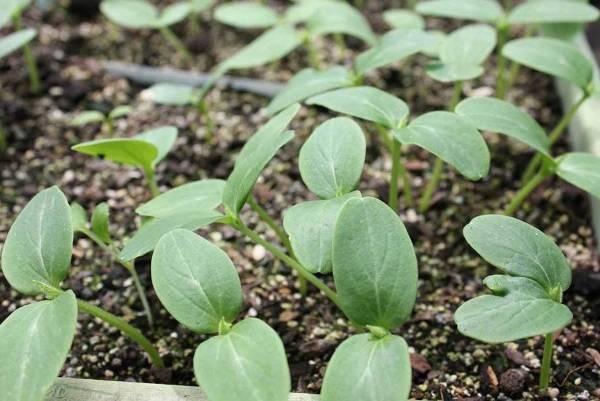
At the end of planting, water the beds generously with warm water.
Nuances of crop care
One of the advantages of growing white-fruited varieties is their low maintenance. Green-fruited varieties require more effort to produce a harvest.
Weeding
Seedling beds should be weeded several times a week before watering. Mature plants don't require any soil loosening.
When weeding, weeds should be pulled out immediately so that they do not interfere with the growth of seedlings.
Topping
Pinch cucumbers Pruning begins before flowering. The bushes should be at least 25 cm tall. The top of the bush, containing six leaves, is cut off. The cut should be made with sharp scissors that do not leave creases. The three strongest shoots are left on the bush; the rest are trimmed off. Diseased and damaged stems and leaves can also be removed during pinching.
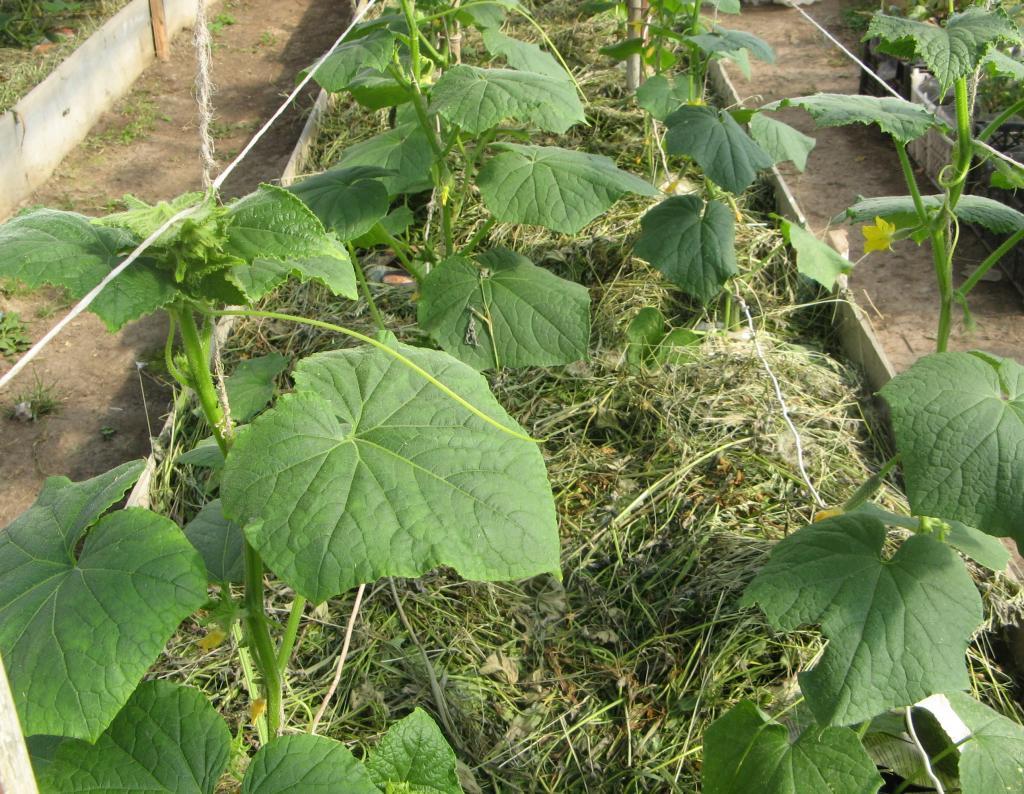
After the procedure, high trellises are installed next to the bushes so that the bushes can easily attach their tendrils to them.
Top dressing
To increase yield, cucumbers need to be fertilized. The choice of fertilizer depends on the growing season. During the first half of the season, the beds are watered with nitrogen-containing fertilizers to encourage active growth of the seedlings.
After the bushes begin to set fruit, potassium and phosphorus are added to the soil. Organic fertilizers are also essential. For example, you can make an infusion of weeds and yeast. To do this, pour chopped weeds with water, add a packet of yeast, and place in the sun. After three days, the fertilizer will be ready. Dilute it with water before watering.


It's helpful to sprinkle the beds with wood ash and bone meal. Once a month, the beds can be watered with chicken manure diluted in water.
Watering
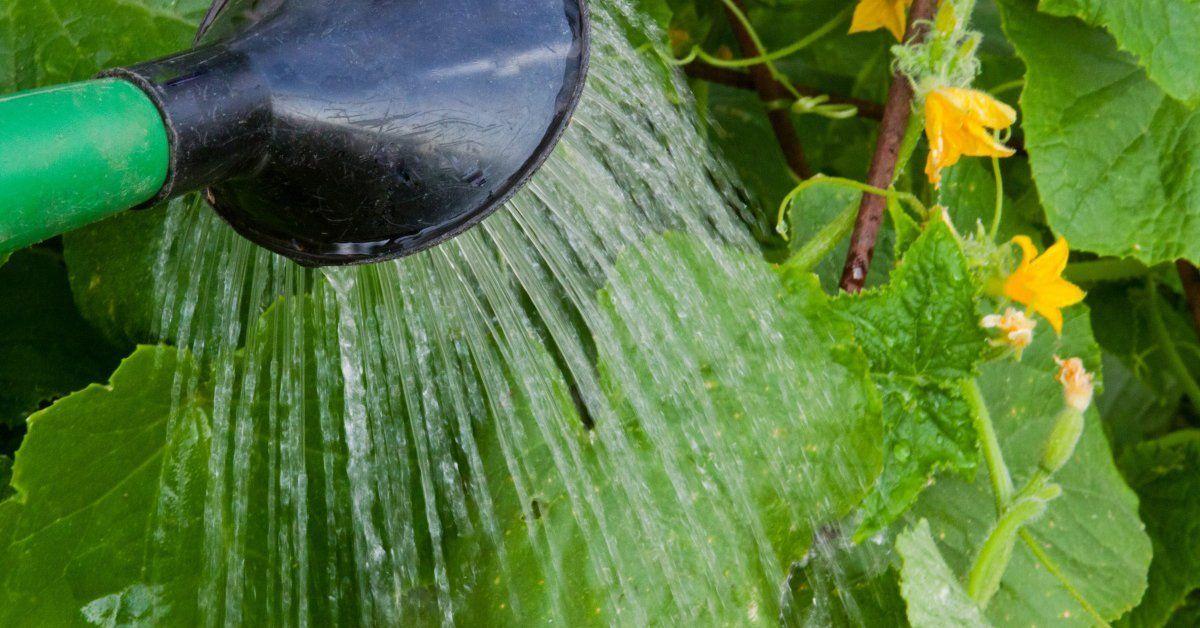
Water the beds daily. If this is not possible, then at least 3-4 times a week, but thoroughly. Use sun-warmed water for irrigation.
Don't water your garden beds with ice-cold water. This type of irrigation creates a host of problems, potentially leading to the complete loss of your harvest. Irrigating with ice-cold water leads to the development of fungal diseases, most of which are untreatable.
Protection from diseases and pests
Prevention of diseases and insects on cucumbers:
- Do not plant bushes close to each other.
- Regularly remove weeds from the area.
- Do not water the beds with cold water.
- Apply fertilizer regularly.
- After planting, treat the seedlings with Bordeaux mixture.
If you follow all these measures, you won’t have to fight diseases. Another tip is to monitor the appearance of your bushes. If leaves start to turn yellow, fall off, or other symptoms appear, begin treatment immediately.
Harvesting and storage of crops
It's best to harvest the cucumbers immediately. If you delay picking them for too long, the skins will become hard and the flavor will be less juicy. One of the advantages of white-fruited varieties is their long shelf life after harvest. After harvesting, cucumbers should be refrigerated, where they can be stored for several weeks.
Feedback from our readers
Oksana, 32: "On a friend's advice, I tried planting white cucumbers. At first, I was skeptical. I chose the White Angel variety. The cucumbers started appearing quickly after planting. When I tried my first ripe cucumber, I regretted not planting these varieties sooner. The cucumbers are delicious and crispy. I'll continue to try other varieties."
Valery, 39: "I've tried several white-fruited cucumber hybrids. But the best is Belka. Cucumbers are starting to appear in droves. The flesh is never bitter, always juicy and delicious. They also taste great when pickled."
Related posts:
 Description of the best varieties of Chinese cucumbers, planting, growing and care
 Description of the best varieties of bee-pollinated cucumbers, rules for their formation and care
 Description of unusual methods for planting and growing cucumbers
 TOP 30 best varieties of cold-resistant cucumbers with descriptions and characteristics
 How and with what to cover cucumbers from the cold in open ground, what to do for protection
 How to prepare pickled cucumbers in adjika for the winter without sterilization and Caucasian style: recipes
 How to plant cucumbers in open ground under film: timing and cultivation technology
 35 Best Powdery Mildew-Resistant Cucumber Varieties with Descriptions