
Many gardeners are familiar with tobacco dust, and its use on cucumbers is one of the many uses of this substance. More and more amateur vegetable growers are moving away from chemical fertilizers, opting for organic alternatives such as manure, ash, and tobacco dust.
The heat-loving tobacco plant has long been cultivated in large quantities. It is processed in factories, and the resulting shredded stems and leaves are used to produce a fine powder known as tobacco dust. The advantage of this product is that it contains no weed seeds.
Dust as fertilizer
Plants require a variety of micronutrients and nutrients, all found in tobacco dust: 2-5% nitrogen, 1-3% potassium, up to 2% phosphorus, 1% nicotine, magnesium, and other beneficial components. Tobacco dust is most often used for cucumbers, mixed with other fertilizers such as manure, urea, and ash. These mixtures are easily absorbed by cucumber roots.

When using the drug in its pure form, follow these recommendations:
- Apply the powder when digging the soil in spring and autumn - this improves the quality of the fruit and increases the yield by up to 40%;
- dust should be sprinkled at the rate of 200-400 g per 100 m² (100 m²);
- Use tobacco dust as a primary fertilizer no more than once every 3 years at a dosage of 40 g/m².
When planting cucumbers in pots as seedlings, mix tobacco powder with equal parts of turf and sand to prepare the soil. Nicotine, an active ingredient for killing and preventing insects, is of greater interest to plants.
Pest control
Pests that are dangerous to cucumbers can be successfully exterminated using tobacco dust.
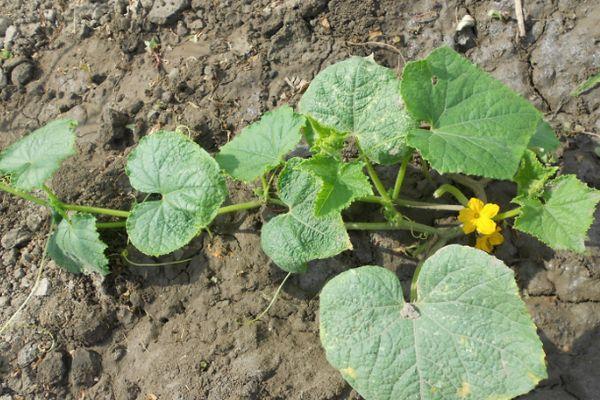
Here is an incomplete list of methods of influence:
- The melon aphid is a sap-sucking insect up to 1.5 mm long. It damages flowers, ovaries, and the undersides of cucumbers grown in greenhouses and open ground. Fruiting ceases, and young plants die. Recipe for an infusion: pour 400 g of tobacco powder into a bucket of boiling water, wrap it in a blanket, and strain after 24 hours. A decoction is made using the same proportions, but the heat is maintained over a fire for an hour. Apply the infusion to both sides of the cucumber leaves; repeat the process after 7-10 days.
- Whiteflies damage greenhouse cucumbers by depleting the plants of their sap, which ultimately stops flowering. The method of control is fumigation with a tobacco mixture: close the transoms and burn rotten wood chips on a brazier placed in a safe place inside the greenhouse. Sprinkle dust on top to a depth of 5-7 cm, go outside, and close the door. Carry out the treatment in the evening and do not open the greenhouse until morning. For larger areas, use several braziers filled with tobacco.
- Spider mites prefer warmth and dry conditions, so they appear when humidity levels in the greenhouse drop. The insect sucks the sap from the leaves, leaving tiny punctures. Treat the affected bushes with a decoction or infusion prepared according to the recipe above. The mite eggs will not disappear after the first spray; a second treatment is performed after 5-7 days. Hot pepper can be added to the solution.
- The sprout fly overwinters in plant debris and becomes active in May, laying eggs that hatch into larvae that attack the stems of cucumber plants, killing the plants. To avoid this, dig up any tobacco dust scattered on the ground in the spring and water the soil with a hot tobacco infusion before planting. As a preventative measure, avoid leaving plant debris and tops in the beds; bury them deep in the soil.
- Ants and slugs—the former destroy the root system of bushes, while the latter eat the foliage. In both cases, get rid of these unwanted neighbors by sprinkling the soil with nicotine dust; for greater effectiveness, mix it with ash or lime. Repeat this procedure every evening until the pests disappear completely. The recommended application rate is 20-25 g/m².
- Cucumber midges are parasites measuring 3-5 mm in size that lay eggs on the soil surface. They are difficult to detect on the ground. The larvae migrate to the plants and feed on the sap, depleting the cucumbers and infecting them with infectious diseases. To prevent problems, apply a powdered solution to the soil in the spring when digging, at a rate of 1 cup per 1 m². Before planting seedlings, water the soil with a hot decoction.

There are three ways to spread tobacco insecticide: dusting with powder, spraying with decoction, and fumigation with smoke.

The medication should be stored in a sealed container for up to 2 years. Failure to do so will reduce the shelf life to 12 months.
Rules for working with the drug
Tobacco contains a toxic substance, nicotine, which causes allergic reactions when inhaled and irritation when it comes into contact with the skin.

Therefore, it is necessary to follow safety precautions when handling insecticides:
- pollination should be carried out in windless weather without bright sun;
- Use a respirator or a cotton-gauze bandage to protect your respiratory system: inhaling nicotine dust is equivalent to smoking a cigarette;
- use rubber gloves and safety glasses when working;
- Do not fumigate greenhouse cucumbers while outside, as smoke inhalation will cause poisoning.

The insecticide has no harmful effect on the fruit—it can be used as food after rinsing. If dust comes into contact with the mucous membranes of the mouth or eyes, wash the affected area with clean water and soap.
Related posts:
 The best eggplant varieties for growing in a polycarbonate greenhouse: planting and care
 Is it possible to soak treated cucumber seeds before planting and how to do it correctly?
 How to control carrot flies with medications and folk remedies
 How to control onion flies using natural and chemical methods
 Methods for planting and propagating cherries at home
 How to properly plant peas in a greenhouse and open ground
 The health benefits and contraindications of black currants
 The best grape varieties for growing in the Urals, planting and care rules in summer
This product works well against many insects, but it's not enough to fertilize the soil. I also use a bioactivator.BioGrow" It is easy to apply and costs very little.