
- Pre-landing work
- Choosing the best variety for the Urals
- By ripening time
- Greenhouses
- For open areas
- The most delicious
- High-yielding crops
- Varieties with stable immunity
- Germinating seeds
- Preparing the soil and beds
- Optimal timing and technology for planting cucumbers
- In a greenhouse and in a hotbed
- In open ground
- How to care for cucumber bushes
- Regularity of irrigation
- Top dressing
- Loosening the soil
- Tying and shaping
- Pest control
- Stimulating pollination
- Tips and recommendations from gardeners
- Conclusion
The Urals are considered one of the most difficult regions for growing cucumbers, and therefore some Ural vegetable growers avoid planting them. However, in recent decades, plant breeders have developed many varieties of vegetables suitable for growing in this region. Therefore, before planting, it is recommended to familiarize yourself with the best cucumber varieties for the Urals.
Pre-landing work
Before planting cucumbers, pre-sowing work is carried out, which will improve the growth of the planted vegetables.
Choosing the best variety for the Urals
It's recommended to familiarize yourself with the descriptions of cucumber varieties that can be grown in the Southern Urals in advance. This will help you choose the best variety for the region.
By ripening time
It's common knowledge that all vegetables vary in their ripening times. Popular early-ripening cucumbers that can be grown in the Urals include:
- Amur. An early variety, the fruit ripens 35-45 days after planting. Amur's advantages include its tolerance to temperature fluctuations and moisture.
- Moscow Region. This vegetable is suitable for growing outdoors because it's frost-resistant. It doesn't require much light, so it can be planted in shaded areas of the garden.
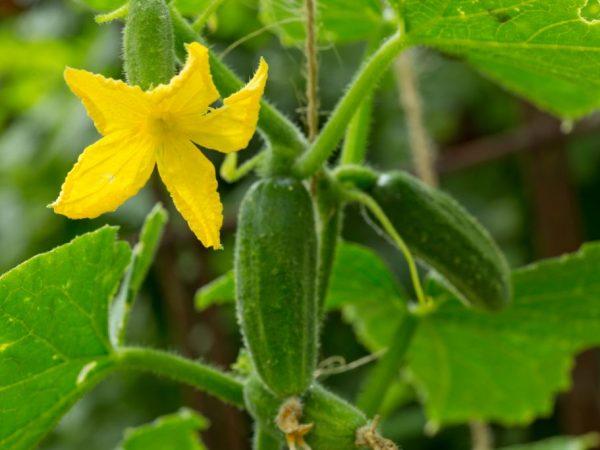
Among the cucumbers with medium ripening periods, the following stand out:
- Voyage. Despite its tolerance to low temperatures, gardeners recommend planting Voyage in a greenhouse. In greenhouse conditions, the harvest ripens in 50-55 days.
- Arina. A frost-resistant vegetable often grown in the Urals. One of the characteristics of this variety is that its fruits are best eaten fresh. They are not suitable for preparing winter preserves.
There are also late-ripening cucumbers that are popular among Ural vegetable growers:
- Hercules. Considered the latest-ripening vegetable, its fruits ripen within 70 days. It is recommended to grow Hercules in greenhouses for a higher yield.
- Klavdia. A variety with late-ripening fruits that ripen in two and a half months. Klavdia's advantages include its fruit's flavor, which lacks a bitter aftertaste.

Greenhouses
There are several varieties that grow best in greenhouse conditions at temperatures of 15-20 degrees. These include:
- Emelya. An early-ripening hybrid variety that ripens in 25-35 days. It doesn't tolerate low temperatures well and is therefore grown only in greenhouses. With proper care, each fruit will weigh 100-120 grams.
- Dynamite. Among the large-fruited Ural cucumbers, Dynamite stands out, with fruits weighing up to 150 grams. When grown outdoors, the yield decreases, so experienced gardeners recommend planting it in greenhouses.
- A friendly family. A mid-season plant suitable for growing indoors. The first ripe fruits appear on the bushes 40-50 days after sowing the seeds. The harvested fruit is used in fresh salads and preserves.
- Matilda. A hybrid cucumber with an early ripening season. Matilda's advantages include self-pollination and excellent taste. Under optimal greenhouse conditions, a single plant can yield over 10 kilograms.

For open areas
Not all gardeners have the opportunity to grow vegetables in greenhouses, so they have to grow them outdoors. The following varieties are suitable for this purpose:
- Nezhinsky. This vegetable is planted only in the garden, as it requires bees for pollination. Nezhinsky is considered a mid-season cucumber. The fruits are used for pickling, salting, and salads.
- A delicacy. It copes with nighttime temperature fluctuations and can therefore be planted outdoors. To better withstand frost, plant it in loose, fertile soil rich in nutrients.
- Pickling. A mid-season vegetable that ripens within a month and a half. Its distinctive feature is its large fruits, weighing 145-160 grams. The ripe harvest is used for winter preserves.

The most delicious
Many gardeners want to get the most delicious harvest. There are several varieties of cucumbers that offer excellent flavor:
- Vyaznikovsky. A high-yielding vegetable with tasty fruits weighing 150 grams. The plant is considered an early-ripening crop; cucumbers ripen two months after the first shoots emerge. One of the advantages of Vyaznikovsky is its adaptability to a variety of climatic conditions.
- Unstoppable. It was developed by Russian breeders in the mid-20th century for cultivation in harsh climates. 40-55 days after planting, the bushes bear oblong fruits that grow up to 12 centimeters long. They do not turn yellow after harvesting and are easy to transport.
- Izyashchny. An early-ripening cucumber recommended for planting outdoors. Izyashchny's fruits grow up to 14 centimeters and are elliptical in shape. The cucumbers are firm, crisp, and juicy. They are used in pickles and vegetable salads.

High-yielding crops
To get a larger harvest, it's important to plant the most productive varieties. These include:
- Pinocchio. This is the most popular, productive cucumber variety, suitable for growing in the Urals. Pinocchio fruits ripen very quickly, allowing them to be harvested in the first half of summer. They are added to salads and for winter pickling.
- Zozulya. Zozulya cucumbers are considered a high-yielding crop. Mature fruits grow to 20-35 centimeters and weigh approximately 200-220 grams. A single plant yields 10-15 kilograms of ripe cucumbers.
- Farmer. Those who love high-yielding vegetables often plant this variety in their gardens. It can be grown outdoors, but for increased yield, it's best to plant it in a greenhouse. Under favorable conditions, it yields over 15 kilograms of fruit per square meter.

Varieties with stable immunity
It's no secret that cucumbers are often susceptible to diseases, which can reduce yield. It's recommended to plant crops with strong immunity and disease resistance:
- Masha. An ultra-early hybrid plant resistant to many diseases. Its advantages include high yields, excellent taste, and low maintenance. The harvest is suitable for both canning and eating raw.
- Knyazhna. This plant is resistant to common diseases and adverse climatic conditions. Knyazhna's fruits are not very large, growing to only 6-7 centimeters. However, this does not affect the yield. Each bush yields 7-8 kilograms of cucumbers.
- Swallow. A medium-sized plant with stems reaching up to one and a half meters. Its good immunity allows it to be grown outdoors. Ripe fruit has a pleasant aroma, is crisp, and has no bitter aftertaste.
Germinating seeds
To speed up the emergence of the first seedlings, you'll need to pre-germinate the seeds. To do this, spread all the seeds on a natural fiber cloth. Then, water the cloth surface with warm water. When the cloth begins to dry, moisten it again.
Germination lasts 2-4 days until small sprouts begin to appear on the seeds.
Preparing the soil and beds
Before planting, prepare the soil for the vegetable. Sandy loam and loamy soils, rich in nutrients, are considered the most suitable for cucumbers. Two to three days before planting, add organic fertilizer containing manure, which contains phosphorus, calcium, potassium, and other nutrients. Apply 5-6 kilograms of fertilizer per square meter.
After applying fertilizers, the beds for growing cucumbers are marked out on the plot.

Optimal timing and technology for planting cucumbers
It is recommended to figure out in advance when to plant seeds for seedlings in 2025.
In a greenhouse and in a hotbed
People planning to grow vegetables in greenhouses don't know when to plant them. Before planting, it's important to determine the timing of sowing seeds and growing seedlings.
Seeds are planted in the first half of May or at the end of April. If the seedlings will be grown in a heated greenhouse, the seeds are planted 1-2 months earlier. Young seedlings are best transplanted to their permanent location in early June. However, for an early harvest, the timing can be shifted by 1-2 weeks.
Before planting, make shallow holes in the greenhouse where the seedlings will be planted. The distance between holes should be 30-35 centimeters.

In open ground
Determining the timing of sowing cucumbers outdoors is more difficult, as you'll need to consider the outside temperature. Cucumbers are considered heat-loving vegetables, so experienced gardeners recommend planting them when the soil warms to 8-10 degrees Celsius. Planting them in unheated soil is not recommended, as the seeds will germinate slowly in such conditions.
When planting cucumbers outdoors, make deeper holes to protect the root system from frost. The holes should be 10-12 centimeters deep. After planting, cover the beds with plastic film to protect against night frosts.
How to care for cucumber bushes
Growing cucumbers requires proper care. This will help ensure a bountiful harvest.

Regularity of irrigation
Cucumbers are a moisture-loving crop that requires periodic watering. Therefore, it's important to learn how to properly irrigate cucumber plants during cultivation.
In summer, the soil is moistened 2-3 times a week. On the hottest days, water daily. If the vegetable is grown in clay soil, the seedlings need less watering. Such soils retain moisture well and take longer to dry out. Watering should be done in the evening or morning, when it is not hot.
Top dressing
To improve cucumber yields, you'll need to fertilize them periodically. The first feeding is done a week and a half after planting the seedlings. Organic fertilizers such as cow manure, quail droppings, herbal infusion, and slurry are added to the soil.
The next time, add fertilizer after two and a half weeks. This time, mineral fertilizers are used. The bushes are fed with superphosphate, dry ash, ammonium nitrate, and potassium nitrate.
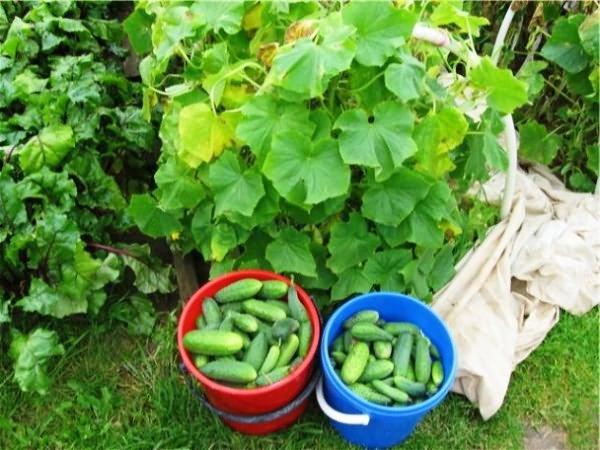
Loosening the soil
Timely soil loosening has a positive effect on vegetable yield. Gardeners recommend loosening the space between rows to a depth of 5-10 centimeters after watering and heavy rain to prevent the topsoil from forming a crust, which impairs moisture and air flow.
You don't need a hoe to loosen the soil. You can use a harrow or a regular rake instead. While loosening, hill up the bushes to encourage additional root development.
Tying and shaping
During bush formation, pinching is performed to improve yield. All long shoots except the central one are removed.
Tall cucumbers must be tied to additional supports. These can be simple metal or wooden stakes.

Pest control
Cucumber plants are often attacked by pests. To protect them, pre-treat them with a mixture of tomato tops, tobacco, and ash. Insecticides can also be used to prevent pests.
Stimulating pollination
When cucumbers begin to bloom, shake the bushes 1-2 times a day. This improves pollination and significantly increases the number of fruits set.
Tips and recommendations from gardeners
People growing cucumbers in the Urals should familiarize themselves with the recommendations and advice of experienced gardeners:
- It is necessary to plant cold-resistant varieties with strong immunity;
- Only self-pollinating vegetables are selected for planting in a greenhouse;
- When the temperature drops sharply, the beds are covered with protective film.

Conclusion
The Urals' climate makes it difficult to grow certain cucumber varieties. Therefore, before planting, it's important to familiarize yourself with the crops suitable for cultivation in this region.
Related posts:
 Description of the best varieties of Chinese cucumbers, planting, growing and care
 Description of unusual methods for planting and growing cucumbers
 Description and characteristics of the best seeds of pea varieties and types
 How to properly plant cucumber seedlings in a greenhouse and care instructions
 How to make a cucumber trellis with your own hands from scrap materials
 How to care for cucumbers in open ground from planting to harvesting
 How to properly plant cucumbers in open ground with seeds, and at what depth
 Description of blight-resistant tomato varieties for open ground and greenhouses
