
- Description and characteristics of the Courage F1 variety
- Pros and cons of cucumber
- Growing a crop
- Planting dates
- Choosing a location
- Preparing the beds and crops
- Planting diagram
- In open ground
- In the greenhouse
- Rules for caring for cucumbers
- Watering
- Top dressing
- Lighting
- Pest and disease control
- Harvesting and use of the crop
- Reviews from gardeners
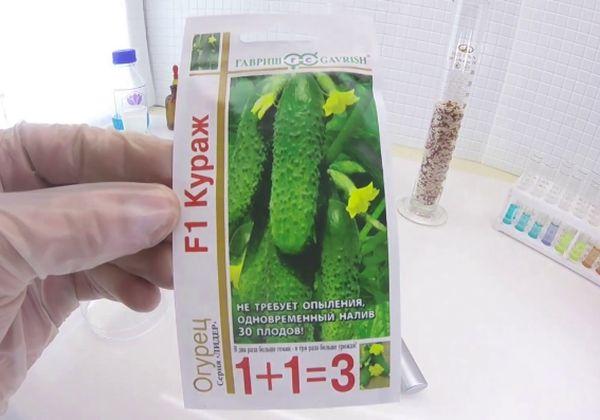
The popular Kurazh F1 cucumber variety is an early crop that can be grown in any way. This plant is especially suitable for beginning gardeners with no experience in vegetable gardening. Any beginner can easily grow this crop. Kurazh F1 has excellent germination, is rarely susceptible to disease, and produces a bountiful harvest with proper care.
Description and characteristics of the Courage F1 variety
A hybrid crop developed by Russian botanists at the Gavrish agrofirm in 2002. This variety can be grown in any way (greenhouse or in a garden bed). The plant bears fruit 39-45 days after sprouting. This early-ripening variety can be planted in any region. Kurazh F1 is an indeterminate, self-pollinating crop. This variety belongs to the same series as cucumbers Son-in-law.
Description: The plant reaches 3 meters in length, with ovaries forming in clusters. The fruits appear in the leaf axils near the main stem. A single plant can produce approximately 30 cucumbers. The yield is 10 kilograms per plant. It is recommended to train the plant into a single stem. The lower four leaves are removed to allow the plant to develop a tall stem and robust leaves. When the plant reaches 2 meters in height, the top is pinched.
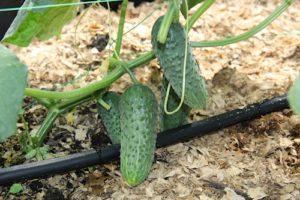
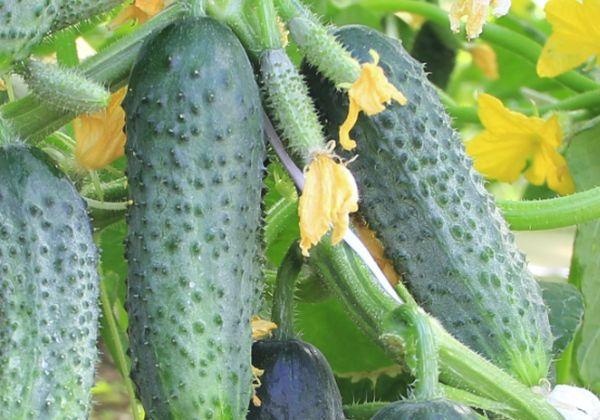
The cucumbers are oblong, dark green, with pinpoint spines and light stripes extending almost to the center. The cucumbers are 12-18 centimeters long and 3.5 centimeters in diameter. Each cucumber weighs between 100 and 140 grams. The flesh is tender, crisp, and slightly sweet. Cucumbers on the main stem are slightly larger than those on the side shoots.
In terms of flavor, Kurazh F1 is inferior to salad and bee-pollinated varieties. It's best to harvest the first ripe fruits as early as possible, otherwise the plant will slow down its growth. It's not recommended to leave cucumbers on the stem for too long. Regular harvesting encourages more fruit set.
Kurazh F1 adapts well to adverse weather conditions. In southern latitudes, cucumbers of this variety can be planted twice a season—in early (June) and mid-summer (July). The second planting guarantees a good harvest 35 days after the first shoots emerge. This versatile variety is grown for canning, pickling, or fresh consumption.
Pros and cons of cucumber
Advantages of the variety:
- resistance to powdery mildew and root rot;
- beautiful view;
- excellent taste characteristics;
- vegetables can be stored for two weeks after harvesting;
- fruits that are not picked in time do not grow;
- high yield.
Flaws:
- in case of drought or poor watering the fruits begin to taste bitter;
- demanding in care;
- the stem needs shaping;
- There are voids in the fruits.
Growing a crop
Kurazh F1 prefers fertile, loose soil. Cabbage, potatoes, and onions can be used as precursors for cucumbers. The vegetables can be grown with or without seedlings. If the seeds are sown in early May, the first cucumbers can be harvested as early as June.
Planting dates
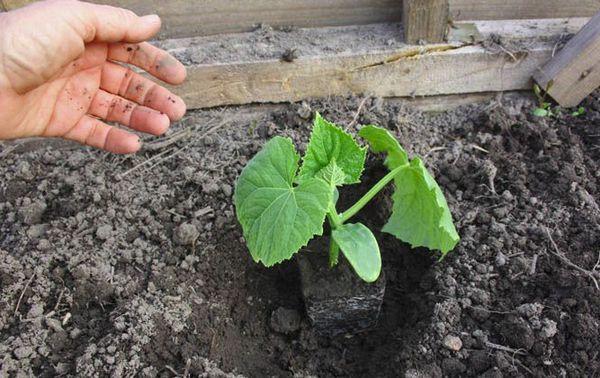
It's best to sow the seeds for seedlings in early May in peat pots. You can use 0.5-liter plastic containers. Seedlings don't like having their roots disturbed. Cucumbers don't need to be pricked out. When transplanting to the garden, transfer the young plants with the root ball. If they're transplanted to the garden in mid-May, fresh cucumbers can be harvested in June.
Kurazh can be grown without seedlings, and the seeds can be sown in the garden at the end of May. The harvest can be reaped in July. If you sow the seeds in midsummer, the cucumbers will begin to bear fruit closer to autumn.
Hybrid seeds are not cheap. Manufacturers pre-treat the seeds with pesticides, which gives the seeds an emerald color. These seeds do not need to be soaked before sowing. Untreated seeds can be soaked in a pink solution of potassium permanganate for 25 minutes. Light-colored seeds can be disinfected with Epin-Extra or Baikal EM-1. The germination rate is 95%.
Choosing a location
The plant prefers lightly shaded locations, well protected from drafts and wind. It does not tolerate summer heat well. Kurazh F1 prefers well-fertilized, non-acidic soil. To reduce acidity, add 500 grams of wood ash or lime per square meter.
Preparing the beds and crops
First, the bed needs to be dug, loosened, and fertilized with organic matter and minerals. Add one bucket of well-rotted humus or compost per square meter, along with 30 grams of phosphate and potassium fertilizers.
Planting diagram
When planting, it's important to adhere to the recommended planting density. There should be no more than two bushes per square meter. Without proper shaping, the plant will grow too bushy and dense. Stems should be pinched off.
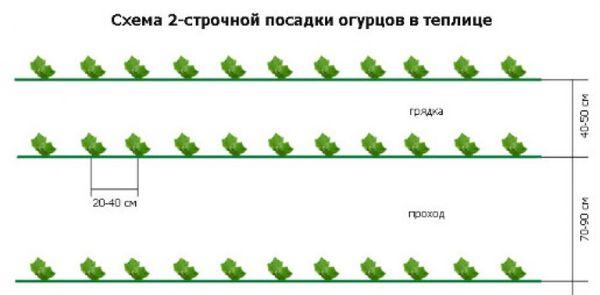
Planting pattern for seeds or seedlings: space the seedlings 35 centimeters apart from the neighboring crop, and 50 centimeters between rows or beds. Seedlings are transplanted at 20 days old. Without removing them from the pot, they are transferred, along with the root ball, to a shallow hole. A 4-centimeter-deep furrow is dug for sowing the seeds. Two seeds are planted in each hole. After two weeks, the seedlings are thinned.

In open ground
The crop is well adapted to the temperate continental climate. When grown outdoors, Kurazh F1 cucumbers are sown in late May. If the weather is warm and the soil has warmed to 10 degrees Celsius, the vegetables are sown in mid-May. When grown from seedlings, pre-grown 20-day-old seedlings are transplanted to the garden in mid- to late May.
First, the soil is dug over, loosened, and fertilized with organic and mineral matter. As the stems develop, they are pinched and tied to a support. The plant should grow upward.
In the greenhouse
Kurazh F1 is grown in hotbeds, film, or glass greenhouses. Indoors, protected from adverse weather conditions, yields an earlier and higher yield. Before planting, the soil is refreshed and fertilized with organic matter and minerals. For every square meter of greenhouse space, add a bucket of well-rotted humus or compost, 30 grams of urea, 40 grams of superphosphate, and 25 grams of potassium fertilizer.
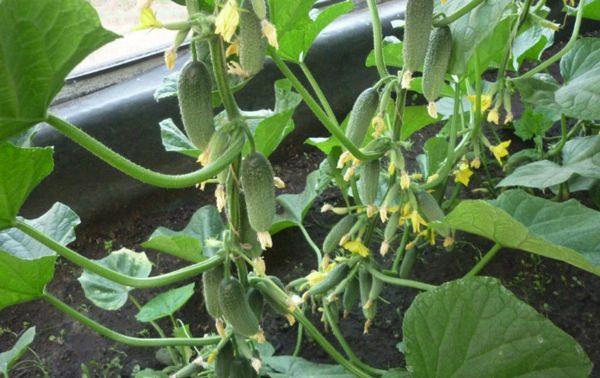
Cucumbers sown as seedlings in early May will ripen in early June. In greenhouse conditions, the plants are protected from the vagaries of the weather, but excessively hot and humid climates can affect the quality of the fruit, causing them to rot. The greenhouse should be constantly ventilated, the soil should not be allowed to become over-watered, and the crops should be provided with good lighting.
Rules for caring for cucumbers
Kurazh F1 requires stem shaping. If side shoots and leaves are not removed, the plant will become dense thickets. Cucumbers require support. This hybrid is best grown on a trellis.
Watering
During dry summer months, plants are watered generously (every other day). Watering is done in the evening. Each plant requires about 5 liters of water. It's advisable to mist the leaves and soil around the cucumbers. Cucumbers require ample watering during fruit set and ripening. During these periods, cucumbers are watered daily. It is advisable to use non-chlorinated water. Rainwater is best for watering.
Top dressing
When planting cucumbers, add organic fertilizers and minerals to the soil. After two weeks, the plants can be fed with nitrogen fertilizer (30 grams of urea per 10 liters of water). At the beginning of flowering, cucumbers are fertilized with an infusion of meadow grasses and wood ash. When the ovaries are forming, the crop is not given nitrogen fertilizers. During this time, the plants are fertilized with potassium and phosphorus. Use 35 grams of superphosphate and potassium sulfate per 10 liters of water.
Lighting
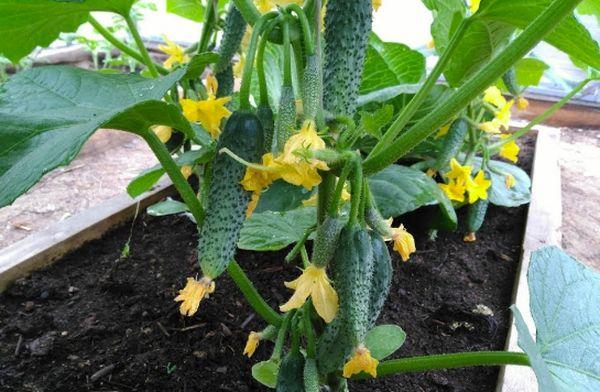
The bushes grow upward, and to ensure the fruit receives sufficient light, side shoots and excess leaves are removed. The plant requires optimal lighting. Dense, overgrown bushes growing in the shade of tall trees will produce bitter, small fruit.
In winter greenhouses, Kurazh F1 requires artificial lighting, with at least 12 hours of daylight. Under these conditions, cucumbers ripen slightly later than summer ones (50 days after sprouting).
Pest and disease control
Kurazh F1 is almost immune to powdery mildew, cucumber mosaic, and olive spot. However, under unfavorable conditions, the crop can be susceptible to fusarium wilt. As a preventative measure, spray the plant with a pink solution of potassium permanganate.
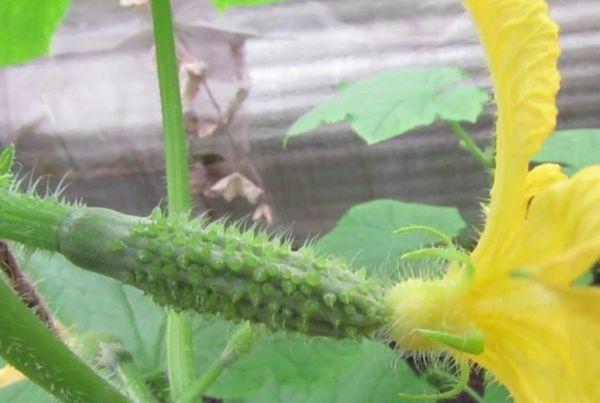
If brown spots of bacterial blight appear on leaves and fruits, the crop is sprayed with Bordeaux mixture. If white rot appears, the cucumbers are sprayed with a copper sulfate solution.
Kurazh F1 is susceptible to attacks by many insects, including aphids, spider mites, slugs, whiteflies, and root-knot nematodes. Insecticides (Fitoverm, Aldicarb, Admiral, and Groza) are used to control pests. Cucumber stems and leaves can be sprayed with herbal infusions (celandine, yarrow), wood ash solutions, tobacco, and soapy water.
Harvesting and use of the crop
Ripe cucumbers can be harvested 35-40 days after germination. Cucumbers should reach at least 10 centimeters. Harvest regularly—early morning or late evening. The harvested crop can be stored in the refrigerator for two weeks. At room temperature, cucumbers become soft after three days.
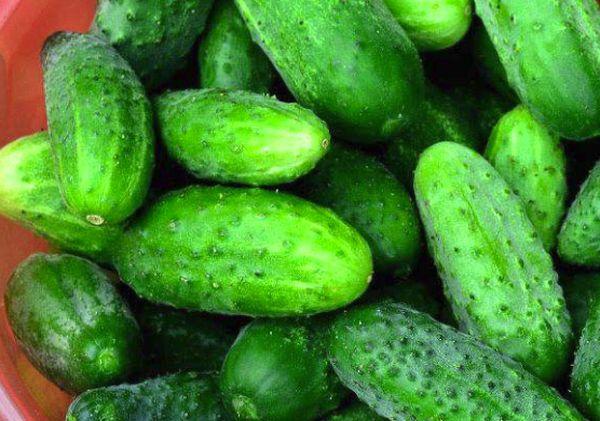
Courage F1 is grown for making light vegetable salads or for canning, pickling for the winterAccording to reviews from gardeners and summer residents, Kurazh F1 cucumbers are better suited for canning; these early vegetables can be eaten fresh.
Reviews from gardeners
Ekaterina Semenovna, 56 years old:
"Last year, I planted a couple of beds of Kurazh F1 cucumbers. The summer was dry, and this variety was the only one that produced a decent harvest. I harvested three liters of cucumbers daily and canned them right away. I loved the variety and highly recommend it."
Related posts:
 Description of the best varieties of bee-pollinated cucumbers, rules for their formation and care
 Description of the best varieties of Chinese cucumbers, planting, growing and care
 Description of unusual methods for planting and growing cucumbers
 Growing cucumbers in open ground and greenhouses in the Leningrad region and varieties
 TOP 10 recipes for quickly preparing lightly salted crispy cucumbers using cold and hot methods in a saucepan
 How to prepare pickled cucumbers in adjika for the winter without sterilization and Caucasian style: recipes
 TOP 30 best varieties of cold-resistant cucumbers with descriptions and characteristics
 35 Best Powdery Mildew-Resistant Cucumber Varieties with Descriptions