
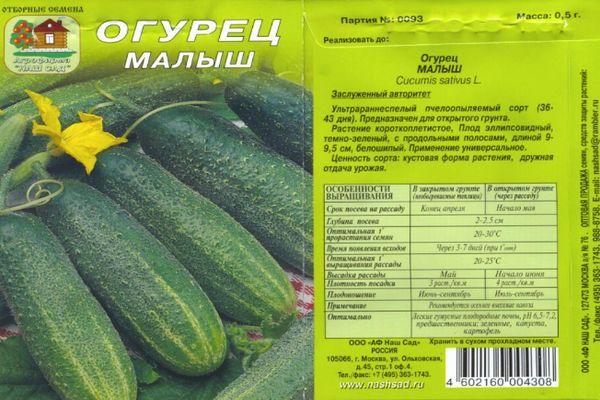
Short-stemmed cucumber varieties, about 0.5 m long, are popular among gardeners. The Malysh cucumber belongs to this group of vegetables. This variety is characterized by its short ripening period and versatile use.
Quantitative and qualitative indicators
The variety description includes several important parameters that make the plant a full-fledged participant in fields and gardens.
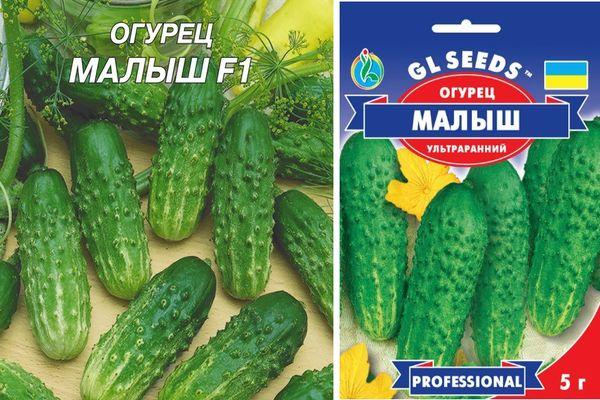
These include:
- ripening period from the moment of emergence is 40 days;
- whip length - from 30 to 50 cm;
- vegetable length - 9 cm;
- number of fruits from one stem - up to 45 or 2-2.5 kg;
- the weight of one cucumber is 80-90 g.
The fruit is dark green. The skin has large bumps. This variety was developed by Volgograd breeders through selection of traditional varieties. It has strong immunity to downy mildew.
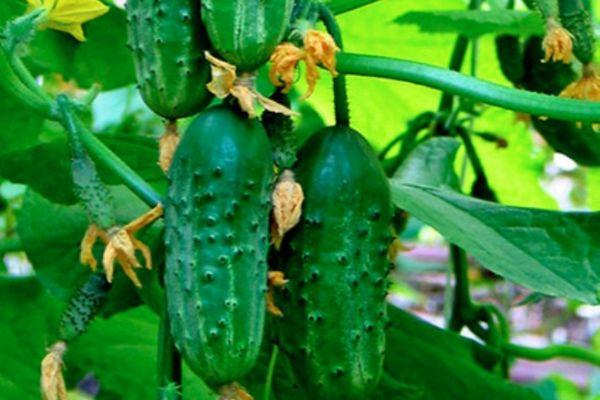
According to reviews from domestic gardeners, this "baby" variety exhibits good germination and a very short ripening period with an optimal growing season. The fruit lacks an unpleasant bitterness. Plants can be planted much more densely than traditional varieties, saving space. The shortened vines make it easy to care for, water, and harvest.
The shelf life without losing its marketable appearance is 10 days. This allows the vegetables to be transported to the most remote corners of the country.
The bushes produce such intense fruiting that they must be picked daily, otherwise they will become overripe. A serious drawback is the impossibility of growing them in protected soil, such as greenhouses or hotbeds. The plant is very demanding when it comes to watering, so even the slightest lack of moisture or irregularities in watering schedules will reduce yield.
Soil for planting cucumbers
The soil for the "baby" should be non-acidic and light. It's prepared in the fall. First, you need to find a location that fully meets agricultural requirements. It should be a well-ventilated and well-lit area. Even with tall plants nearby, the vegetable thrives and produces a good harvest.
It is recommended to sow cucumbers after plants such as:
- tomatoes;
- corn;
- peas;
- early potatoes.
Soil that was previously used for squash, zucchini, pumpkin, or peas is not conducive to the development of cucumber seeds. This is due to excessively depleted soil.
When digging the area for cucumbers, add a generous amount of manure to the prepared trenches. Apply one bucket of fertilizer per square meter. It is backfilled, leaving a shallow trench in which the seeds are planted. If fresh manure is unavailable, substitute it with an artificial fertilizer: a mixture of superphosphate and potassium salt. Sandy loam and loamy soils are considered the most favorable for sowing and growing cucumbers. The planting site should be kept spotlessly clean, and weeds should be eradicated. Many weeds attract aphids, which can quickly destroy seedlings.
Rules for sowing and care
Before planting, it's best to soak all seeds in a mild potassium permanganate solution for 20 minutes. Afterward, rinse and dry them. Just before planting, wrap the seeds in a paper towel to encourage germination. Planting should be done as follows:
- distance between rows - 45 cm;
- the distance between seeds is 25 cm;
- the groove depth is 2-3 cm.
Avoid sowing seeds in unheated soil. To determine if the soil is ready to accept seeds, walk barefoot in it. Your skin should feel pleasantly warm. The optimal air temperature is 18°C. When planting, water the holes with settled water. After planting, cover the seeded area with thick, transparent film.
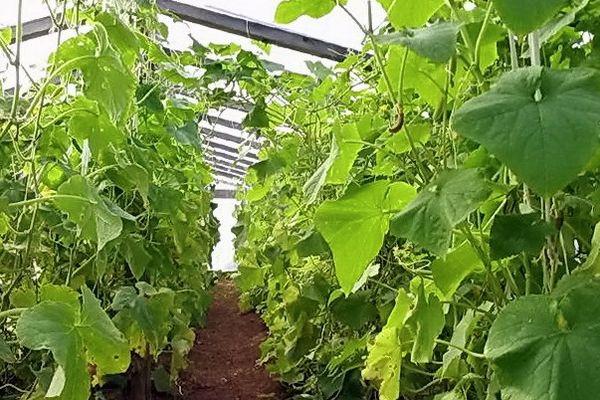
When growing cucumbers using seedlings, prepared seeds are planted in small pots containing a substrate of soil, humus and peat.
For better germination, add 1.5 tablespoons of wood ash and nitrophoska. Once the seedlings reach a comfortable temperature in the open ground, they are transferred to their permanent fruiting location.
During the maintenance process, it is necessary to constantly monitor the humidity level, weed growth, development of diseases and pests. The maximum number of fertilizing applications during the entire growing season is 4, alternating the application of organic and inorganic fertilizers.
Related posts:
 Description of unusual methods for planting and growing cucumbers
 Description of the best varieties of Chinese cucumbers, planting, growing and care
 How to make a cucumber trellis with your own hands from scrap materials
 How to care for cucumbers in open ground from planting to harvesting
 How to properly plant cucumbers in open ground with seeds, and at what depth
 Types of fungicides for cucumbers in a greenhouse and instructions for use
 How to properly plant cucumber seedlings in a greenhouse and care instructions
 Is it possible to soak treated cucumber seeds before planting and how to do it correctly?
