
Farmers who have grown the hybrid cucumber SV 4097 CV f1 give positive descriptions and reviews. The seed producer is the Dutch company Monsanto Holland BV. In 2013, this variety was added to the Unified State Register of Crop Seeds of the Russian Federation. It is recommended to grow this vegetable in plastic greenhouses and hothouses. In the central and southern regions of the country, the variety can also be grown outdoors. These cucumbers are intended for home gardening, although they are also suitable for large-scale commercial production.
Characteristics and properties of the variety
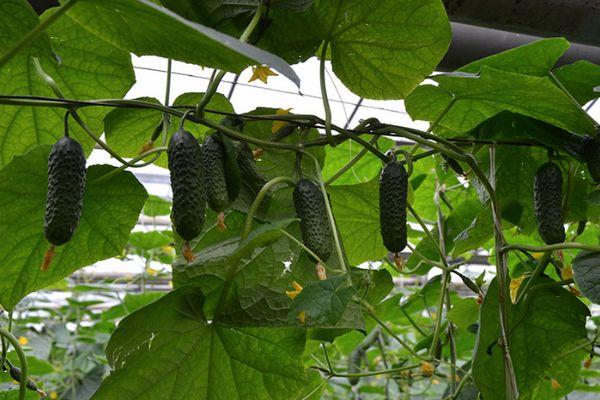
The plant is tall, reaching up to 200 cm in good weather conditions. The root system is extensive, wide, and deeply embedded in the soil. The stem is dense and knotty, resistant to wind loads. The crown is medium-dense, and the leaves are large and richly green. These leaves protect the fruit from birds, sunlight, and hail.
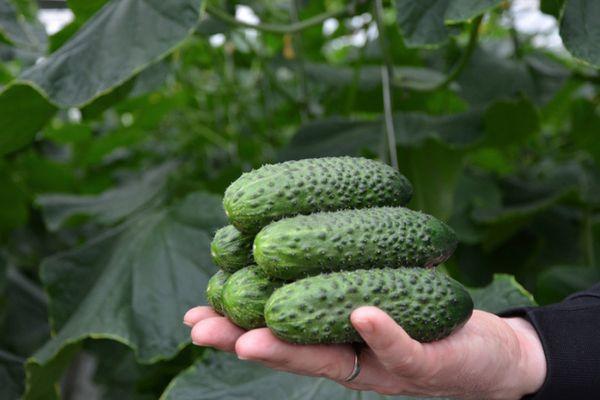
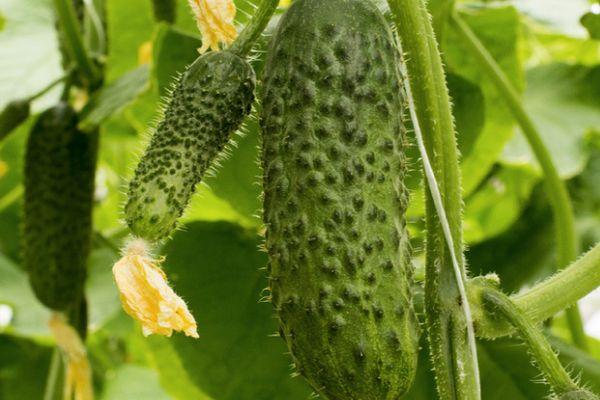
Cucumbers reproduce without pollination, and most of the flowers are female. Each node produces 2-3 perfectly cylindrical cucumbers. The average weight of a mature cucumber ranges from 80-100 g. They are 10-13 cm long and 3-3.5 cm in diameter. The cucumber skin is dense and firm, dark green, covered with light longitudinal stripes. The spines are dense, whitish, and closely spaced.
A distinctive feature of this variety is the fruit's shape, which depends on weather conditions. In good light and warm air, they grow thin and long. Insufficient light and cold temperatures cause the vegetables to become short and thick. However, their skin and interior remain uniform.
The taste of these cucumbers is noteworthy. They have a bright, rich aroma and a pleasant flavor. The flesh is firm but not tough, producing a loud crunch when eaten. This variety is versatile in culinary uses. The fruits are served raw, sliced, and in salads, canned in jars, and pickled in barrels.
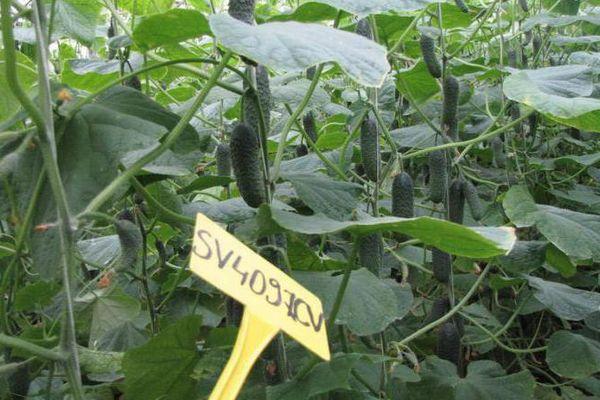
The yield is average. One bush produces up to 8 kg per season. It is recommended to plant no more than three bushes per square meter.
Advantages and disadvantages
The hybrid variety SV 4097 CV has taken root well in our country. Today, it is common in all regions. It is grown in summer cottages, small farms, and large agricultural companies.
The benefits of cucumbers include:
- Early ripening. Fully formed green fruits are obtained within 38-46 days after the first sprouts appear.
- Low temperature tolerance. Plants easily tolerate sudden and prolonged cold snaps and do not lose vitality due to cool night fogs.
- Immune to most diseases affecting garden crops. This hybrid variety is resistant to brown spot, mildew, cucumber mosaic virus, and powdery mildew.
- Good shelf life. The harvest tolerates transportation well, even on poor roads. In a dark, cool, and well-ventilated basement with low humidity, the fruit can be stored for up to six months without losing its marketable quality.
- Responsible for timely harvesting. Once ripe, cucumbers do not turn yellow, remaining fresh, firm, and delicious. When dropped onto the ground, they are undamaged by impacts thanks to their elasticity and strong skin.
- Decent yield. Growing this variety, farmers are confident of getting their kilograms from each plant. The plants' resilience to environmental conditions and low maintenance requirements make them a popular choice for more and more gardeners.
- With their marketable appearance and excellent taste, cucumbers immediately attract attention on the shelf. Farmers successfully sell their surplus harvests at markets and to procurement agencies.
Farmers did not find any significant shortcomings.
Growing hybrid cucumbers
The seeds are immersed in peat pellets or in pots filled with fertile soil. Depending on the climate zone, this is done in early or late March. After the seedlings germinate, they are given 10-15 hours of light per day.

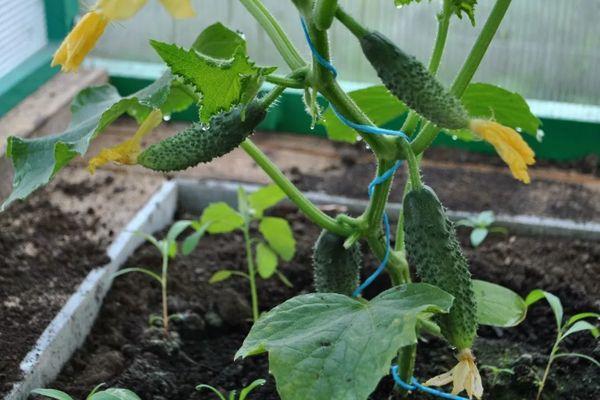
The seedlings are placed in the beds a week after the last frost and if the weather forecast is favorable. At the initial stage of ripening, all side shoots and buds are pinched. Once the trunk reaches a height of 180 cm, it is wrapped around the trellis and directed downward. Pinch it at a height of no more than 1 m from the ground.
When grown in low greenhouses, the trunk is placed over the trellis at a height of 80-100 cm. After this, attention is focused on the formation of side shoots, which are sent out in both directions from the trellis. As a result, each bush forms a low, wide crown. Part of the stem can be twisted and lowered onto straw laid over the plant's roots.
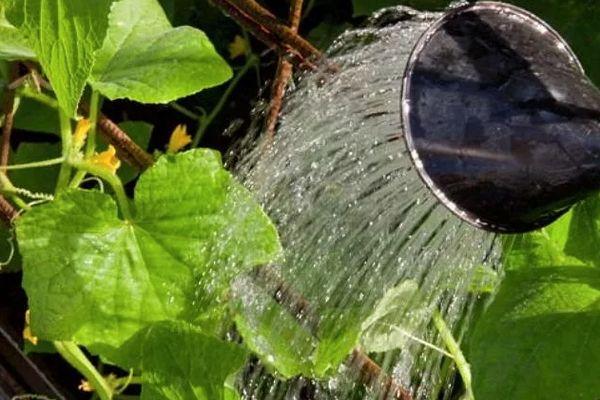
Caring for cucumbers involves the following steps:
- regular watering throughout the growing and fruiting season;
- application of mineral, combined and organic fertilizers;
- weeding;
- loosening and mulching the soil;
- ventilation of greenhouses and hothouses so that air humidity does not exceed 80%;
- Spraying with insecticides against parasitic insects.
If care rules are followed, plants bear fruit until mid-autumn. The last cucumbers must be harvested before the onset of frost.
Related posts:
 80 Best Eggplant Varieties for Different Regions with Descriptions and Characteristics
 The best grape varieties for growing in the Urals, planting and care rules in summer
 Description of 30 varieties and types of Muscat grapes, planting, cultivation and care
 The best eggplant varieties for growing in a polycarbonate greenhouse: planting and care
 Description of the 90 best varieties of beans for open ground with names
 Description and characteristics of the 60 best sea buckthorn varieties, how to choose depending on the region
 Descriptions of the 20 best cherry varieties for the Moscow region, their planting and care
 Description of the best varieties of black tomatoes for open ground and greenhouses