
- Can you water cucumbers with nettle infusion?
- The benefits of nettles for cucumbers
- Are there any disadvantages to the product?
- How raw materials are collected
- Preparing the fertilizer
- Popular recipes
- Standard feeding
- Fertilizer from nettles and bread
- Nettle and dandelion fertilizer
- Recipe with yeast
- We use the methane fermentation method
- How to feed cucumbers with nettles
- Optimal timing
- Technology of processing and watering bushes
- Frequency of watering plants
- Use against diseases and pests
- How to use nettles against slugs
- Reviews
Decoctions and infusions of plants in various combinations are often used as fertilizers for vegetables and garden trees. They are safe and highly effective, and are often used to protect garden beds from diseases and pests. Today's article discusses the benefits of nettle fertilizer for cucumbers and its potential use as a plant protection product.
Can you water cucumbers with nettle infusion?
All varieties of nettle (stinging nettle, stinging nettle, hemp nettle, and narrow-leaved nettle) are rich in calcium, potassium, nitrogen, and other trace elements and vitamins, which are preserved in the finished infusion and can significantly improve the condition of young cucumber plantings and mature plants.
Therefore, nettle infusion has long been used as an excellent organic fertilizer for cucumbers, other garden crops, and garden trees; it helps gardeners combat diseases and pests in their beds.
The benefits of nettles for cucumbers
Nettle infusion is easy to prepare and can be used after the first shoots appear. This fertilizer is especially useful for weakened seedlings.
Regular watering of cucumbers with infusion can:
- accelerate plant growth;
- improve the condition of the root system and shoots;
- have a beneficial effect on the harvest and improve the taste of cucumbers.
Plant resistance to disease and pests increases, and the appearance of crops improves. This fertilizer, while highly effective, is harmless, completely free, and has a long shelf life.
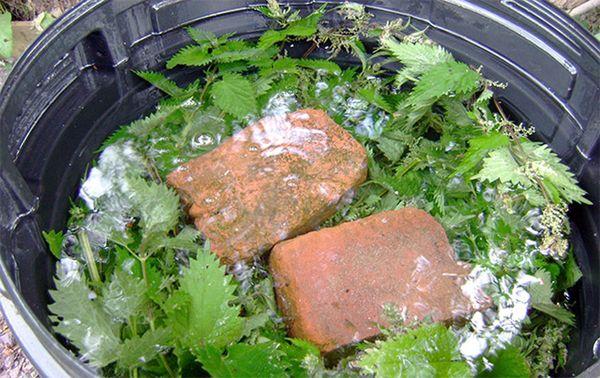 It has only one drawback - an unpleasant, pungent smell, but the obvious benefits of the fertilizer have long since forced experienced gardeners to come to terms with it.
Are there any disadvantages to the product?
This treatment of cucumber beds has no drawbacks: the plants become stronger, are less susceptible to diseases, and the weeds are clearly beneficial. Cucumbers aren't the only ones that can be fertilized with nettle infusion.
Remember: this fertilizer is not suitable for onions, garlic, and legumes. All other plants will benefit from it. The fertilizer can be used throughout the entire gardening season.
How raw materials are collected
To prepare nettle infusion, use the leaves and stems of healthy, undamaged plants. Harvesting is done before the weed blooms. Since the roots are not used, it's best to mow the nettles and then lay them out in the sun to slightly wilt. Fresh nettles, which are easy to chop, can also be used. The fertilizer is used as a foliar and root fertilizer for cucumbers in garden beds.
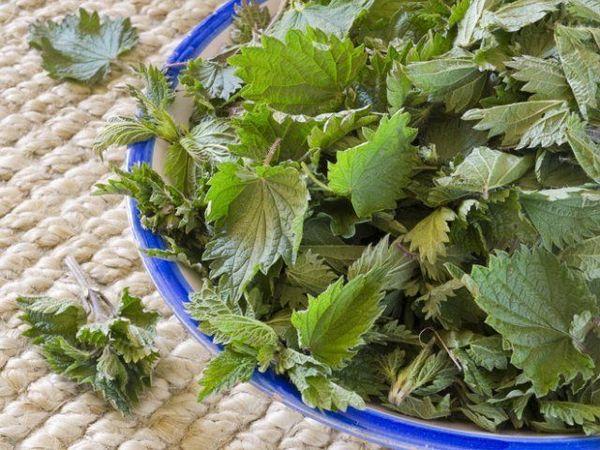
Plants should be collected in dry, cloudy weather; wear long-sleeved clothing and protective gloves.
Preparing the fertilizer
It's convenient to prepare the infusion in a large plastic barrel. Plastic buckets are also suitable. The nettle leaves and stems are poured with settled, clean water, at a ratio of 0.5 kilograms of fresh nettles per 5 liters of liquid. Then, cover the container with plastic wrap with several small holes and leave it in a warm, sunny place to ferment.
The dressing will be ready in 1.5-2 weeks. Fill the container no more than 2/3 full with water; it will foam vigorously during fermentation. Do not prepare the infusion in a metal container.
Advice: It is better to place the container at the far end of the area – the fertilizer has an unpleasant odor.
The finished product is filtered and diluted with water (for 1 part of fertilizer, use 10 parts of water for foliar fertilization and 5 parts of water for root application).
To reduce the smell, it is recommended to add valerian to the infusion.
The fermented remains of the infusion can be stored indefinitely by adding more nettles and warm water. During the winter, the barrel is usually placed in a shed or basement to prevent the remaining starter from freezing.
Popular recipes
There are several popular recipes for organic nettle fertilizer among gardeners. It can be used neat, or with the addition of dandelions, other garden weeds, baker's yeast, and bread. These additions speed up the preparation process and increase the amount of nutrients in the infusion.
Standard feeding
It requires raw materials collected away from highways. The plants can be chopped or left whole. The stems and leaves are placed in a plastic barrel, the plants are pressed down by hand, and covered with warm water. Some gardeners recommend adding 0.5 kilograms of sugar to the barrel to enhance fermentation.
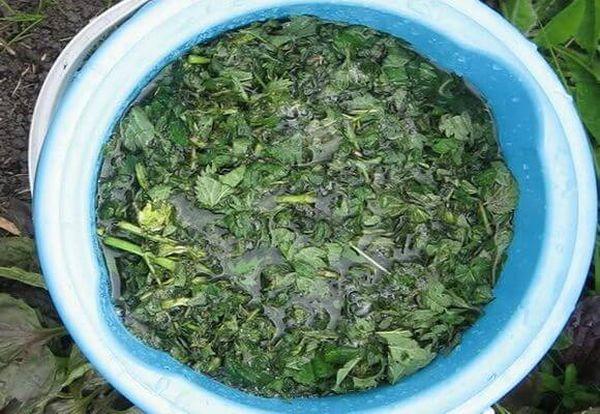
Cover the barrel with plastic, and thoroughly stir the contents every two days. Once fermentation has stopped, the fertilizer is ready; it turns brown and has an unpleasant silage odor.
Fertilizer from nettles and bread
Leftover white and black bread, as well as dry kvass, are suitable. Place nettles in a barrel, filling it to three-quarters of its capacity. Top up with warm water and add breadcrumbs. Let the mixture ferment for 5-7 days. Stir the infusion 2-3 times during this period; it's ready when it stops foaming.
Nettle and dandelion fertilizer
In addition to dandelions, this mixture may also include plantain, comfrey, and other herbs, which are used without the roots or flowers. They are lightly dried, crushed, and then prepared as an infusion, just like a regular remedy. The fertilizer should be left to steep for 7-10 days before it's ready.
Recipe with yeast
The infusion can be prepared with any yeast; it is added to the water with nettles. For 10 liters of infusion, one packet of dry yeast or 100 grams of fresh yeast is sufficient. This will promote more intense fermentation and the infusion will be ready faster. It is also recommended to add a little wood ash, which makes an excellent complex fertilizer.
We use the methane fermentation method
To prepare the fertilizer, the barrel containing the nettle infusion is sealed with thick plastic. In the absence of air, fermentation occurs over 14 days, culminating in the development of a characteristic manure-like odor.
How to feed cucumbers with nettles
Regular use of nettle infusion increases harvests, saves weakened plants, and makes plantings stronger.
Another way to fertilize cucumbers is to place finely chopped nettles mixed with soil into the holes (dug slightly deeper than usual). The cucumbers are planted in the holes and watered with the infusion, resulting in stronger, better-growing plants.
Optimal timing
Since the barrel of infusion can be stored in the basement over the winter, cucumbers are treated immediately after planting. The nitrogen content of the infusion promotes the growth of green mass and accelerates flowering. Cucumber fertilizer is applied during the growing season, the beds are treated at the beginning of flowering and during ovary formation, and cucumbers can be sprayed before harvest.
Technology of processing and watering bushes
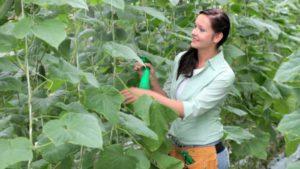
For foliar feeding, plants are sprayed with the infusion on cloudy days. The fertilizer is diluted 1:10. Root feeding is applied to the roots of the plant, diluting the nettle infusion 1:5.
Frequency of watering plants
Root feeding should be applied no more than once every two weeks. After applying the fertilizer, the plant should be watered. Frequent application leads to excessive foliage growth and reduced yield, as occurs with excess nitrogen. Spraying with the infusion should be done once or twice a month.

Use against diseases and pests
Nettle is used to protect crops from pests and diseases. Spraying with an infusion effectively protects crops from aphids and spider mites. It is also suitable for treating plants against powdery mildew and gray mold.
How to use nettles against slugs
To protect against slugs, mown grass is placed between the rows. This simple and effective method provides additional protection against aphids.
It is used for mulching garden beds – chopped plant parts mixed with soil retain moisture well and also serve as a high-quality fertilizer.
Reviews
Sergey Anatolyevich
"I take a barrel of nettle infusion out into the garden in early spring and return it to the basement in the fall. It's an excellent fertilizer for all garden crops except onions and garlic. As they say, 'cheap and cheerful,' and here it's practically free. Everything grows beautifully after this feeding, and I recommend it to everyone I know."
Lydia
"There was always nettle growing in the back of my garden. I'd mow it down and throw it away until the neighbor told me it was an excellent fertilizer. I tried it, and it's fantastic for cucumbers and tomatoes. It's great for strawberries, but it smells really bad. They recommend adding valerian to protect against the smell; I'll have to try that."
Victor
"I've been fertilizing cucumbers with nettle infusion for several years now. I water the first time before planting them, and then I water it almost until harvest. The cucumbers are less susceptible to disease, grow faster, and we think they even taste better after this treatment. The best part is, there are no chemicals—it's all natural. Our grandchildren enjoy picking cucumbers straight from the garden, just like we did when we were kids."
Related posts:
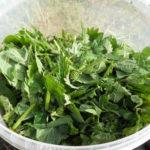 Simple recipes for making nettle fertilizer yourself
 What is the best way to feed cucumbers during flowering and fruiting?
 Description of unusual methods for planting and growing cucumbers
 Description of the best varieties of Chinese cucumbers, planting, growing and care
 How to properly plant cucumbers in open ground with seeds, and at what depth
 How to care for cucumbers in open ground from planting to harvesting
 Description of cucumber pests and their treatment, control measures and processing
 How to make a cucumber trellis with your own hands from scrap materials