
Physalis, like other nightshade crops, was brought to Europe during the discovery of America. Tomatoes and potatoes are planted in gardens and cultivated on a large scale in fields. A lesser-known member of the family, physalis is easy to care for; it can be grown from seed indoors.
In the wild, this perennial plant reproduces on its own and is now cultivated in Latin American countries. Its fruits are rich in pectin and have a fruity aroma reminiscent of both strawberry and pineapple.
Choosing a Physalis Variety for Growing at Home
This perennial herb with a woody base has not just one variety, but several. Unique winter bouquets can be created with ornamental physalis, which thrives in any soil and tolerates temperature fluctuations. Its orange, lantern-shaped flowers look stunning in flowerbeds.
Vegetable varieties are planted not only to decorate balconies or gardens, but also for their fruit. They are used to make jams and pickles like tomatoes.
Berry physalis is susceptible to frost and requires more careful care than other varieties. Its aromatic fruits weigh less than 4 grams but have a wonderful flavor.

To decorate a windowsill or balcony and harvest a crop at the same time, it's best to plant a vegetable physalis:
- The kinglet is grown to produce fruits, which are used to make caviar, candied fruit, and jam.
- The pineapple variety delights with sweet berries that ripen quickly and have a fruity aroma.
- The miniature strawberry physalis bushes produce bright yellow fruits that are eaten raw.
- Vegetable confectionery is suitable for canning, and is distinguished by large fleshy berries weighing about 50 grams.
The Moscow, Konditersky, or Gribovsky varieties of physalis thrive best indoors. However, it's important to remember that these plants require plenty of light.
Preparing for landing
This exotic plant can easily find a spot not only in a private house but also in an apartment. It can be grown on a south-facing windowsill, in a glazed loggia, or on an insulated balcony. For indoor conditions, seedlings are more suitable. First, sow the seeds in trays; once the plants have grown, transplant the strongest ones into individual pots about 20 cm in diameter.

Planting dates
To grow physalis on a loggia or balcony, sow as early as March. The seeds are planted 1 or 2 cm deep in the soil, thoroughly moistened with warm water, and covered with plastic wrap. Place the seedlings on a south-facing window. When two leaves appear, place the seedlings in individual pots, the bottoms of which are pre-filled with a drainage layer.

Soil requirements
Although physalis thrives in any soil, regardless of its type, both in the garden and in the wild, when growing flowering herbs indoors, mix:
- 2 parts peat;
- one each of turf and humus;
- ½ sand.
To reduce acidity, add a little ash. To kill fungal spores or microbes, steam the soil for at least an hour.
Seed rejection
Before sowing, the planting material is calibrated by immersing it in a warm solution made from a liter of water and a spoonful of salt. After about 10 minutes, the empty physalis seeds will rise to the surface. Those that remain at the bottom are washed and disinfected in potassium permanganate. To improve germination, soak the seeds in water for about 12 hours with a drop of Epin.
Caring for physalis at home
This exotic plant's native land is Central America, where it enjoys plenty of sun and warmth. During the short spring days, seeds are given additional light when planting. The emerging shoots are initially shaded from the sun. Young plants require more careful care than mature nightshade plants:
- Moisten the soil daily.
- Feed every 2 weeks, alternating mineral compositions with organic matter.
- The stepsons are torn off.
Physalis doesn't require support. With proper care and seed treatment, it's disease-free, and when grown indoors, it's not susceptible to pests.

Harvesting
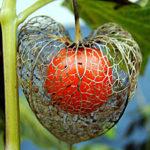
The fruit of this nightshade family is contained within a husk reminiscent of a Chinese paper lantern. It consists of sepals fused together. When these vibrant petals begin to dry and lose their rich hue, it's time to harvest the berries.
At home, the fruits ripen more evenly than in the garden, where they rot from the rain and are eaten by caterpillars.
Physalis will keep longer if you pick slightly unripe berries, which are rich in:
- fiber and glycosides;
- phosphorus and zinc;
- iron and calcium.
Eating the fruit strengthens tooth enamel, improves digestion, boosts immunity, and cleanses the body of toxins. The berries can be eaten fresh or used to make preserves and jams.

Related posts:
 Recipes for preparing vegetable and dessert physalis for the winter at home
 The most delicious recipes for making physalis jam for the winter, how to make jam and store it
 Planting and caring for physalis in open ground, growing and how to harvest
 Symptoms and causes of physalis diseases and insect pests
 Preparing physalis vegetables for the winter using canning and drying methods; can they be frozen?
 The best eggplant varieties for growing in a polycarbonate greenhouse: planting and care
 Methods for planting and propagating cherries at home
 Causes and treatment of eggplant pests and diseases, how to combat them at home
For good growth it is advisable to use BioGrowThis product is a plant growth bioactivator. I liked it and the results are obvious, so I have a lot to recommend it for.