
- The mutual influence of tomatoes and peppers
- Pros and cons of neighboring
- Suitable varieties for growing together
- Basic requirements for crops and compatibility conditions
- Tomatoes
- Pepper
- We organize planting and care in the greenhouse
- Timing of sowing and planting seedlings
- Planning the beds
- Separating the cultures with film
- Planting without separation
- Schemes and timing for planting plants in open ground
- Care instructions
- Irrigation and fertilizing
- Bush formation: pruning, pinching, removing side shoots
- Props, hanging
- Loosening and mulching the soil
- Pollination and suppression problems
- What pests are dangerous for crops: control measures
- Aphid
- Slugs
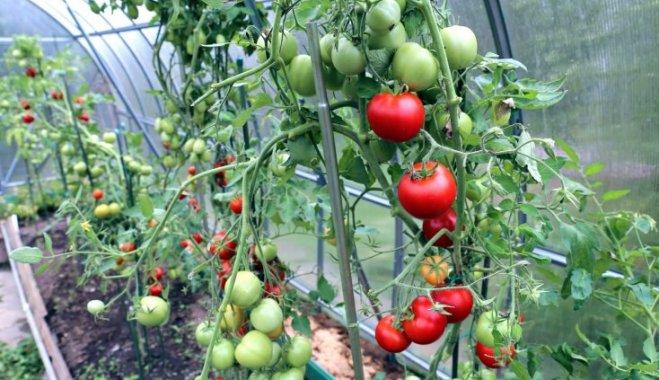
Due to limited space, many gardeners combine several vegetable crops in greenhouses. For this reason, the question of whether it's possible to plant peppers and tomatoes in the same greenhouse remains relevant. When planting different vegetables together, it's important to consider the conditions for their proximity in advance to avoid losing the harvest.
The mutual influence of tomatoes and peppers
When planting tomatoes and peppers in the same greenhouse, it's important to consider the nuances of crop interactions. Specifically:
- Vegetable growing conditions vary. After plants are irrigated, the water evaporates and remains in the atmosphere. Tomatoes and peppers produce a good harvest when the air contains a high amount of water, but tomatoes require periodic ventilation.
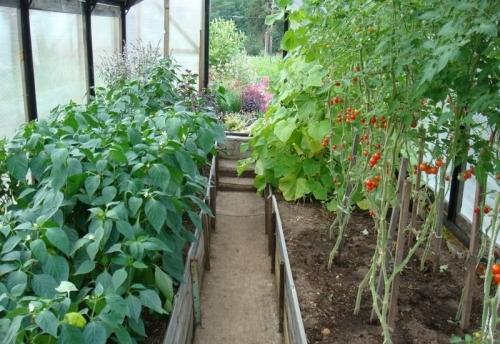
- When planning the planting pattern, it's best to place the peppers closer to the far walls of the greenhouse. This will ensure airflow from the greenhouse entrance for the tomatoes, while the peppers will enjoy warmer conditions.
- The distance between different vegetables should be approximately 1 m. At closer distances, the roots and foliage of the plants will absorb nutrients from each other.
- By planting pollinator vegetables next to varieties that require pollination, the crops will help each other better form ovaries and produce a harvest.
Pros and cons of neighboring
Growing multiple crops in a single greenhouse has both advantages and disadvantages. Growing tomatoes and peppers simultaneously is advantageous primarily because it saves space—there's no need to build a separate greenhouse for each crop.
Another advantage of being close to each other is that tomatoes and peppers can be grown in the same type of soil—loamy soil with the addition of humus, peat mixture, and sawdust.
The disadvantage of growing together is that the plants require different levels of care. Plants require an individual approach, and violation of agricultural practices can lead to deterioration in fruiting and loss of part of the harvest.
Suitable varieties for growing together
To avoid problems when caring for your crops, it's important to choose the right vegetable varieties. Experience shows that it's best to plant hot peppers next to tomatoes, which don't have a sweet taste. This way, the bell peppers and tomatoes won't interfere with each other's flavors.
When growing elite varieties, it is not recommended to plant vegetables from the first and second generations of seed next to each other.
Basic requirements for crops and compatibility conditions
After selecting suitable varieties, it's important to familiarize yourself with the compatibility requirements for vegetables and the rules governing their cultivation in the same location. Adhering to these requirements will help prevent yield reductions.
Tomatoes
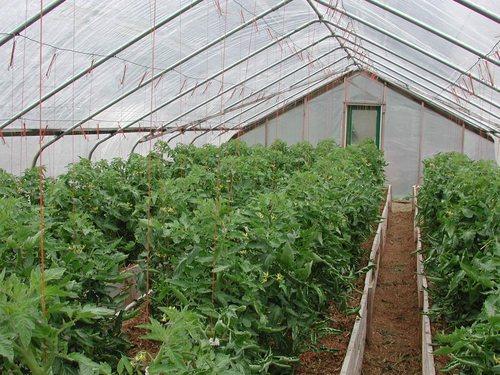
When grown in a greenhouse, tomatoes will be the dominant crop, so only other vegetables with similar care requirements should be planted alongside them. Greenhouse tomatoes require warm, dry air and regular ventilation.
Pepper
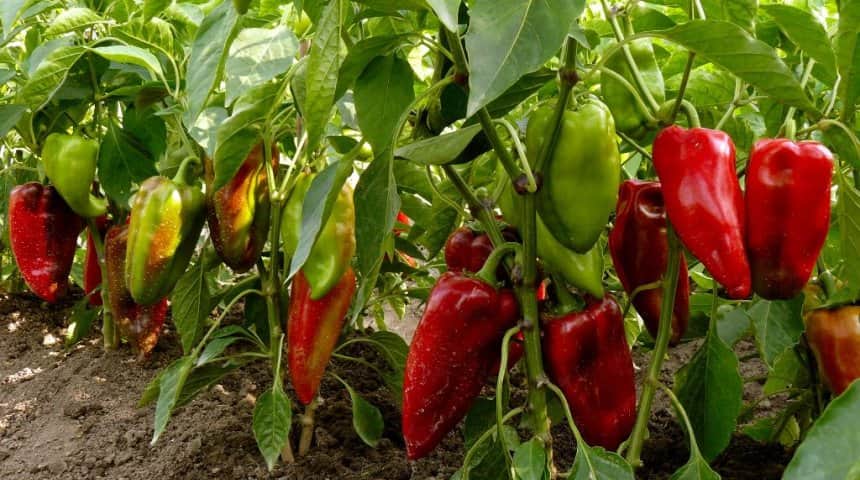
During the growing season, peppers require a humid, warm atmosphere. When planting alongside tomato plants, it's recommended to stagger the plantings. This will prevent the plants from shading each other and ensure they receive sufficient light.
We organize planting and care in the greenhouse
Once you've determined whether it's possible to plant different crops together, you need to properly perform the planting process in the greenhouse. After sowing, comprehensive plant care is required to ensure a large harvest with excellent flavor.
Timing of sowing and planting seedlings
For ease of plant care, it's recommended to select vegetable varieties with similar ripening times. The exact sowing time depends on the variety. Typically, seeds for seedlings are sown in early spring so that the seedlings can be transplanted to their permanent location by the start of warm weather.
Planning the beds
When planning the layout of greenhouse beds, it's important to maximize the usable space for growing large quantities of vegetables. When combining crops, consider the following recommendations:
Take a look Also
- plan the entire planting area, indicating the placement of each crop;
- be guided by the agricultural calendar and experience from past sowings.
Separating the cultures with film
Using polyethylene film allows you to control the growing conditions of your plants within the greenhouse. Simply secure tall wooden stakes into the ground and stretch the film over them.

Planting without separation
When planting crops in the same bed without separation, it's important to consider their different ventilation requirements. It's also important to maintain spatial separation so that the plants don't interfere with the free development and nutrient absorption of neighboring plants.
Schemes and timing for planting plants in open ground
When planting vegetables next to each other in open ground, you can follow one of the standard patterns. It's essential to leave enough space between plants to allow for root development. Otherwise, the roots will become entangled, which can lead to death or poor fruiting.
Care instructions
Comprehensive plant care is the key to vigorous growth and timely harvest. Throughout the growing season, it's necessary to moisten the soil, apply fertilizer, train the plants, control stem growth, and cultivate the beds.
Irrigation and fertilizing
From the moment the plants are transplanted to their permanent location, the soil should be kept regularly moist. Watering should be done as the soil dries out. Severe drought will cause the plants to dry out, while overwatering will cause root rot.
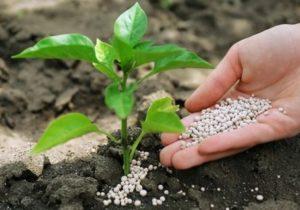
Fertilizers are applied to the soil 3-4 times per season. Organic fertilizers are added to the planting holes before transplanting. Later, tomatoes and Peppers need fertilizing during flowering, formation of ovaries and fruiting.
Bush formation: pruning, pinching, removing side shoots
Pruning involves removing excessive foliage that interferes with aeration and light penetration to the fruit. Pinching involves cutting off the top of the main stem to direct nutrients to the fruit. Side shoots are removed to eliminate growing lateral shoots, which, as they grow, absorb large amounts of nutrients.
Props, hanging
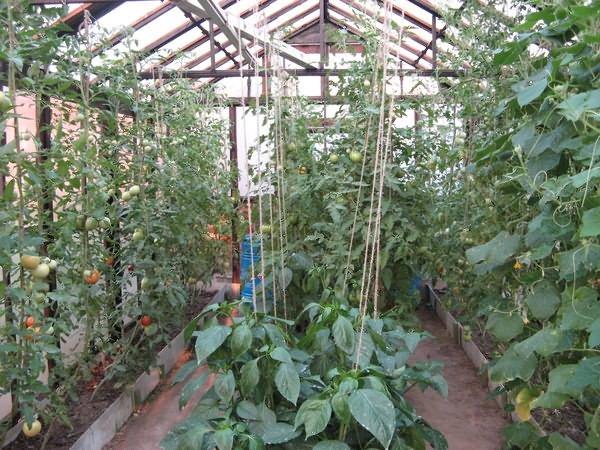
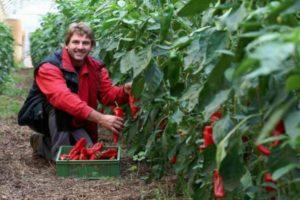
Fixing the bushes is required only when growing tall varieties. Plant supports are placed in the ground or in the upper part of the greenhouse, and the plants are tied to them.
Loosening and mulching the soil
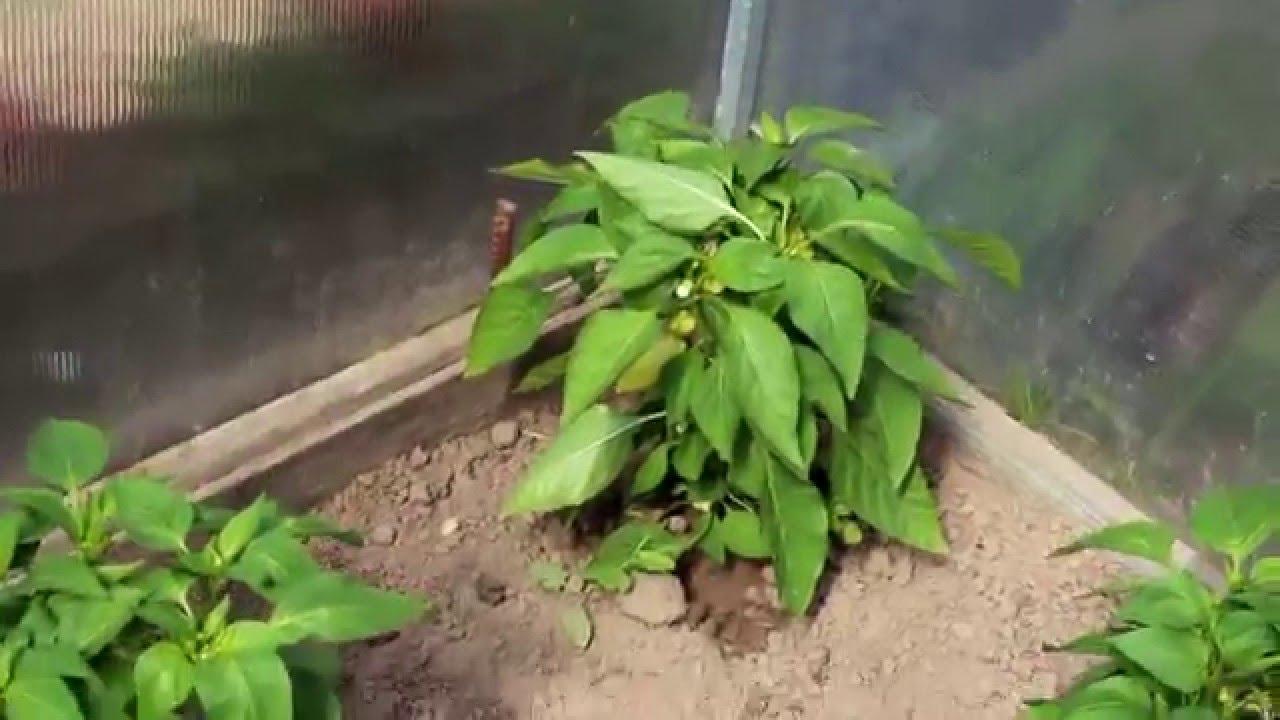
After each watering, the soil is loosened to allow moisture to reach the roots. Using mulch eliminates the need for loosening and protects the beds from weathering and freezing.
Pollination and suppression problems
A lack of pollination results in a low number of ovaries. When growing varieties that require pollination, you can attract pollinating insects to the greenhouse or manually apply pollen to the flowers on the bushes.
What pests are dangerous for crops: control measures
Insect infestations in greenhouses often result in plant death and poor yields. Pests gnaw at roots, above-ground parts of plants, and fruits. Timely pest control and preventative measures are required to protect plants.
Aphid
Aphids pose a threat to tomatoes and peppers during the flowering period. The insects leave larvae on the foliage, which feed on shoot sap and slow plant growth. To control aphids, treat the plants with insecticides.
Slugs
Slugs are carriers of diseases and feed on plant matter. These pests can be repelled with chemicals or collected by hand at night, when they are most active.
Related posts:
 TOP 40 New Year's 2020 Meat Recipes Using Pork, Beef, Chicken, and Lamb
 TOP 40 Hot Dish Recipes for New Year 2020: What to Cook
 Description of the best varieties of ornamental peppers, growing and caring for them at home
 10 simple Armenian-style pickled hot pepper recipes for the winter
 Description of the best pepper varieties for greenhouses and open ground in 2025
 Preparing pickled peppers in oil for the winter using simple recipes and storage conditions
 Top 15 Recipes for Pickled Hot Peppers at Home
 Planting, growing, and caring for peppers in open ground in the Moscow region: the best varieties