
Pricking out is considered an important step when cultivating pepper seedlings. Transplanting seedlings into separate containers will allow for increased growth and nutrition, which will aid root development through the growth of lateral roots. This process will be completed quickly and efficiently if you prepare everything beforehand to avoid distractions during the process.
Is it worth picking pepper seedlings?
An agricultural technique such as picking peppers allows you to:
- obtain uniform, strong seedlings by discarding diseased, weak, and damaged seedlings;
- prevent growth retardation or its complete cessation;
- prevent the intertwining of roots of individual shoots;
- to produce plants with a fibrous root system, which will provide them with nutrition in their further development;
- create favorable conditions for seedlings in a compact sowing container;
- find a pepper that will be characterized by good survival in open soil;
- guarantee a harvest of excellent quality and quantity.
Picking requires special care, precision and unhurriedness in its implementation.
Disadvantages of growing peppers without picking
Peppers planted in the same container can begin to shade each other over time, and their root systems can become intertwined. This can lead to the death of a significant portion of the plants when transplanted into open soil. Therefore, transplanting peppers is essential, otherwise you won't be able to reap a bountiful harvest.
When to perform the procedure at home
A gardener eager to grow their favorite vegetable asks questions like how and when to transplant pepper seedlings. They understand that the roots of tender young sprouts are fragile. And the future harvest depends on the precision of transplanting.
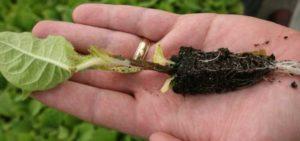

Favorable days
Early transplanting is considered effective; peppers acclimate easily to a new location. The best time for transplanting is in March, provided the seedlings are sown in February. The optimal time is when the plants have 2-3 true leaves, which corresponds to 15-20 days after germination.
Bad timing
According to gardeners, when 4-6 true leaves appear on the sprouts, picking becomes problematic, since transplanting at this time can be stressful for the root system.Also, the days of the new moon are not a suitable time for picking peppers, as well as other crops.
Preparation
Peppers are fussy plants and don't like being transplanted. Their delicate roots don't recover well. If transplanting is unsuccessful, the seedlings may stunt their growth. Therefore, it's important to choose a gentle transplanting method that minimizes root damage.
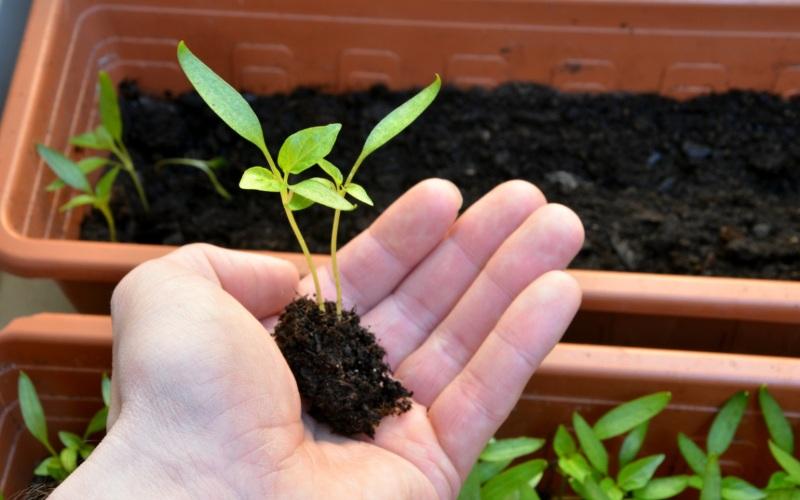
How to prepare a soil mixture
The key to a superb pepper harvest is properly grown seedlings. This requires careful attention to the soil in which the plants will grow. The soil mixture must meet certain criteria: it must be well-pored, loose, and not too acidic. These characteristics can be achieved by carefully preparing the soil substrate.
To do this, mix for 1 kg:
- 100 g of peat;
- 400 g of turf soil;
- 500 g of humus.
This soil composition is considered optimal for bell peppers, as it has normal acidity, a loose structure with excellent air permeability.

You should also supplement the mixture by adding mineral elements in a certain dosage:
- 800 g potassium chloride;
- 600 g ammonium nitrate;
- 1 kg of superphosphate.
It is best to carry out this procedure in the fall, so that by spring the soil for the seedlings will have settled and settled.
Selecting a container for planting
Experienced gardeners confirm that the quality of seedlings depends on the container they're grown in. Choose containers that will provide the seedlings with the best conditions. Any deep, waterproof container is suitable for transplanting.
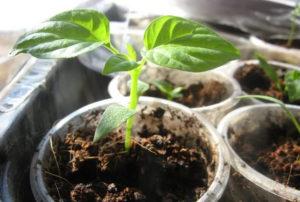

To ensure 100% survival of seedlings, before transplanting, new containers must be washed, dried, additional holes must be made in the bottom and filled with prepared soil mixture.
Transplantation scheme and depth
Peppers should be planted so that the sprouts are at the same level in the soil as when they emerged. It's important not to plant them down to the cotyledon leaves, as this will damage the roots.
Step-by-step instructions and technological features
Before starting work, water the peppers so as not to damage the roots when removing the sprouts from the container, and also to discard weak and deformed specimens.
Stages of transplantation:
- Pour the prepared soil mixture into individual pots.
- Find the main root of each plant and pinch off its tip by a quarter of its length.
- Moisten the soil in the pots, level it, and then make a small depression in the center.
- With extreme care, lower the seedling into the hole, cover with soil and compact it.
- Carry out watering.
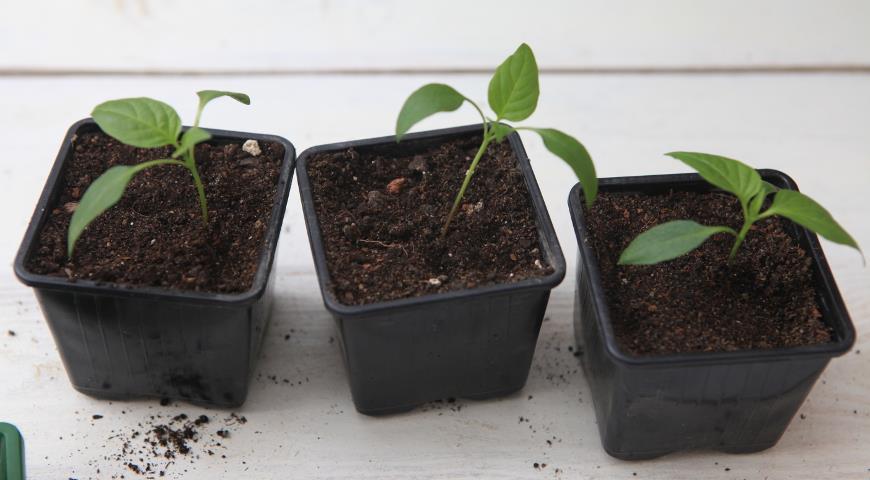
After repotting, place the pots in a shaded area for 2 days. While the plants are acclimating, ensure that the temperature does not drop below 20-22 degrees Celsius.
Caring for pepper seedlings after picking
During the first 24 hours after transplanting, provide comfortable conditions for the plants:
- protect plants from direct sunlight;
- make sure that the room is not too hot;
- do not over-water the soil in the pots to avoid rotting of the root system;
- send the seedlings to the greenhouse after they have regained their turgor after planting;
- After 2 weeks, fertilize using a universal composition for vegetable crops.
Correctly transplanting this finicky crop will allow you to get a generous harvest of healthy vegetables.
By following all the proper agricultural practices, you can grow vigorous vegetable plants that will yield high-quality fruit. Their firm, crunchy texture and piquant flavor make them an essential addition to any menu.
Related posts:
 How to grow peppers from seeds at home: choosing a variety, planting, and care
 Planting, growing, and caring for peppers in open ground in the Moscow region: the best varieties
 Planting, growing, and caring for bell peppers in open ground
 Description of the best varieties of ornamental peppers, growing and caring for them at home
 Why are pepper leaves turning white? What to do and how to feed them in a greenhouse and in the ground.
 How to properly plant pepper seedlings at home, grow and care for them
 15 simple recipes for pickling tomatoes in jars for the winter
 20 recipes for canned hot peppers for the winter
