
The Winnie-the-Pooh bell pepper has been known in Russia for several decades, but remains popular even when compared to modern varieties. The plant is included in the State Register of Breeding Achievements of Russia and is recommended for cultivation in the central regions of the country, but it even produces good yields in southern Siberia.
General characteristics of the plant
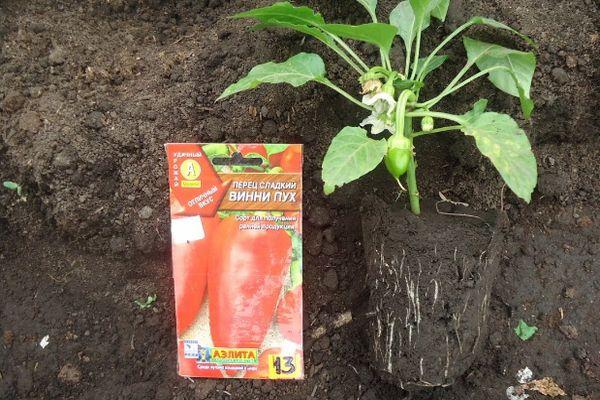
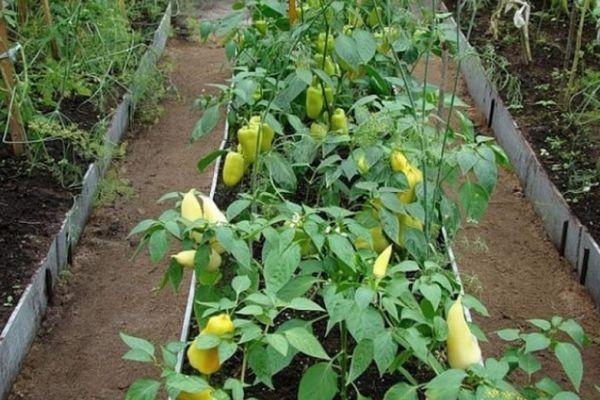
The Winnie-the-Pooh sweet pepper variety forms a very compact bush and can even be grown on a windowsill. The plant rarely exceeds 30 cm in height, and its small root system allows it to be grown in limited soil. These plants are ideal for planting in plastic tunnels and greenhouses; they can also be used to thicken the plantings of taller plants in a greenhouse (for example, indeterminate tomatoes).
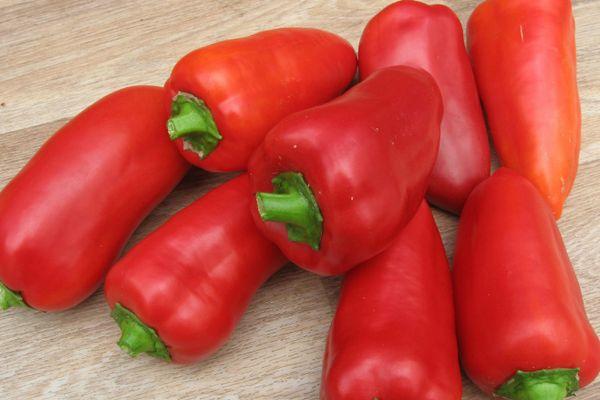
It takes 100-110 days from sowing to technical maturity—the Winnie-the-Pooh pepper is considered an early-ripening variety. However, it takes about two more weeks for full ripening. These timeframes should be taken into account when attempting to harvest fully ripe (biologically ripe) and green, yet edible peppers.
The plant is resistant to temperature fluctuations and tolerates long periods of cold weather in mid-summer well.
The variety is immune to verticillium wilt, a fungal disease of nightshade crops. It may be slightly susceptible to late blight under unfavorable weather conditions.
The Winnie-the-Pooh sweet pepper presents little challenge to the gardener. The plant's main requirement is regular watering during fruit set and ripening. Without this, the fruit will grow poorly, and the flowers may fall off.
Low bushes are not prone to falling over under the weight of ripening peppers, do not require garters, and can easily withstand the weight of the fruit.
Consumer qualities of fruits
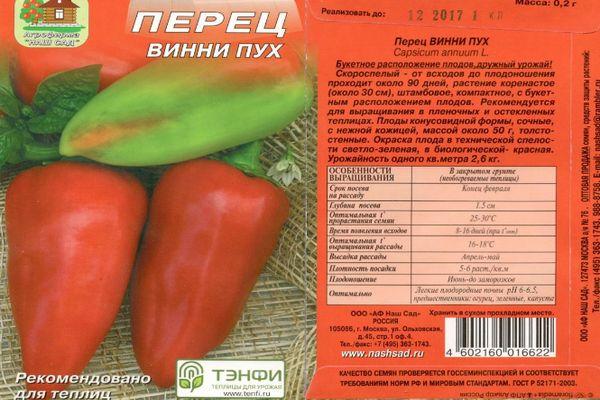
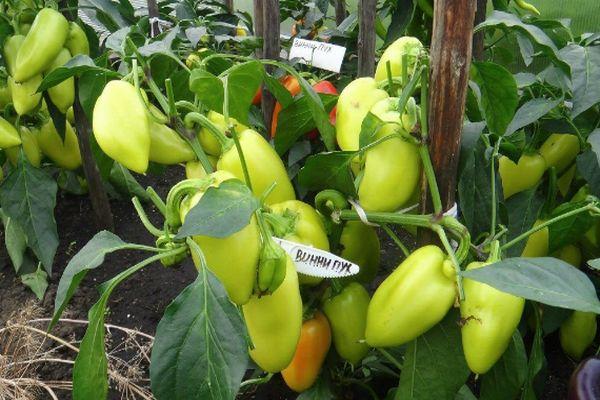
The plant produces numerous ovaries simultaneously. Each pepper is no more than 10 cm long and weighs only 60-80 g. The light but numerous fruits allow for a yield of up to 5 kg of high-quality commercial produce per square meter. The Winnie-the-Pooh pepper is conical and triangular in shape, with a pointed tip and a small depressed area near the stem.

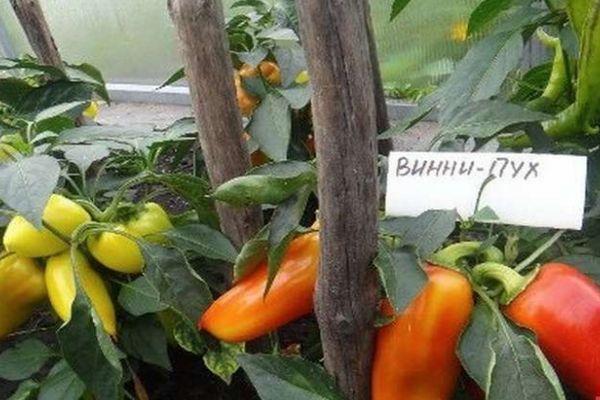
The skin is tough, reliably protecting the peppers from damage during transportation and storage. The skin is light green when ripe, but gradually changes to bright red as it ripens. Fruits picked at ripeness can be ripened at room temperature or in a cool pantry.

The flesh is crisp, dense, and very juicy. Despite the peppers' small size, growers' descriptions of the variety note their thick wall thickness—up to 0.5-0.6 cm. Their flavor profile rates them as excellent. Gardeners emphasize that Winnie-the-Pooh peppers have a sweet flavor, without bitterness or pungency. The peppery aroma is distinct.
Small, neat, and aromatic, these peppers are ideal for individual dishes and are also delicious fresh. Peppers at varying stages of ripeness can enhance a salad, adding unique notes to both its color and flavor. The colorful rings and slices look beautiful even when sliced for a festive occasion; they can be used to garnish sandwiches, canapés, appetizers, and cocktails. The peppery flavor complements most dishes typical of Asian, Caucasian, Mediterranean, and Latin American cuisines.
Bell peppers can be used in a wide variety of preparations. This vitamin-rich vegetable is included in salads and appetizers, fried and baked before marinating, and used to make lecho and similar dishes in a tomato sauce. Calibrated peppers can be preserved by steeping the seeded peppers in tomato juice. In winter, this semi-finished product is used for stuffing.
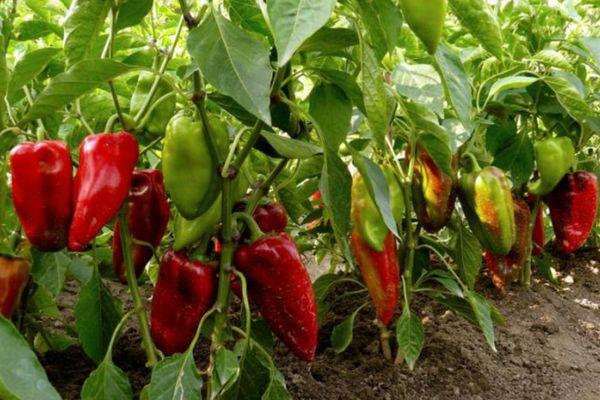
When peppers are grown outdoors, the last ovaries don't reach technical maturity, but they are still suitable for processing. These small fruits don't yet have a pleasant sweet taste, but they already possess a distinctive aroma. The tender pericarps are included in canned borscht dressings, appetizers, and seasonings.

Growing methods
You can get seeds yourself if you know someone who has a Winnie-the-Pooh variety. Peppers aren't hybrids, so seeds from fully ripened peppers can be used for propagation. They should be removed from the pepper and dried on paper.
In March, you can begin sowing pepper seedlings. For sowing, use a store-bought soil mix or prepare your own from equal parts sand, humus, and garden soil. To reduce acidity, add 1 tablespoon of dolomite flour for every 5 kg of soil. Disinfect the soil by soaking it in a hot solution of potassium permanganate.
Scatter the seeds over moist soil and cover them with a layer of dry soil or sand. The layer should be no more than 0.5 cm thick. This layer does not need to be watered. Cover the seed tray with plastic wrap and place it in a very warm place (+30°C) to germinate. Under these conditions, the peppers will begin to sprout in 7-8 days. Remove the plastic wrap from the tray, but leave the container at the same temperature for a few days.
Water the seedlings only when the top 0.5 cm of soil has dried out. Use warm water; you can lightly tint it with potassium permanganate.
In case of black leg disease, the soil and stems should be dusted with wood ash after each watering.
When the seedlings develop 2-3 true leaves, transplant them into individual containers or into a common planting box, using a 7x7 cm pattern. When transplanting, plant the seedlings deep into the soil up to the cotyledon leaves. For balcony cultivation, this is accomplished by planting 1-2 plants per container with a capacity of approximately 2 liters, where the Winnie-the-Pooh peppers will grow and bear fruit. Prepare the soil for these peppers according to the recipe for sowing seeds.
Take a look Also

Seedlings intended for planting in a greenhouse or garden continue to be watered regularly, but do not require additional feeding. Greenhouse cultivation begins in early to mid-May, and they are planted outdoors in early June. Planting distances between plants are 25-30 cm.
To encourage peppers to bear fruit faster, remove the very first flower or ovary that forms at the fork of two branches at the top of a young plant. This will allow the plant to direct all its nutrients toward the development of flowers and fruits on the new shoots.
You can tell when the fruit is ready for picking by its appearance (glossy, smooth skin) and the thickness of its walls (the fruit is hard and difficult to squeeze). It's best to cut these peppers to avoid damaging the fragile branches. Fruits in this state are perfectly suitable for salads and hot dishes.
Approximately 1 month after planting, Winnie the Pooh bushes should be fed with a complex mineral fertilizer for tomatoes and peppers (Signor Tomato, etc.). If desired, you can replace the fertilizer with a wood ash solution (500 g per 10 liters of water), watering the area around the trunk of each plant with 0.5-0.7 liters of the solution. This fertilizer should be repeated after two weeks to provide the peppers with the potassium they need.
Related posts:
 The best eggplant varieties for growing in a polycarbonate greenhouse: planting and care
 Methods for planting and propagating cherries at home
 How to control carrot flies with medications and folk remedies
 Is it possible to grow an apricot tree from a seed in your garden? How to plant and care for it?
 Top 40 DIY New Year's Baking Recipes for 2020
 The health benefits and contraindications of black currants
 How to properly grow a peach tree from a seed at home, planting and care
 The health benefits and harms of cherries, rules of consumption, and their effects on the body
This variety has a truly wonderful taste. I've been planting it for years—it's fleshy, juicy, and productive. But this year, for the first time, I started feeding it with a plant growth bioactivator. BioGrow, the yield increased by at least 50%!