
- The subtleties of preparing cherries for the winter
- Preparing berries and containers
- Delicious cherry recipes
- Drying felt cherries
- Freeze in the freezer
- Making jam
- With a bone
- Seedless treat
- Without cooking with jelly
- Roasted cherry jam
- Cherry jam
- Berry jam
- Berry compote
- Juice
- Syrup with sugar
- Chinese cherry liqueur
- Wine
- Tincture
- Specifics of storing winter preparations
Cherries are used to make various preserves. In Siberia and the Far East, they are known for their Chinese (felt) cherry. They are rich in iron and vitamin C and are beneficial to eat fresh or processed. Cherries increase hemoglobin levels, and their juice kills intestinal microbes, helping with asthma and colds.
The subtleties of preparing cherries for the winter
Cherry is a berry that is versatile in its uses and beneficial in its composition. The pleasant, slightly tart flesh is rich in vitamins. In winter, when it's cold, cherry preserves are always a welcome addition. For dessert, housewives prepare jams, syrups, kissels, and juices. For holiday feasts:
- liqueurs;
- tinctures;
- liqueurs.
The foam that forms during cooking is removed. It causes the jam to spoil faster.
Preparing berries and containers
The berries are picked with the stems attached and collected in the morning. They are placed in wide containers to prevent them from getting crushed. At home, they are washed and any debris is removed. The pits are removed if necessary. The preserves, marmalades, and marmalades are packaged in jars.
Liquid preparations without berries (syrup, tincture, wine) are bottled.
The container is sterilized. Any method can be chosen:
- steamed;
- in the oven;
- in the microwave.
The larger the container, the longer the heat treatment. Lids are first washed with baking soda, then scalded with boiling water for nylon ones, and boiled for 1-2 minutes for tin ones. Containers sealed with a lid remain sterile for 30 minutes.
Delicious cherry recipes
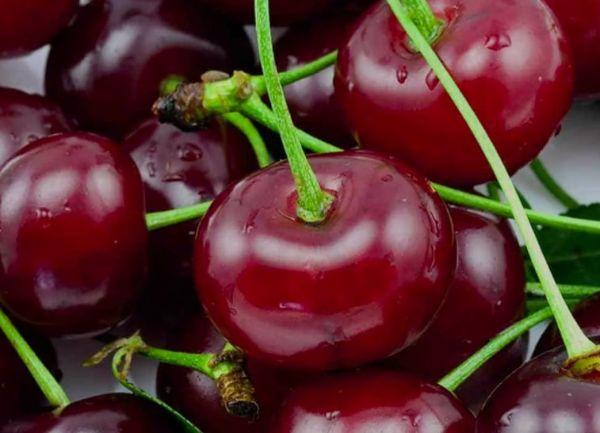
Cherries are a versatile berry. Every home cook has one or two tried-and-true recipes that feature them as the main ingredient. In summer, fresh berries are used, and in winter, preserves made during the harvest season are used in baked goods, desserts, and sauces.
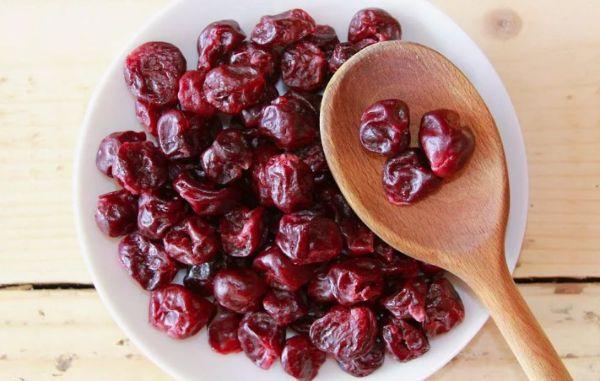
Drying felt cherries
Before drying, the berries are blanched. First, a pinch of baking soda (1 g/l) is added to boiling water, then a colander with the berries is dipped into the boiling water for 2-3 seconds. After removing the cherries from the boiling water, the colander is briefly immersed in cold water. Remove and allow the liquid to drain.
Line a baking sheet with parchment paper. Spread the cherries in a single layer. Dry in the oven:
- set to 70 °C;
- turn on convection (open the door slightly);
- the process lasts 12-16 hours.
The stove is turned off for a while and ventilated. After this break, the felt cherry drying process continues. The above breaks do not include any breaks.
Freeze in the freezer
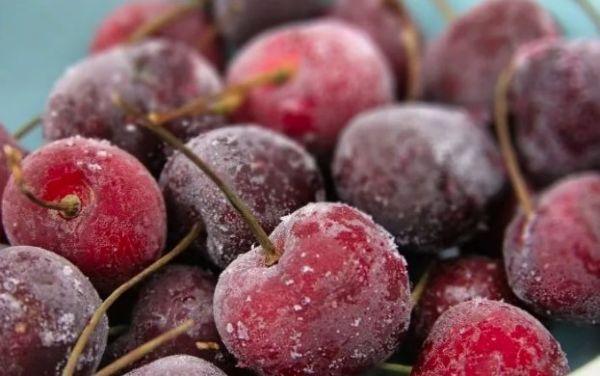
A freezer is a lifesaver for a busy housewife. It helps preserve the harvest of vegetables and fruits grown at home. Preparing berries for freezing takes minimal time.
Wash the cherries and drain them in a sieve. Once dry, transfer them to a tray and place them in a quick-freeze for several hours. For storage, transfer them to a suitable container:
- plastic bag;
- container with lid;
- a sour cream cup.
You can freeze berries in syrup. Take 1 part sugar and 1 part cherries. Place them in a plastic container, close the lid, shake well, and place on a shelf in the refrigerator. The berries will quickly release juice. Drain the juice. Transfer the cherries to a freezer-safe container, pour the juice over them, and place them in the freezer.
Frozen raw materials are used in different ways:
- they cook compote;
- make filling for dumplings;
- prepare sauce for meat and game;
- make sweet desserts;
- they cook jelly.
Making jam
Thick jam keeps better. It keeps well in an apartment. It's cooked longer and contains more sugar. Thin cherry jam begins to ferment at room temperature, so it's best stored in a cellar or refrigerator.
With a bone
A syrup is made from water and sugar. Clean berries are steeped in it for 8 hours. They release juice and are soaked in the sweet liquid. The jam, including the pits, is cooked in 2-3 batches.
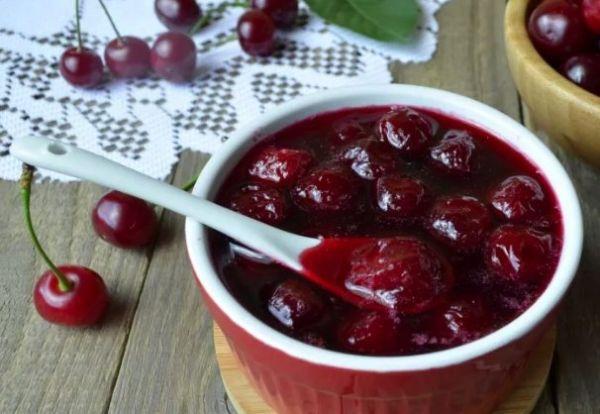
One technique is understood as a simple sequence of operations;
- bring to a boil;
- cook for 10 minutes over low heat;
- leave alone for 8 hours.
The finished jam is poured into jars while still hot. Raw material consumption:
- 150 ml of water;
- for liquid berry jam, 1 kg of sugar;
- for thick berry jam 1 kg sugar 1.5 kg.
Seedless treat
"Pyatiminutka" is a jam beloved since childhood. It's made with seedless berries, which are squeezed out using a special device. You need:
- 1 part sugar;
- 2 parts cherries.
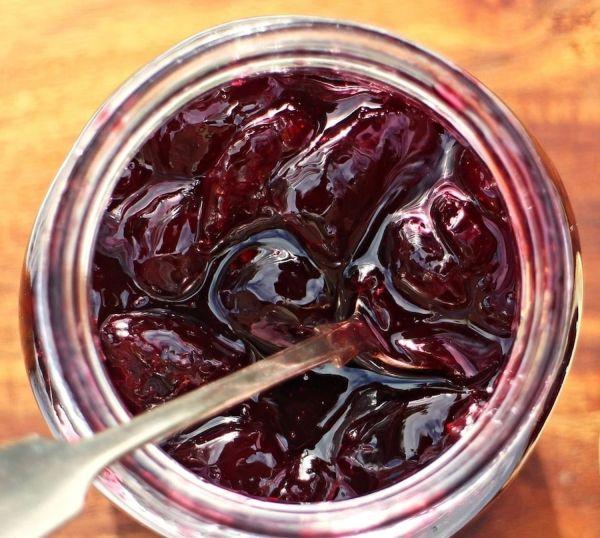
For example, one part is 500 g, two parts are 1000 g. This delicacy is prepared without water. The fruits are covered with sugar for 5 hours, allowing them to release juice. This replaces the liquid and dissolves the sugar. The mixture is brought to a boil. After 5 minutes of gentle simmering, remove the pan from the heat. The "Five-Minute" jam is ready.
Without cooking with jelly
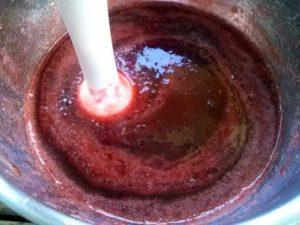
This method is the easiest way to preserve cherries for the winter. You'll need an immersion blender. For every two parts pitted cherries, use one part sugar (powdered sugar). One part equals 1 kg, two parts equals 2 kg. Blend the ingredients together to create a jelly. Store it in the refrigerator.
Roasted cherry jam
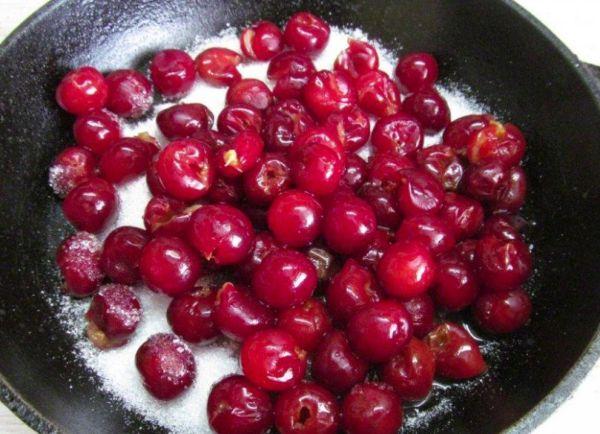
It's cooked in a frying pan, so in small batches. Use 1 part berries (seedless) and 1 part sugar. The weight of 1 part is determined by the diameter and depth of the frying pan. Roasted cherry jam cooks for about 15 minutes.
- First, add sugar;
- berries are placed on top;
- To prevent the sugar from burning, stir the berries and set the heat to medium or low.
The jam turns out thick and very aromatic. Its flavor is rich.
Take a look Also
Cherry jam
The French word confiture translates simply as "to cook in sugar." It consists of a jelly-like mass and berry pieces. The best recipes call for the gelling agent pectin or agar-agar. Modern cooks substitute gelatin, using 3 tablespoons for the amounts listed below.
- 1 kg seedless berries;
- 0.8 kg sugar;
- 400 ml of water;
- a pinch of citric acid.
The berries are simmered with water and sugar for three hours. Finally, citric acid and gelatin are added. The gelatin is soaked in boiling water for 10-15 minutes. It swells and dissolves easily in the hot berry mixture. Bring the jam to a boil, but do not let it boil. Pour it immediately into jars.
Berry jam
Take 1 part cherries and 1 part sugar. Boil the cherries or pour boiling water over them and press them through a sieve. Add sugar to the puree and cook until the mixture thickens.
Berry compote
Neither garden nor wild cherries can be stored in the refrigerator for more than two days. And at room temperature, even less. Therefore For the winter, compote is made from fresh berriesThey are washed, the seeds are removed, and they are poured into jars (⅓ of the volume).
Cook the syrup, take:
- 3 parts water;
- 1 part sugar.
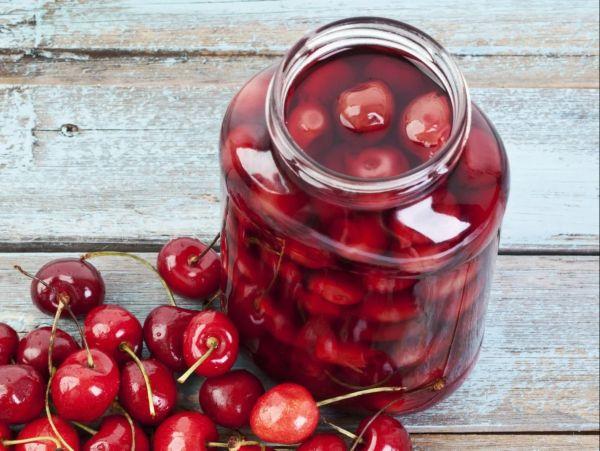
For example, 1 part = 300-330 g, three parts = 1000 g (1 l). The cherries are poured with boiling syrup. The jars are sterilized and sealed.
| Sterilization time (minutes) | Volume of the can (l) |
| 10 | 1 |
| 20 | 2 |
| 25 | 3 |
The compote is placed under a “fur coat” for 24 hours.
Juice
You can make it natural (sugar-free). Mash the cherries with a wooden pestle. Add a pinch of citric acid. After 12 hours, squeeze the juice, boil it, and bottle it.
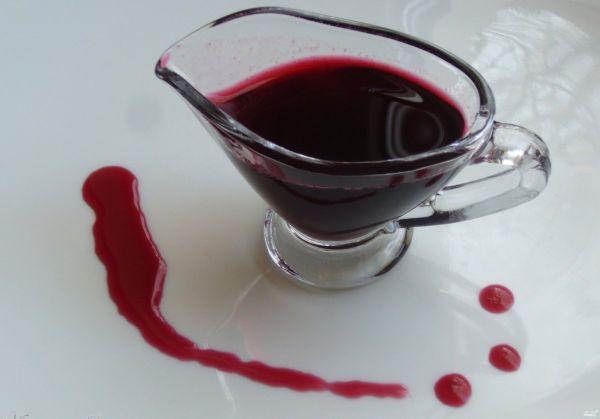
Syrup with sugar
You can make cherry syrup topping at home. It's essentially sugar dissolved in berry juice. In the summer, you can preserve it for the winter. To do this, use:
- 500 g berries;
- 600 g sugar;
- 700 ml of water.
Place all ingredients in a saucepan and bring to a boil. Once boiling, reduce heat, simmer for 3 minutes, remove from heat, and let cool. Repeat this process several times. When the syrup is rich and fragrant, remove the cherries. Strain the liquid, bring to a boil, and bottle.
Chinese cherry liqueur
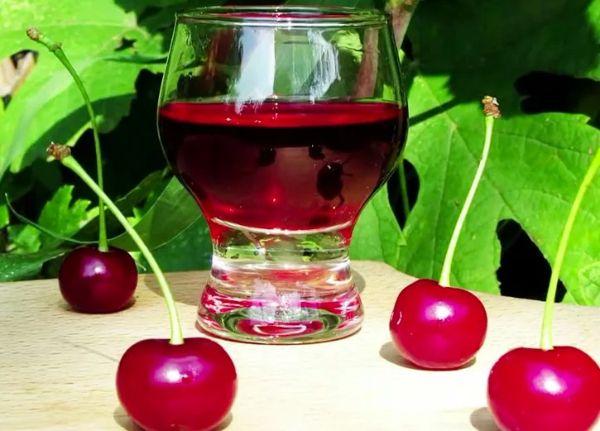
Liqueur is a sweet alcoholic infusion of Chinese berries with an alcohol content of over 20%. Ingredients for liqueur:
- 0.5 kg berries;
- 2 tbsp. sugar;
- ½ lemon;
- 500 ml of vodka;
- purified water 5 tbsp.;
- vanilla sugar.
Place the berries, sugar, and water in a saucepan, then add the sliced lemon. Cook for 10 minutes. Strain the cooled syrup, then press the cherries through a sieve. Pour everything into a bottle and add vodka. Store the bottle in a dark place. After two weeks, the liqueur is ready to drink.
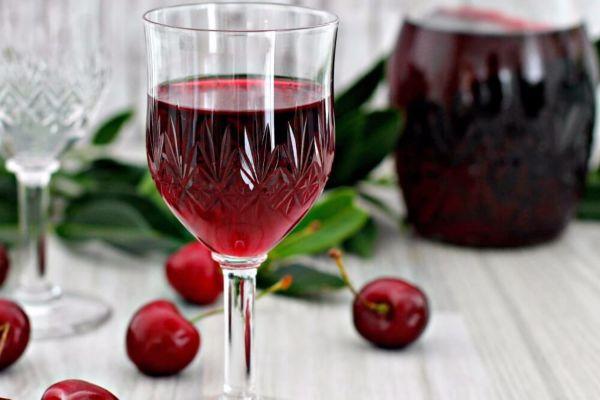
Wine
It should be made in a 10-liter bottle using cherry pulp (5 kg), sugar syrup (4 l), and water (3 l). Prepare 35% sugar syrup. Pour it over the pulp while it's still warm. Tie the neck. Place the bottle in a warm room (25-30 °C).
When the flesh side floats to the surface (4-6 days), install a water seal. The cherry wine ferments for 30-50 days. Then strain it, adding the juice squeezed from the flesh side. Replace the water seal on the bottle again. After 20-30 days, strain the wine and bottle it.
Inexperienced winemakers are advised to place a glove over the neck of the fermentation vessel. This makes it easy to determine the intensity of fermentation. When fermentation is active, the glove will be inflated; when it's finished, it will collapse. To prevent the glove from coming off, a hole is pierced in one finger with a pin or needle.
Tincture
To make cherry liqueur, you'll need a wide-mouthed bottle. Fill it with washed cherries. Add 0.7 kg of sugar per 1 kg of cherries. Tie the bottle's neck with cheesecloth. Place the bottle in the sun for 1-1.5 months. Strain the resulting juice and mix it with vodka and cold boiled water.
| Ingredient | Quantity |
| Vodka | 500 ml |
| Water | 250 ml |
| Juice | 250 ml |
Specifics of storing winter preparations
Dried berries can be stored for 12 months. They are packaged in paper or canvas bags, which make it easier to maintain optimal humidity. Glass jars are suitable for short-term storage. They are not sealed with lids. A napkin is placed over the neck and secured with a tie.
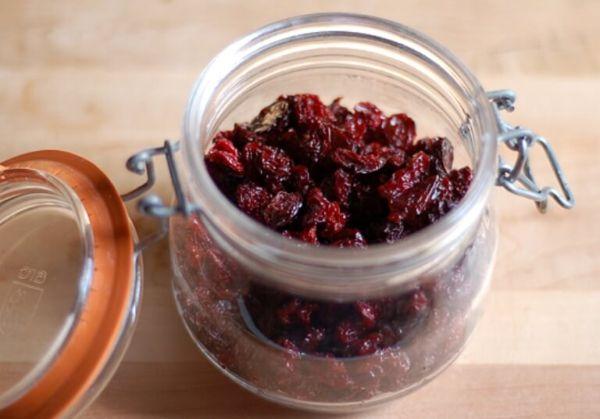
Seeds shorten the shelf life. After a year of storage, they release hydrocyanic acid, which is toxic to the body. Seedless jam can be stored for several years, while seeded jam lasts less than a year. Wine storage requires a special approach. Factors that degrade the quality of homemade alcohol include:
- sharp temperature fluctuations;
- unstable air humidity;
- the presence of a heater, lighting fixture, or window nearby.
If you exclude them and store cherry wine at a constant temperature of 6-15 °C, air humidity of 70-80%, it will last for 5 years.
Frozen seedless berries have a shelf life of 2-3 years. By the end of this period, the amount of nutrients in frozen berries decreases. Berries with seeds should be kept in the freezer for no more than a year. It is recommended to eat them before spring.
Related posts:
 13 Best Cherry Jam Recipes for Winter
 Simple step-by-step recipes for making lingonberry jam for the winter
 40 of the best recipes for delicious homemade winter preserves
 TOP 10 recipes for jam from garden and wild strawberries for the winter, in a slow cooker and on the stovetop
 15 simple recipes for making blueberry jam at home with apple and lemon in a slow cooker
 Description and pollinators of the Vladimirskaya cherry variety, planting and care
 20 Best Blackcurrant Winter Preserves Recipes
 23 of the most delicious orange jam recipes for the winter