
- History of selection
- Description and characteristics of the Dachnitsa currant
- Bushes
- Flowering and fruiting
- Taste qualities and scope of application of berries
- Immunity to diseases and pests
- Frost resistance
- Pros and cons of culture
- Planting technology
- Choosing a location
- Recommended planting times and patterns
- We prepare the planting hole and the seedling
- Planting Rules
- What kind of care does the variety require?
- Irrigation
- Fertilizing bushes
- Loosening and mulching the soil
- Formative pruning
- Protection from cold
- Diseases and pests – treatment and prevention
- Methods of reproduction
- By dividing the bush
- Layering
- Cuttings
- Gardeners' reviews of Dachnitsa
Blackcurrant is a popular crop for gardeners and homesteads. Gardeners try to select varieties based on the region's climate and care requirements. The blackcurrant variety with the typical name "Dachnitsa" is known for its consistent fruiting and undemanding nature. However, the hybrid has distinctive characteristics.
History of selection
The hybrid appeared in 2004 and was immediately included in the State Register. It is known as a variety zoned for cultivation in the Northwestern and Volga-Vyatka regions. The hybrid was developed in Serbia from several varieties with highly adaptable qualities.
Description and characteristics of the Dachnitsa currant
Dachnitsa is a mid- to mid-early-ripening currant variety. The hybrid's main characteristic is its sensitivity to excess sunlight.
Bushes
This shrub is characterized by its compact size. The bushes reach up to 1.2 meters. Shoot formation is characterized as slow to moderate. As a result, growth forms a sparse crown with noticeable gaps. With timely pruning, the shrub acquires a well-rounded shape. The leaves on the branches are green, with a characteristic bronze sheen.

Flowering and fruiting
Dachnitsa flowers are pale in color and reach 2.5 centimeters in diameter. A cluster contains 10 to 13 flowers. Almost all of them produce full-fledged ovaries. The variety is self-fertile, meaning it doesn't require additional pollinators.
Fruiting begins in the 2nd or 3rd year of growth. Peak fruiting occurs in the 5th or 6th year of growth. The bush produces up to 1.5 kilograms of fruit each season.
Information! The hybrid's early ripening period is extended, so the harvest is collected in several stages.
Taste qualities and scope of application of berries
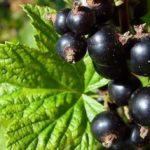
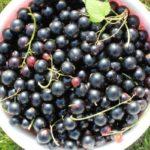
Large Dachnitsa currants weigh between 2 and 5 grams. They are round and oval in shape. Their color is described as dark blue, almost black.

The berries' sugar content reaches 9.3 percent. The taste rating is 4.6 points. The berries are suitable for:
- frosts;
- preparation of jams and preserves;
- additions to assorted compotes;
- use for fresh baking and dessert making.
Information! Due to the thin skin, the berries are not suitable for long-term storage and transportation.
Immunity to diseases and pests
The Dachnitsa currant variety is resistant to powdery mildew and spider mites. This hybrid was bred with enhanced protective properties, but is susceptible to anthracnose if care or planting instructions are not followed.

Frost resistance
Dachnitsa is adapted to low temperatures (with additional cover). The hybrid tolerates temperatures down to -35 degrees Celsius. However, the berry is intolerant to drought. Without regular watering, the berries become smaller, and shoot growth stops.

Pros and cons of culture
When choosing a Dachnitsa for planting on a plot, consider not only the advantages but also the disadvantages of the variety.
| Pros | Cons |
| Large-fruited | Low growth, lower branches overloaded with berries |
| Early fruiting, extended ripening time | Low berry transportation rates |
| Resistance to powdery mildew and mites | Drought intolerance |
| Self-fertility | |
| Stable fruiting |
Planting technology
Experienced gardeners know that the choice of seedling location, as well as adherence to planting guidelines, influences the growth and development of the future bush. When preparing a plot for currants, keep in mind that the bush can grow in one place for 10 to 15 years.
Choosing a location
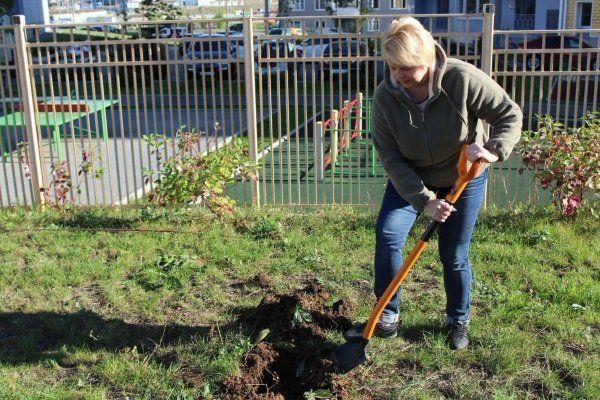
For currant bushes, choose open, sunny areas along hedges or fences, with the necessary space for root growth. Leave about 2 meters between bushes to ensure the roots don't interfere with each other.
Currants prefer fertile, loose soils and light loams. Avoid planting young Dachnitsa seedlings in areas previously occupied by other currant or gooseberry varieties.
Avoid low-lying areas where moisture can accumulate. Currants should be planted in locations protected from strong winds.
Recommended planting times and patterns
Currant seedlings are planted in the fall or spring. This depends on the individual preferences of the gardener:
- spring planting begins long before the buds on the seedlings swell;
- In the fall, the bushes are deepened into the soil so that the roots have time to adapt and get used to the soil before the first frost.

We prepare the planting hole and the seedling
For the planting hole, dig a 40-centimeter-deep hole, then fill it with a fertile mixture consisting of soil and complex fertilizer. When choosing a seedling, pay attention to the root system. The overall condition of the seedlings is assessed according to several criteria:
- the root system should not have dry areas or damage;
- the bush should consist of 2 or 3 stems;
- viable buds must be formed on the shoots.
Planting Rules
Currant bushes are planted in a straight line along hedges or fences. Space is left between bushes to allow for the fibrous root system to grow. Space between subsequent rows should also be sufficient for shaping the tree trunks, mulching, and installing fencing.

What kind of care does the variety require?
Each hybrid blackcurrant variety requires similar care techniques. However, each variety has its own unique requirements, including irrigation schedules, shaping, and tying.

Irrigation
The Dacha plant is intolerant of drought, so regular watering is a must for caring for the hybrid. During the flowering and fruiting period, a mature bush requires two buckets of warm water weekly. Water around the trunk to prevent soil from washing away from under the trunks.
During dry, hot summer days, it's recommended to water the Dachnitsa currant variety with an evening drip irrigation system. This method moistens the foliage and shoots.
Fertilizing bushes
Fertilizing to improve fruiting is essential when caring for the Dachnitsa variety:
- When buds are forming, before flowering, nitrogen-containing complexes are added to the soil; these include ammonium nitrate and complex fertilizers.
- When fruits are forming and berries are ripening, calcium and phosphorus are added to the soil; these can be dry granules or solutions of mixtures based on the main elements.

Loosening and mulching the soil
It's recommended to mulch the soil around currant bushes after planting. Larch bark or pine needles are used for this purpose. Larch bark has bactericidal properties, which helps prevent soil diseases and the growth of pests.
Loosening is carried out after every heavy watering or prolonged rainfall. This helps provide the soil with additional air and allows the root system to grow, which depends on the condition of the topsoil.
Formative pruning
The Dachnitsa variety has compact bushes. They are pruned in spring and fall:
- In spring, damaged and dead branches that will not be able to adapt are removed.
- In autumn, the bushes are pruned to prepare for winter.
In addition, summer pruning can be corrective. This means removing shoots that block the sun from reaching the main part of the plant.

Protection from cold
Although this variety is highly frost-resistant, in regions prone to low winter temperatures, additional cover is required. Newly planted seedlings under two years of age are also covered.
The bushes are pruned back to 4-5 buds, then carefully bent to the ground and covered with agrofibre or burlap. To prevent the material from blowing away in strong winds, it is secured with twine or nylon rope. The area around the trunk is loosened, a protective trench is dug, and the soil around the trunk is mulched.
Diseases and pests – treatment and prevention
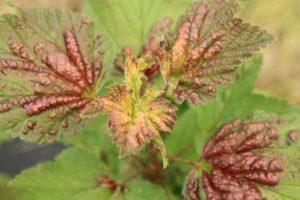
The Dachnitsa variety is resistant to powdery mildew and spider mites. The main danger for this variety is anthracnose. This fungal disease can ruin a season's harvest. Infection occurs in stages: first, the root system is affected, then the condition of the aboveground part gradually deteriorates.
The main measures to combat anthracnose include spraying shrubs with Bordeaux mixture at the early stages of infection.
Currants are often infested with aphid colonies, which cause leaves to curl, turn yellow, dry out, and fall off. Regular treatments with tobacco or soap solutions are recommended to control aphids. These treatments help completely eliminate adult aphids and destroy their nests.
Take a look Also

Methods of reproduction
Among several propagation methods, the one most suitable for the gardener is chosen. Propagation is carried out in early spring or late fall.
By dividing the bush
Dividing the bush is a propagation method used when a mature bush needs to be transplanted to a new location. The currant bush is dug up, and the root system is carefully divided into several sections, each with strong shoots. The sections are then planted in prepared locations and watered thoroughly.
Layering
Dachnitsa is a variety whose lower branches often bend toward the ground under the weight of ripe berries. Gardeners remove fruit from some of the lower branches, bury them, and wait for the shoots to emerge. Once the rooted shoots emerge, they are dug up again, separated from the mother plant, and planted in a new location.

Cuttings
To propagate the variety from cuttings, the cuttings are made in the fall. The resulting cuttings are rooted in water or soil indoors over the winter months. Strong shoots that have taken root and developed leaves are planted in prepared holes in the spring.
Gardeners' reviews of Dachnitsa
According to gardeners, the advantages of this variety include the quality and flavor of its berries. With proper care, Dachnitsa bushes can produce a stable harvest for several years.
Gardeners note that with annual fertilization with potassium nitrate during fruiting, currants produce only large berries.
Related posts:
 Description and rules for growing black currant variety Veloy
 20 Best Blackcurrant Winter Preserves Recipes
 Characteristics and descriptions of the 40 best red currant varieties
 Description of the 10 best currant varieties for the Moscow region, planting and care
 The health benefits and contraindications of black currants
 Description and characteristics of the 25 best blackcurrant varieties for Siberia
 The health benefits and contraindications of white currants
 TOP 10 recipes for red, black, and white currant sauce and ketchup for the winter, and how to store your preparations