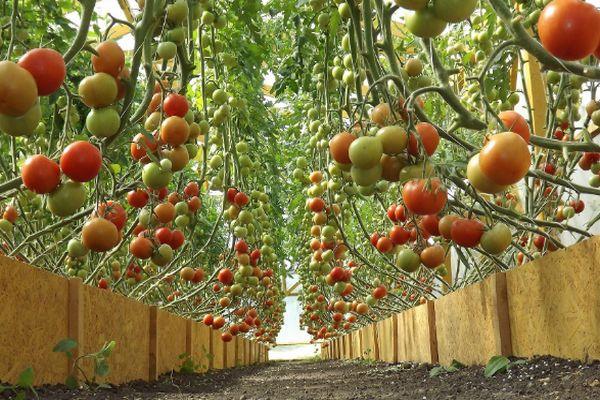
The Beefsteak tomato, the characteristics and description of which will be discussed below, is grown in greenhouses. There's also the Big White Beefsteak tomato, which, unlike other red-skinned varieties, produces fruits in shades of white. This tomato has crisp skin and is rich in juice. It's used in various salads and sauces. High-quality tomato juice is produced commercially from these tomatoes. The fruits can be preserved in slices or fried for the winter.
Some information about the plant
The Beefsteak tomato variety has the following characteristics:
- The height of the bush with red fruits ranges from 170 to 190 cm. The bush of the white tomato grows up to 2 m.
- The plant has a medium ripening period. The first harvest is obtained 80-90 days after planting the seeds.
- Tomato leaves are green, of normal configuration.
- The formation of bushes in red specimens occurs from 1-2 stems, and in white ones - 2-3 stems.
- The fruits are round with slight ribs. Depending on the variety, their color ranges from bright red to a milky shade.
- Beefsteak tomatoes are resistant to various fungal and bacterial infections.
The fruit contains 5-6 seed chambers. Because this tomato has a thin skin, it can be stored for no more than 7 days. This variety is practically unsuitable for transportation.
The fruit weighs from 0.3 to 0.5 kg, but there are reviews from some gardeners who managed to get specimens weighing from 1 to 2 kg.
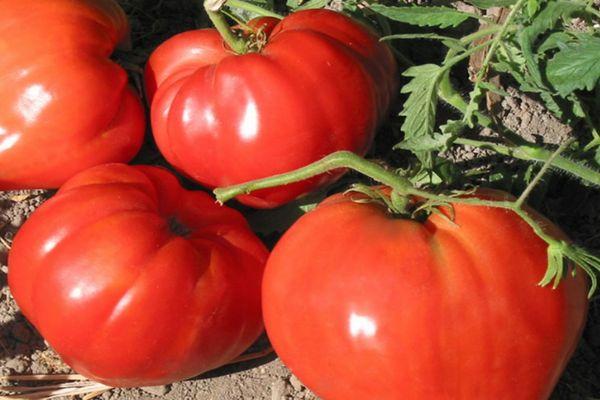
The yield of this tomato variety is 7-8 kg per square meter. Reviews of the plant are positive, although many farmers point out that due to the relatively tall bushes, they need to be tied to sturdy supports; otherwise, the branches may break during fruit formation due to the heavy weight of the tomatoes.
According to gardeners' reviews, the bush can grow outward, so it's important to remove side shoots and shape the plants promptly. With proper care, up to seven clusters can develop from the ovary, resulting in a bountiful harvest.
Cultivation of the described tomato
The Beefsteak variety thrives in acidic soils that require regular loosening and fertilization. It's recommended to plant the plant in soil that hasn't previously grown tomatoes for 3-4 years.
The seeds are planted in holes up to 15 mm deep. This should be done two months before planting the seedlings in the greenhouse. Seed treatment and calibration are necessary, as only large seeds will develop into healthy plants.
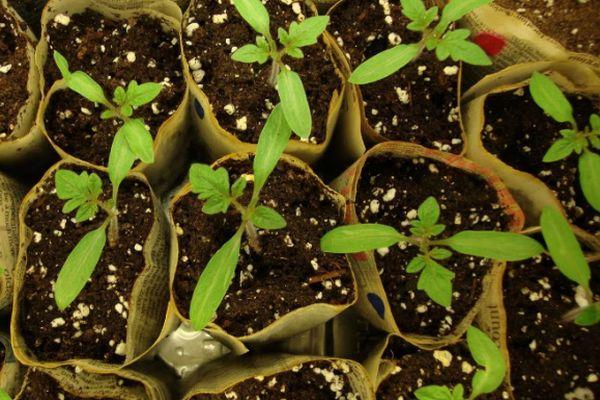
To ensure germination, seeds are treated with stimulants and treated to destroy pathogens of various diseases.
The seed trays are kept indoors at a temperature of +25°C, and after sprouts appear, at +16°C. The containers with seedlings should be well-lit. Special lamps are used for this purpose.
Seedlings are pricked out when 1-2 leaves appear. For normal growth, seedlings are fertilized twice.
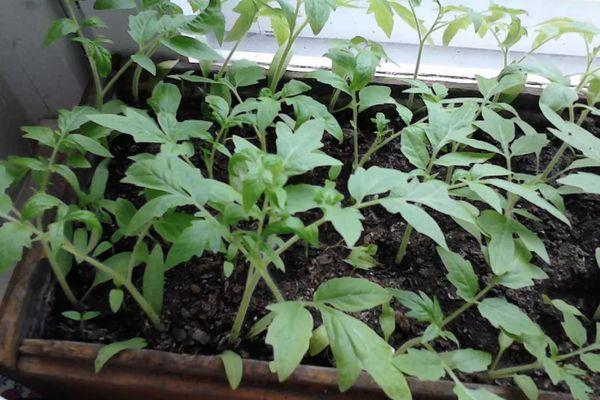
Before planting the seedlings, the soil is loosened, and then loosening is carried out 3 times a week until the ovary appears. It is necessary to fertilize plants on time and water them regularly.
Tomatoes grow well if no more than three plants are planted per square meter. The stems are supported with strong stakes or trellises. During the initial stages of growth, it is recommended to apply more nitrogen fertilizer, but this should be done in moderation. Otherwise, the plant's immunity will decline sharply, and late blight will develop. Under these conditions, there will be no harvest.
To eliminate this threat, mulching the soil in the greenhouse with sawdust is recommended. Remove the sawdust after 14 days.
When tomato buds appear, it is recommended to feed them with potassium-containing fertilizers. Calcium nitrate is used to prevent blossom-end rot. After the first feeding, repeat the process 14 days later. Watering should be regular, preferably via drip irrigation.
Related posts:
 Rules for growing tomatoes in open ground, choosing a variety, planting and care
 What fertilizers and when to use for feeding tomatoes in a greenhouse
 Planting and caring for arugula in open ground, description of the best varieties and their cultivation
 How often should you water onions in open ground and the water consumption rates?
 The benefits and contraindications of lentils for the human body
 How to properly plant cucumber seedlings at home and what to feed them with
 Description and characteristics of the Klusha tomato variety, yield and cultivation
 Why potatoes aren't growing well in the garden, and what to do to ensure a bountiful harvest