
The Khlebosolny tomato is a mid-early variety bred in Siberia. Its adaptation to local weather conditions results in a strong immunity, allowing it to be grown in harsh climates, achieving a bountiful harvest. The demand for this vegetable crop is also due to the excellent taste of its fruits.
Description of the variety
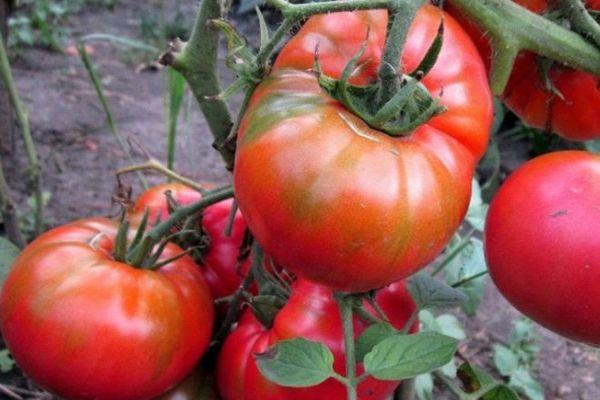
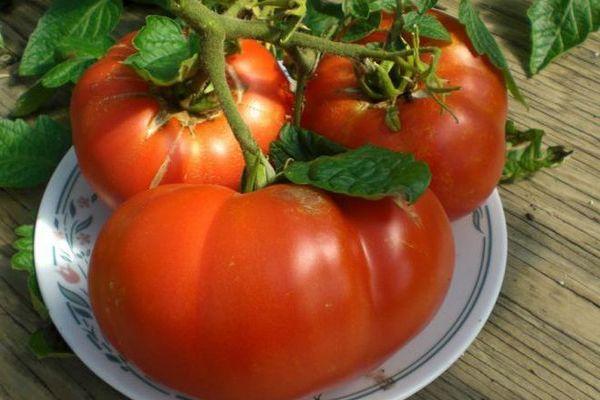
Characteristics of Hospitable Tomatoes: mid-season ripening, determinate, spreading bush with dense green foliage. The plant grows up to one meter tall but requires staking due to the large fruits, gathered in small clusters. One tomato weighs 600–1000 g. The round, slightly flattened tomatoes with slight ribbing are covered with a firm yet tender, bright red skin. The sugary flesh with a meaty, dense texture has a sweetish flavor.
Growing
Growing Tomato cultivation begins with seed preparation:
- To identify viable seeds, immerse them in a saline solution and wait 10 minutes. Any seeds that float to the surface are discarded.
- The remaining seeds are washed and disinfected with a weak solution of potassium permanganate.
- The seed material is kept in a growth stimulator.
- The seeds are hardened in the refrigerator for 24 hours, wrapped in cloth.
- Heat at a temperature of 20 degrees for 5 hours.
The seeds are planted in a mixture of equal parts fertile soil, peat, and river sand, to which a cup of wood ash and a little rotted cow manure are added. The prepared soil is watered with a strong potassium permanganate solution and placed in boxes or containers.

The surface is leveled, and furrows one centimeter deep are formed. The seeds are placed in the furrows at 2-cm intervals and covered with soil. The containers are covered with plastic or glass and placed in a dark room at a temperature of 25 degrees Celsius.
When the sprouts appear, the cover is removed and the room is provided with good lighting with a temperature drop to +15 degrees.
The seedlings are watered infrequently but generously using a spray bottle. When two true leaves have formed, the seedlings are transplanted into separate pots or cups, leaving the root ball attached. Twice a month, a solution made from 200 grams of ash and 10 liters of water is added to the plants.
A week before planting tomatoes in a permanent location, preliminary hardening is required.
To do this, open the window, lower the room temperature, and take the seedlings outside.
Seedlings are planted in the greenhouse in the first ten days of May, spaced 40 cm apart. The plants are laid at an angle and covered with soil to strengthen the root system. The planting process ends with watering and mulching with compost or sawdust.
Care Features
Khlebosolnye tomatoes are watered as needed, weeded, and carefully loosened to prevent crusting on the soil surface. Hilling is recommended during flowering and ripening.
The application of certain fertilizers depends on the stage of growth of the plant:
- fertilizing the root zone with ash is advisable during flowering;
- during the period of fruit formation, a solution is prepared from one liter of water, boric acid and soda, taken one gram each;
- Fermented mullein is added during the growth process.
In greenhouse and hothouse conditions, with insufficient lighting, the bush is formed into a single trunk, provided with support and tied up.
Advantages and disadvantages
The description of the positive properties of Khlebosolnyh tomatoes includes:
- resistance to low temperatures;
- high level of seed germination;
- stable yield;
- active fruiting;
- low susceptibility to diseases;
- easy care;
- excellent taste;
- large-fruited;
- transportability;
- attractive appearance;
- long shelf life;
- friendly ripening.
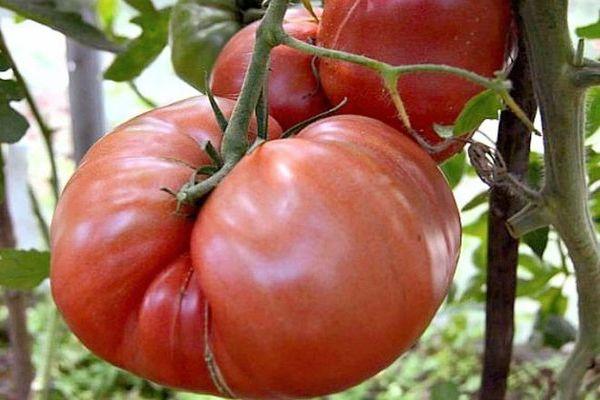
A benefit of Khlebosolny is the ability to harvest seeds yourself. Moreover, the collected seeds have an almost 100% germination rate.
The characteristics of the culture highlight the following disadvantages:
- spreading bushes must be tied to a support;
- The size of the fruits does not allow for whole canning.
Pests and diseases
Growing disease-free tomatoes is a difficult but achievable task. The Khlebosolny variety is renowned for its resistance to late blight, but is susceptible to blossom-end and root rot. Prevention involves disinfecting the soil with a potassium permanganate solution, mulching, and weeding.


Pests that pose a danger to this variety of tomato:
- whitefly;
- aphid;
- Colorado beetle;
- spider mite.
To combat aphids, wipe the leaves with a solution of laundry soap. Other pests should avoid morning or evening sprays with Fitosporin.
Foggy and sunny weather is not suitable for spraying, as burns appear on the leaves.
Harvesting and storage
Harvesting of the pink Khlebosolny tomato begins 120 days after planting. One bush can produce 20 kg of fruit.
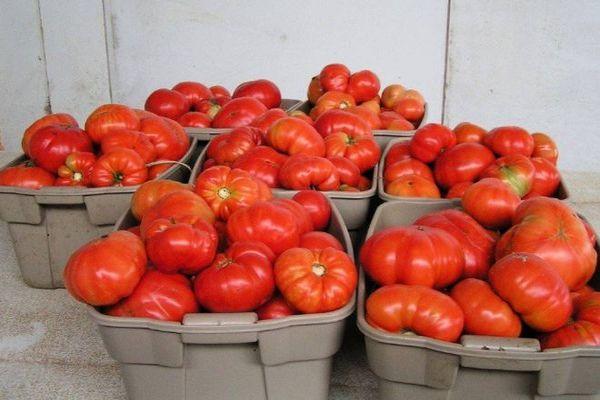
For storage purposes, harvesting must be carried out in compliance with the following rules:
- pick the fruits during the day, when the dew has dried;
- the room should be dark;
- ensure a temperature of no more than 10 degrees above zero and air humidity of up to 82%;
- select healthy fruits without signs of damage;
- Place the tomatoes in wooden or plastic containers, layering them with paper or dry sawdust (no more than three);
- Check boxes weekly for spoiled tomatoes.
Despite the large mass of the fruit, tomatoes can be stored for a long time.
This variety is used for salads, garnishes, and in various dishes, including dietary and children's dishes. These tomatoes are suitable for making paste, juice, ketchup, and sauces. Although they can withstand heat treatment, they are not suitable for canning due to their large size.
The simple and undemanding Khlebosolny tomato variety is easy to grow, even for inexperienced gardeners. By following the manufacturer's recommendations and listening to reviews from seasoned gardeners, you'll always have a bountiful harvest.
Gardeners' reviews
Inna Vasilievna:
"Large-fruited Khlebosolnye tomatoes are the only ones I have no trouble with. The main requirement is to tie up the bushes on time, and everything else is minimal. In five years of growing them, we've never had a single crop failure."
Tamara:
"Delicious, huge tomatoes are ready to eat every day. The sweet flesh allows you to pick them straight from the vine and eat them without any additives, and they really shine in a salad. A dozen plants are enough not only for fresh use as much as you like, but also for winter preserves: juice, ketchup. They also go well in borscht, canned vegetables, and canned fish."

Vladimir Semenovich:
"My family's favorite variety! I'd even call it early, not mid-season. Fleshy but juicy. If you want larger fruits, leave a few ovaries in the cluster. Overly large ones grow gnarled, while medium-sized ones are neat and tidy."
Related posts:
 Description of the best varieties of black tomatoes for open ground and greenhouses
 What is the best way to feed tomato seedlings to make them plump?
 15 simple recipes for pickling tomatoes in jars for the winter
 TOP 17 recipes for pickled sweet tomatoes for the winter
 How to grow cherry tomatoes on a balcony: suitable varieties and planting and care guidelines
 What fertilizers and when to use for feeding tomatoes in a greenhouse
 What varieties of tomatoes are best to plant in a polycarbonate greenhouse?
 16 Best Quick Pickled Tomato Recipes for the Winter