
Compact bushes covered with brightly colored fruits—this is what the Karotinka tomato looks like in the garden. A gardener won't have to put in much effort to achieve a good harvest. This easy-to-grow tomato is adapted to the conditions of central Russia and can be grown outdoors.
Description of the general qualities of the variety
The Karotinka tomato variety is a determinate plant. It stops growing on its own after four to five flower clusters and ovaries have formed. The maximum height of the bush is only 60-70 cm, and gardeners' reviews indicate that the low-growing standard plants do not require staking. Karotinka tomatoes are also not prone to excessive branching, so care for them does not include removing side shoots.
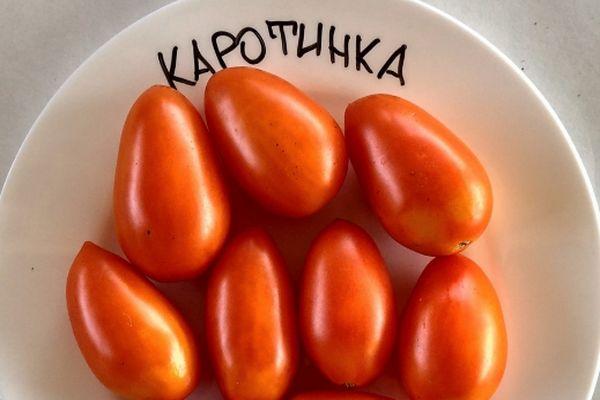
This variety is recommended for growing both indoors and outdoors. Karotinka is resistant to temperature fluctuations and sudden cold snaps, producing a consistent harvest in any season. It also produces well in greenhouse conditions, and can tolerate heat and slight soil drying without significant harm. The tomato is resistant to most fungal diseases and is not affected by late blight or other saprotrophic organisms.
The Karotinka variety has a medium yield. A single bush can yield approximately 3 kg of fruit. However, the value of compact varieties lies in their ability to be planted in a dense pattern. By leaving 30-40 cm between bushes, gardeners can get a good yield of neat, small, oval or egg-shaped tomatoes per square meter.
Medicinal fruits of Karotinka
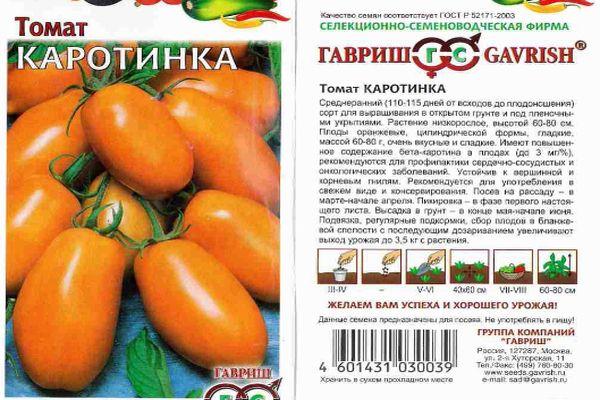
The Karotinka variety is promoted by producers as having medicinal properties. This description stems from the high carotene (provitamin A) content of the tomatoes, which grow on low bushes. Furthermore, Karotinka is considered a low-allergenic variety. These tomatoes are suitable for baby food and dietary nutrition. In addition to its beneficial properties, Karotinka has a pleasant sweet, slightly tart flavor.
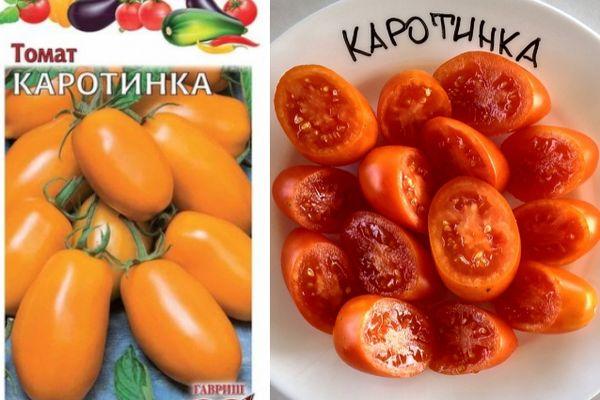
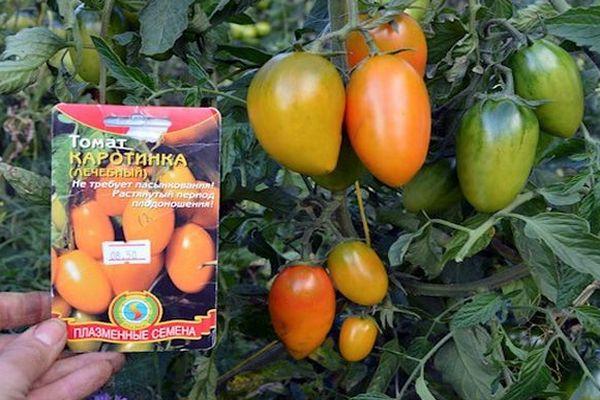
The skin of the Karotinka tomato is firm and durable, but not too thick. The tomatoes do not crack even during sudden weather changes, such as when hot spells are followed by prolonged rainfall. A ripe Karotinka tomato is a bright orange and uniform in color. Unripe tomatoes have a dark green spot at the base.
The tomato flesh has a pleasant consistency, juicy but not too firm. To preserve these tomatoes for a long time, they should be picked slightly underripe (blanched) and then ripened at room temperature. This does not alter the flavor of the tomatoes.
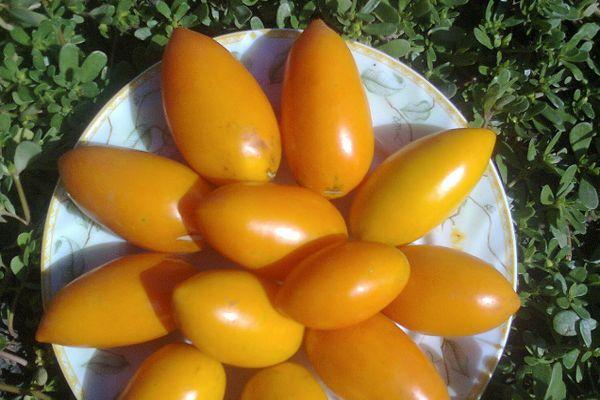
Description of fruits:
- The average weight of the Karotinka tomato is 50-60 g.
- They are collected in small clusters of 6-7 ovaries, which develop evenly and ripen almost simultaneously.
- The first brush appears after 5-7 leaves, the next ones are formed after 3-4 nodes.
Karotinka tomatoes are considered a mid-season variety: the first ripe tomatoes can be harvested only 110-120 days after sowing the seeds. For a more extended harvest, the plants should be planted in a greenhouse in mid-May, where they will begin bearing fruit 2-3 weeks earlier. In open ground, healthy tomatoes will appear after greenhouse tomatoes have finished fruiting.
This variety is versatile. The unusual orange flesh looks beautiful in a salad among yellow and red vegetables. These small tomatoes are also perfect for a holiday table, served as summer appetizers or on sandwiches.
Carotene is well preserved during heat treatment. Therefore, the nutritional value of Karotinka tomatoes will be preserved even when canned. Orange calibrated tomatoes are beautiful in marinades, mixed with other vegetables, or on their own.
Tomatoes can be used to make beautiful, uniquely colored tomato juice with a high carotene content. However, the best way to preserve tomatoes is by drying them: by reducing the moisture content, all the beneficial nutrients are preserved.
How to grow Karotinka in your garden?
The basic agricultural techniques for growing medicinal tomato varieties are no different from caring for ordinary tomatoes. The mid-season variety should be sown for seedlings in early March so that the bushes reach 70-90 days of age by planting. In this case, the harvest will be ready sooner.
Prick out the seedlings into 7 cm diameter pots and place them in a well-lit area with a temperature of approximately 23°C. Water the seedlings regularly to prevent the soil in the containers from drying out.
Compact tomatoes require virtually no additional feeding. If the bed has been fertilized with organic matter and phosphorus-potassium fertilizers since autumn, there's no need to add additional chemicals.
If so tomatoes grow in the same place If it's not the first year, it's worth feeding them with special fertilizers such as Signor Tomato or Kristallon Tomato, according to the instructions for the product.
Related posts:
 What varieties of tomatoes are best to plant in a polycarbonate greenhouse?
 Description of the best varieties of black tomatoes for open ground and greenhouses
 The best tomato varieties for growing in the Leningrad region for greenhouses and open ground
 Characteristics and cultivation of the best varieties of pear-shaped tomatoes
 Growing and caring for tomatoes in a greenhouse from planting to harvest
 Description of the best tomato varieties for open ground in the central zone
 16 Best Quick Pickled Tomato Recipes for the Winter
 When is the best time to plant tomato seedlings in 2025 and when to sow seeds?