
Gardeners are interested in how to grow the Samara tomato, the characteristics and description of which are of interest to many. This early-ripening variety boasts excellent flavor. This variety is versatile in its uses. The fruits can be used to make salads, borscht, sauces, juices, and side dishes.
Description of the Samara tomato
Characteristics of the variety:
- Tomato Samara f1 is an indeterminate hybrid of early ripening.
- Tomatoes grow in clusters.
- The first fruits ripen 90-100 days after sowing the seeds.
- The variety can be grown in a greenhouse and in open ground.
- In central Russia, tomatoes are grown in greenhouses.
- The plant reaches 2 m in height.
- The bushes need shaping and removal of side shoots.
- The number of leaves is average. They are green in color, with a matte surface.
- To increase yields, gardeners remove lateral shoots.
The bush is trained into a single stem. This will result in larger, more abundant fruits, as timely removal of excess shoots will prevent the central stem from robbing it of nutrients.
Description of fruits:
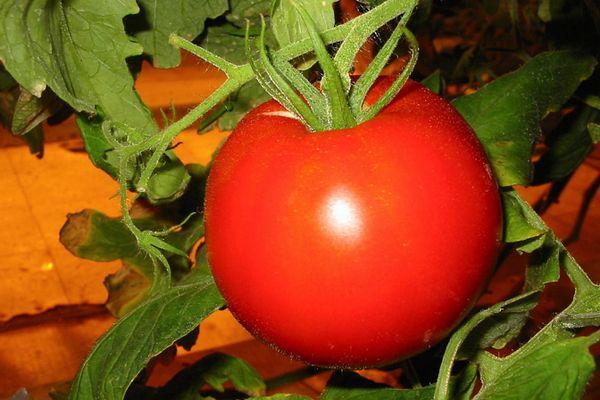
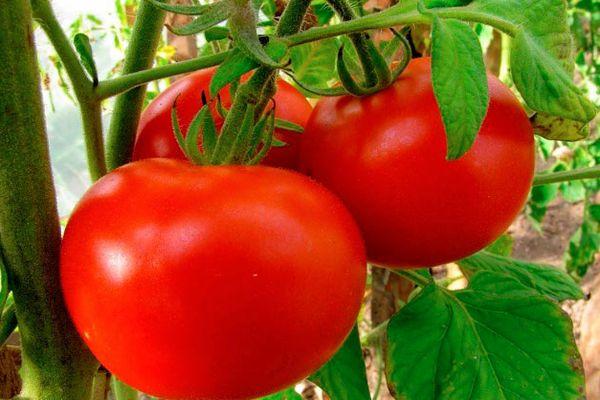
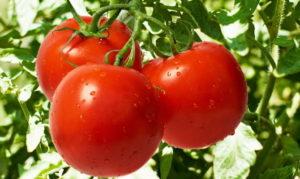
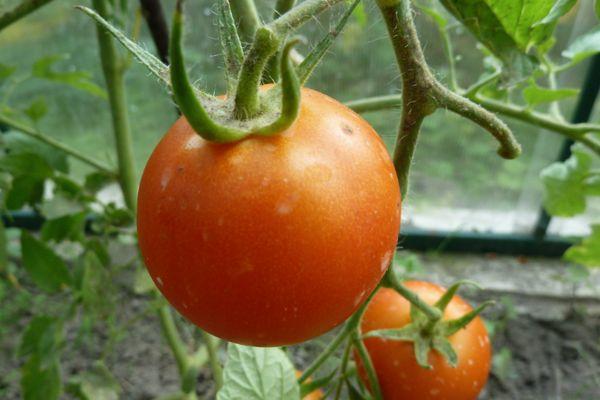
- The fruits are round in shape.
- The color is bright red.
- The skin is glossy and dense.
- The weight of the fruits is about 80-100 g.
- Tomatoes do not crack.
- The pulp of the fruit is juicy and dense.
Gardeners' reviews of the Samara variety are positive. These tomatoes withstand transportation and long-term storage well. This makes Samara tomatoes suitable for commercial use.

The fruits have excellent taste. This is one of the advantages of this variety, as early-ripening varieties are typically inferior in taste to later-ripening tomatoes.
All fruits are approximately the same size and ripen at the same time.
If the growing conditions are followed, including timely watering and fertilization, the yield per bush per season can reach up to 4 kg. The tomato is resistant to diseases such as tobacco mosaic, blossom-end rot, and fusarium. When harvesting, the fruits can be plucked from the branches in whole bunches, which prolongs the shelf life and preserves their appearance.

The variety's drawbacks include its ability to be grown only in the country's central regions with warm climates. It cannot be grown in greenhouses during the fall and winter. The growing season is summer and fall only.
How are tomatoes grown?
Tomatoes are grown using seedlings. First, sow the seeds for seedlings. Late February is a good time to do this. The seeds are planted in containers no more than 1 cm deep. The containers are placed in a warm place. When the first leaves appear on the sprouts, they are transplanted into individual pots. Fertilize the soil with a complex fertilizer.
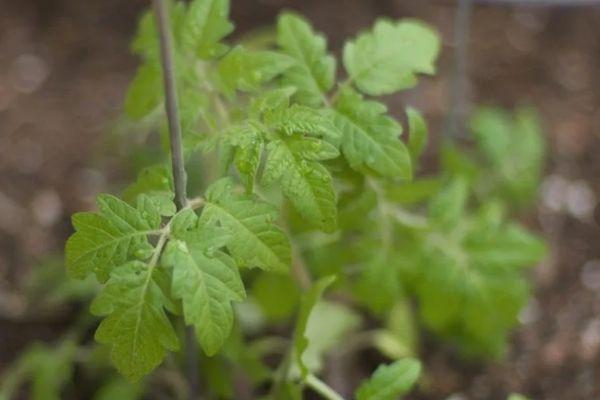
Before planting seedlings in the ground, they need to be hardened off. This is accomplished by taking them outside for a short period of time each day. Once the hardening period has reached its maximum, meaning they've been left outside for 24 hours, the seedlings are ready for transplanting into the ground.
Planting can be done when there's no risk of frost. Experienced vegetable growers recommend growing this variety in greenhouses. In greenhouses, the bushes need to be properly watered and fertilized. Regular ventilation is essential.
Before planting, dig holes, place the seedlings in them, cover with soil, compact them lightly, and water. The next watering is necessary after 10 days, as the soil should not be too wet. After this, until flowering, water the bushes as the soil dries out. Use 3-4 liters of water per square meter. During fruit formation, the bushes require more intensive watering. Then the water consumption is approximately 10-12 liters per 1 m².
Plants should not be watered with cold water. The water should be warmed to 20–22ºC. This can be achieved by leaving the water in large containers in the sun for several hours. Once the water warms up, water the plants. When the fruit ripens, water the plants after 5–7 days.
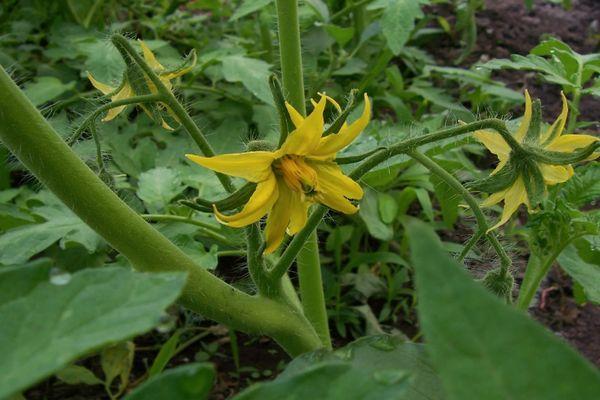
Humidity in the greenhouse is very important. If it's too high, the tomatoes will pollinate poorly. Pollination occurs naturally. To increase yields, many gardeners also use mechanical pollination. This requires regularly shaking the branches of the plants. This is usually done during sunny daylight hours.
After mechanical pollination, the flowers are sprayed with water and the greenhouse is ventilated. The greenhouse should be equipped with vents for ventilation. The temperature in the greenhouse should be 22ºC during the day and 20ºC at night. During the flowering and ripening periods, the temperature should be 26…27ºC. Following these tomato care guidelines will ensure a bountiful harvest.
Related posts:
 80 Best Eggplant Varieties for Different Regions with Descriptions and Characteristics
 Description of blight-resistant tomato varieties for open ground and greenhouses
 Description and characteristics of the best seeds of pea varieties and types
 The best eggplant varieties for growing in a polycarbonate greenhouse: planting and care
 The best grape varieties for growing in the Urals, planting and care rules in summer
 Descriptions of the 20 best cherry varieties for the Moscow region, their planting and care
 Description of the best varieties of black tomatoes for open ground and greenhouses
 Descriptions and names of varieties and the best types of radish, planting and care