
Thanks to the efforts of breeders, good tomato harvests are possible even in Siberia. The Golden Eggs tomato is one of the varieties recommended for cultivation in risky farming zones.
General characteristics of the variety
This variety belongs to the determinate tomato group. This means the tomato plants are short and compact, reaching up to 40 cm in height. The plants branch well, but due to their small size, they rarely require pinching.
The advantages of the variety include:
- high yield;
- resistance to sudden temperature changes;
- early maturity;
- undemanding to care.
The variety's characteristics and descriptions in catalogs highlight its high yield. Despite the small size of the bush and the ability of this determinate variety to produce only 4-5 fruit clusters, up to 10-12 kg of tomatoes can be harvested per square meter.
A consistent harvest increases the overall yield of marketable fruits and makes picking easier. However, due to its short ripening period, this variety is not one that can provide gardeners with fresh tomatoes throughout the season. To prolong fruiting, you can cut back spent vines to a height of 20 cm. This technique encourages the plants to form side shoots, which will produce several more fruit clusters before autumn.
The compact size of the bushes allows for dense plantings, with up to 8 plants per square meter. With an average yield of approximately 2.5 kg per bush, this provides a good overall yield per unit area.
The Golden Eggs variety is recommended for growing outdoors. Those who have grown tomatoes in greenhouses note the disadvantages of low-growing plants: they take up the same space as tall greenhouse varieties, but produce a smaller yield. Even in the Urals and Siberia, tomatoes ripen beautifully in open beds, and unripe fruits can be ripened indoors without much effort.

The plant's compact size allows gardeners to spend less time tending to the plants. Golden Egg tomatoes don't require staking or pinching, and don't require top pinching to speed ripening. Determinate varieties stop growing on their own after 4-5 clusters have formed. After this point, fruit filling and ripening occur quickly, and the tomatoes ripen almost simultaneously.

Appearance and properties of fruits
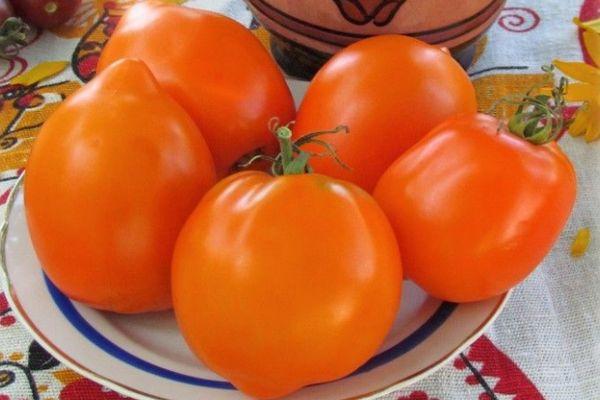
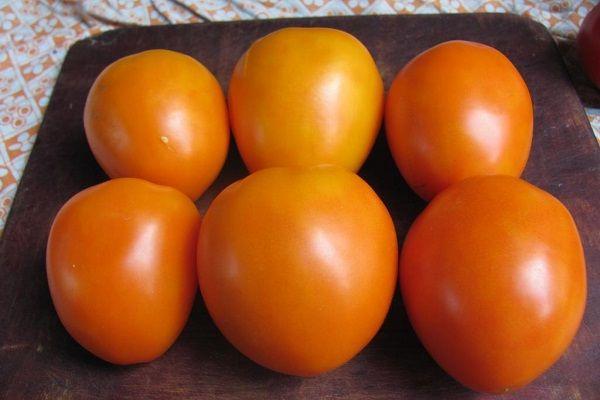
The Golden Eggs tomato variety is a yellow-fruited variety. When ripe, the skin takes on a golden-yellow hue. The tomatoes have a characteristic egg-shaped form, as seen in the photo.
Despite the small size of the bushes, the first fruits in a bunch reach a weight of 200-220 g. The remaining tomatoes are approximately the same size, with an average weight of 100-150 g. Up to 15-17 fruits are formed on a bush.
The flesh of the Golden Eggs tomato is virtually colorless, pale yellow, and delicate. The seed chambers are small. The skin is fairly dense, the fruits are not prone to cracking, and are suitable for whole-fruit canning.
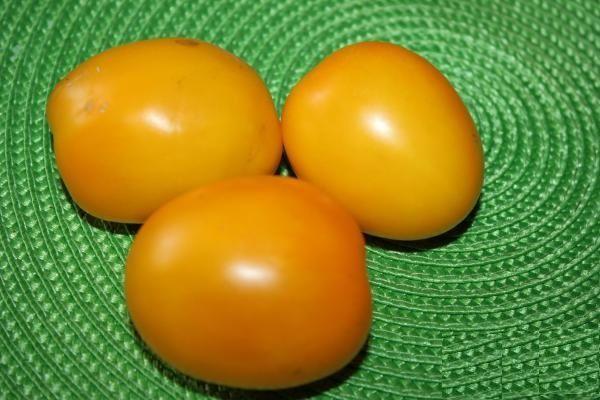
Their excellent flavor makes Golden Egg tomatoes a sought-after summer vegetable. The low acidity characteristic of all yellow tomatoes makes them ideal for salads and other appetizers. They're also delicious eaten raw. I've been growing this variety for several years because of its slightly sweet, slightly tart flavor. Children especially love yellow tomatoes.
Lightly colored tomato varieties have an important property: they are hypoallergenic. Thanks to this, Golden Eggs tomatoes are suitable for people prone to allergies, children and the elderly.
How to grow Golden Egg tomatoes?
The cultivation techniques for this variety differ little from the general rules for growing and caring for tomatoes. This early-ripening tomato (85-90 days from germination to ripening) should be grown from seedlings, especially in northern regions, where the first harvest can be obtained as early as early July. Seeds for seedlings are sown two months before planting.

After two true leaves appear, the seedlings should be transplanted into individual pots to prevent them from becoming too leggy. During the seedling growth period, provide the plants with good light, about 10 hours a day.
But even elongated seedlings take root well and can quickly gain strength in open ground. To ensure strong bushes, such plants should be planted horizontally, leaving about 15 cm of the top stem above the soil surface. If the plant has already formed its first flower cluster, it is planted to this depth. Fertilize with a complex fertilizer containing nitrogen, phosphorus, and potassium one week after planting.
Related posts:
 Description and characteristics of the Golden Domes tomato variety, yield and cultivation
 TOP 50 recipes for favorite and unusual salads for the New Year of the Pig 2019
 Description of the best varieties of black tomatoes for open ground and greenhouses
 80 Best Eggplant Varieties for Different Regions with Descriptions and Characteristics
 Top 40 DIY New Year's Baking Recipes for 2020
 Recipes for cold, hot, and original appetizers for the New Year 2020
 Top 10 Best Pig-Shaped Salad Recipes for New Year 2020
 How to control carrot flies with medications and folk remedies