
- Description and characteristics of the Mikado tomato
- Advantages and disadvantages of tomatoes
- Main types
- Mikado Sibiriko
- Mikado Black
- Mikado Pink
- Mikado Red
- Mikado the Golden
- Mikado yellow
- Features of growing the variety
- Planting dates
- Sowing seeds
- Caring for seedlings
- Transplantation into open ground
- Tomato care
- Watering rules
- How to remove stepchildren
- How to fertilize properly
- Diseases and pests
- Cleaning and storage
- Vegetable growers' reviews of Mikado
The Mikado tomato variety has become very popular among gardeners. It is prized for its consistent yield and excellent flavor. These tomatoes have a number of distinctive characteristics and require comprehensive care to ensure vigorous fruiting.
Description and characteristics of the Mikado tomato
Mikado belongs to the category of mid-season varieties. From the moment of planting until the first harvest, it takes about 120-130 days. The plants are standard, semi-determinate, up to 1 m in height. The leaves on the bushes are shaped like potato leaves.
Higher yields can be achieved by growing them outdoors or in a greenhouse. Regardless of cultivation method, the bushes form into 1-2 stems.
Advantages and disadvantages of tomatoes
When planning to plant Mikado tomatoes, it's important to familiarize yourself with the variety's advantages and disadvantages. Positive characteristics include:
- rich fruit flavor;
- high sugar content of the pulp;
- good presentation;
- ability to be stored for a long period of time;
- resistance to common diseases.
The main disadvantages are related to care requirements. Growing requires the removal of overgrown shoots, regular watering, and fertilizing.

Main types
There are several varieties of the Mikado variety, each with its own unique characteristics. When choosing tomatoes, it's worth familiarizing yourself with the descriptions of each variety.
Mikado Sibiriko
A large-fruited, indeterminate variety developed by Siberian breeders. The Sibiriko variety is suitable for growing in greenhouses or open ground. The highest yield is achieved when training plants with 1-2 stems.
Mikado Black
The distinctive features of this variety are the emerald leaves and dark brown fruits. The vegetables are round and slightly flattened. The flesh is tender and slightly sweet, with 6-8 internal chambers. With proper care and a favorable climate, tomatoes can weigh up to 250-300 g.

Mikado Pink
The pink tomato variety produces fruit 90-95 days after planting. Each plant produces 7-9 fruits. When growing, it requires trellis support, vertical supports, and regular pinching.
Mikado Red
The plants reach a height of 80-100 cm and are considered mid-season. The first fruits ripen 90-110 days after sowing. The uniform formation of the clusters allows for a quick harvest.
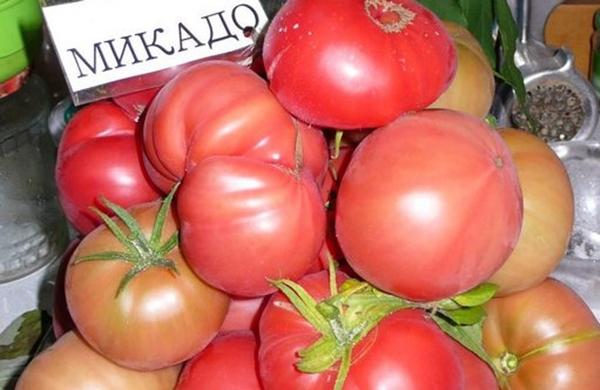
Mikado the Golden
A mid-early, tall variety, producing round fruits weighing up to 500 g. The pulp is sweet, rich, and meaty, rich in vitamins. Its primary uses are fresh consumption and processing for juice. Mikado Gold is suitable for growing in regions with extreme temperature fluctuations.
Mikado yellow
A greenhouse variety with a mid-season ripening period. Tomatoes ripen 120 days after planting. The plants are tall and indeterminate. Their main advantages include high resistance to variable weather, a weight of approximately 600 g, and general purpose use.
Features of growing the variety
Compliance with the rules and nuances of cultivation directly affects the amount of the harvest. For the Mikado variety, it is important to consider the timing of sowing for seedlings, ensure proper care for the seedlings, and transplant the plants to a permanent location in a timely manner.
Planting dates
Seedlings are planted 50-60 days before transplanting to a greenhouse or open ground. It is recommended to sow Mikado tomatoes for seedlings in the second half of March and no later than early April. Early sowing is necessary to ensure the seedlings have time to reach the desired height by the onset of warm weather.
Sowing seeds
To sow seedlings, use a common container filled with fertile, low-pH soil. Seeds can be planted in individual holes 1-2 cm deep, or spread on the surface and covered with a thin layer of soil. To speed up germination, it is recommended to cover the container with glass or plastic film.
Caring for seedlings
Throughout the growing season, seedlings require regular watering, which is done as the soil dries out. Typically, moistening the soil once or twice a week is sufficient. Loosening the soil after watering and fertilizing promotes vigorous growth.
Take a look Also
Transplantation into open ground
The seedlings are transplanted to their permanent location once they reach 25 cm in height and the weather has stabilized. If the seedlings were planted in peat pots, they are placed in the dug holes without removing them from the containers and covered with soil. Seedlings grown in other containers are carefully removed from the containers and placed in the holes without disturbing the root ball.
In cloudy weather, it's best to plant seedlings in the morning. In sunny weather, transplant in the evening.
Immediately after transplanting the seedlings into open ground or a greenhouse, the soil must be compacted and watered.
Tomato care
Once the seedlings have been planted in the garden or greenhouse, they need to be cared for regularly to ensure a bountiful harvest. Mikado tomato varieties require regular watering, bush training, stimulating fertilizers, and treatment for diseases and pests.
Watering rules
Moisten the soil as it dries. Before watering, it's recommended to check the soil moisture—the top 5 cm should be completely dry. Mikado tomatoes require generous watering at the roots, as superficial spraying can cause damage.
Avoid stagnant moisture to prevent the development of late blight or root rot. Each watering should be followed by loosening the soil to aerate it.
How to remove stepchildren
Remove growing side shoots by hand, rather than using pruning shears. Only shoots longer than 3 cm should be removed. If possible, it's recommended to wait until the side shoots reach 5 cm, leaving 1-1.5 cm after removal. This technique delays the development of new side shoots and simplifies subsequent care of the plant.
In addition to side shoots, all leaves growing below the level of the first flower cluster should be trimmed off. Secateurs can be used for this purpose. Avoid watering the plants on the day of pruning.
How to fertilize properly
Fertilizer needs to be applied three times during the growing season. The following frequency is recommended:
- apply the first fertilizer 2 weeks after planting in the ground;
- fertilize plants 2-3 weeks after the last feeding;
- stimulate growth during fruit formation.

For the first two feedings, fertilizers high in nitrogen are suitable. In particular, ammonium nitrate or urea can be used. The presence of nitrogen in the fertilizer promotes active root development and plant growth. The final plant feeding should contain phosphorus and potassium, which ensure proper vegetable development.
Diseases and pests
The Mikado variety is highly resistant to diseases and pests. The risk of damage only arises if care is improper or the seeds are of poor quality. If signs of infection or insect infestation are detected, treatment with fungicides or insecticides is sufficient.
Cleaning and storage
Ripe tomatoes are cut off with the stems or carefully plucked from the bushes. A uniform fruiting season means the harvest process doesn't have to be protracted. Harvested tomatoes can be eaten fresh, processed, or stored.
Tomatoes will stay fresh if stored in the refrigerator or in a cool, dark place with a temperature no higher than 12 degrees Celsius. The harvest can be packaged in plastic bags or wooden crates, covered with thick cloth.

Vegetable growers' reviews of Mikado
Galina: "I grow this variety regularly because the climate is unstable, and Mikado tomatoes withstand weather changes well. The fruits are small, but the overall yield is large."
Sergey: "I read reviews from people who had planted this variety and decided to try growing it in a greenhouse. I encountered no problems with care and harvested about 30 kg."
Related posts:
 The best eggplant varieties for growing in a polycarbonate greenhouse: planting and care
 Methods for planting and propagating cherries at home
 Is it possible to soak treated cucumber seeds before planting and how to do it correctly?
 The best grape varieties for growing in the Urals, planting and care rules in summer
 How to properly plant peas in a greenhouse and open ground
 How to propagate and grow peas, cultivation technology, and care in open ground
 Description of varieties of sowing peas and cultivation, to which family they belong
 Causes and treatment of eggplant pests and diseases, how to combat them at home