
- Basic principles for creating beds in a greenhouse
- We orient ourselves on which side the light is
- Arrangement of plants by height
- We take into account the design features of the greenhouse
- Suitable width and height
- Beds for protected ground
- How to calculate the required number of bushes
- Dwarf and low-growing
- Medium-sized
- Tall
- Spreading
- How to properly plant tomatoes in a 3x6 m greenhouse
- Sowing density
- Rules for shaping tomato bushes
- Planting patterns and technology
- Double row
- Chess
Seedlings are young tomato sprouts that eventually develop into mature plants. To ensure this process proceeds smoothly and produces the desired results, gardeners pay attention to the space available in the greenhouse. Thoughtful organization of the shelter space facilitates care and increases yields. To achieve this, gardeners often use a 3x6 greenhouse planting pattern for tomatoes.
Basic principles for creating beds in a greenhouse
Even a novice gardener can set up a greenhouse. After learning the basics, you'll be able to effortlessly grow not only tomatoes but other crops as well.
We orient ourselves on which side the light is
The most suitable greenhouse orientation is east-west. This ensures the level of light needed for tomato plants. The greenhouse should be placed in a sunny yet open area.
Despite this, the greenhouse may have partial or full shade on certain sides. In this case, varieties that require more light are placed on the sunny side.
Limited space doesn't discourage people from planting tomatoes with different characteristics. So, gardeners combine shade-tolerant varieties with sun-loving ones.
Arrangement of plants by height
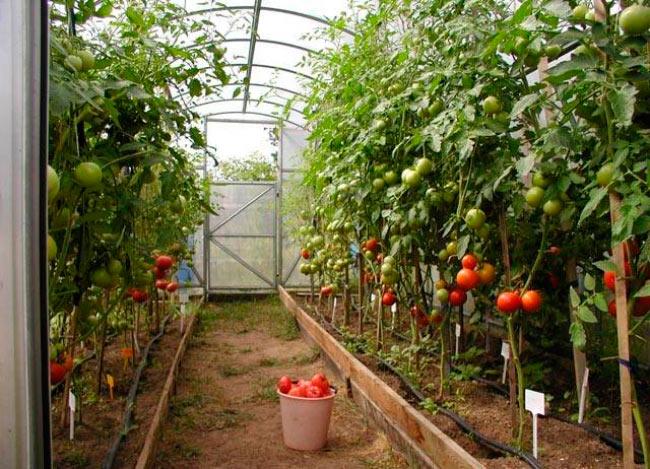
It's recommended to plant tall plants closer to the walls of the greenhouse. Shorter tomatoes should be placed closer to the aisle. This combination is ideal for greenhouse conditions.
We take into account the design features of the greenhouse
Previously, glass or film were used to make greenhouses. But technology is constantly evolving, and the agricultural sector is constantly evolving. Polycarbonate has replaced glass and film. The material is easy to install, is more durable than film, and is affordable, which is not the case with glass.

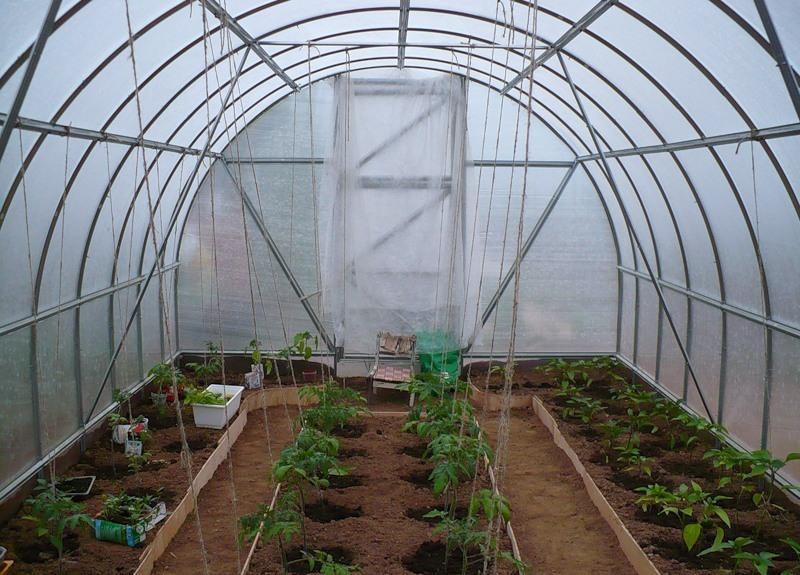
When growing tomatoes in a polycarbonate greenhouse, pay attention to height. Some varieties tend to grow uncontrollably. To ensure sufficient space for the plants, greenhouses should be at least 2 meters high. Otherwise, the tomato beds will become crowded early in the growth stage, which will negatively impact their fruiting.
Suitable width and height
Few people know this, but the width of garden beds and the spaces between them is crucial and can significantly impact yield. If the spaces are too narrow, it will make tending the crops difficult. Very little light will reach the plants, which will impair ventilation.
Beds for protected ground
Brick, slate, and wood planks were previously used to create curbs. Each of these materials has its own drawbacks:
- the tree quickly becomes unusable;
- Slate is a material that cannot boast of being environmentally friendly;
- Laying bricks takes a lot of time and effort.
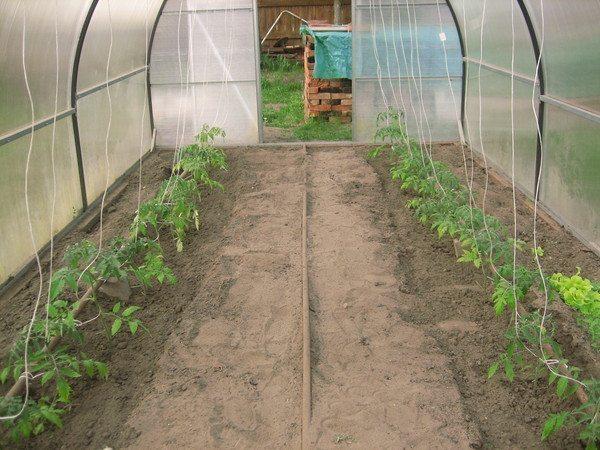
Galvanized borders have recently been introduced to the market. Their characteristics are unmatched. The material is durable and strong. It is resistant to moisture and rising temperatures in the greenhouse. They are easy to assemble and disassemble and are resistant to fungus.
How to calculate the required number of bushes
After ensuring a comfortable microclimate in the shelter, consider the number of plants to plant in the beds. People always wonder how many plants are needed in a greenhouse. It all depends on the type and variety of crops.
Dwarf and low-growing
Short-growing tomatoes are usually planted 1 or 2 plants per hole. The distance between holes should not exceed 40 cm. In this case, the number of plants can reach 150-200. Only strong seedlings are left.

Medium-sized
Hybrid tomato varieties are most often planted in greenhouse beds in two rows. The distance between plants is 45 to 50 cm. No more than 40 plants are planted in a row.
Tall
It is recommended to plant this type of plant in a staggered pattern. Two lines are created in the prepared bed. The maximum number of plants is 30-33.

Spreading
Some tomato varieties tend to clutter up a lot of space with their large vines. These varieties are called spreading. They are planted in a single row of 10-13 plants.
How to properly plant tomatoes in a 3x6 m greenhouse
The spacing of tomato plants depends on many factors. Before planting, the first consideration is seeding density.
Sowing density
This parameter is also commonly referred to as density. Typically, low-growing tomatoes are trained into multiple stems. The planting pattern is staggered in two rows. Leave a space of 50 to 65 cm between the rows. The distance between the individual plants should be at least 40 cm.
The determinate and standard groups are formed into a single stem. They are planted much more densely. The distance between plantings is 45-50 cm. There should be 35-40 cm of free space around each bush.
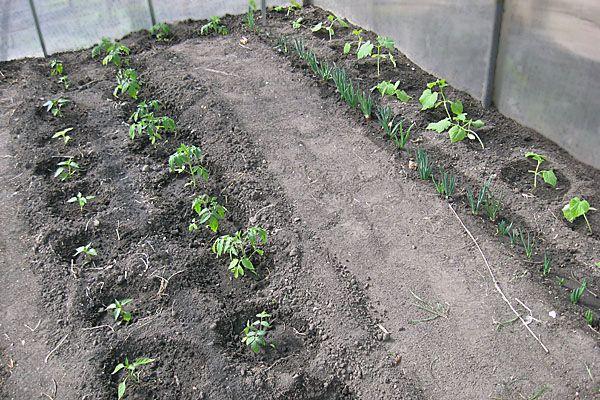
Indeterminate varieties are planted less densely. The distance between rows is approximately 45 cm, with 65-70 cm remaining between bushes. The path between rows is 1 m long.
Rules for shaping tomato bushes
The type of tomato plays a major role in this matter. Indeterminate tomatoes are grown as single-stem varieties. There is no need for additional lateral shoots, as the bush turns out to be powerful.
As for determinate varieties, in addition to forming a single stem, two branches are also acceptable. Although their growth is limited, they require support along the entire length of the branch. They require regular pinching. Growing shoots in the lateral axils negatively impacts the appearance of the plant and reduces yield.
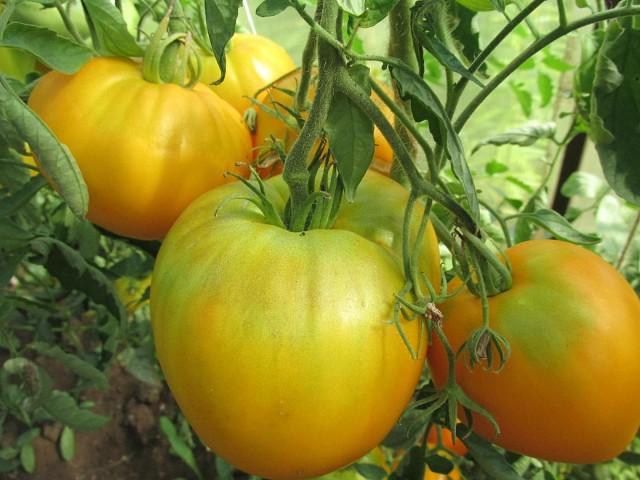
If you leave determinate tomato varieties to grow unchecked, instead of well-tended plantings, you'll end up with a veritable "jungle." Under these conditions, the plant devotes all its energy to maintaining healthy foliage. Nutrients are directed to the stems and leaves, so fruit production is virtually nonexistent. Even if it does occur, it's very small.
Planting patterns and technology
If you take the issue of creating optimal conditions for growing tomatoes in a greenhouse seriously, you'll reliably get a good harvest. Nutrients in the soil support the normal development of tomatoes, which in turn affects the fruit. Few people realize that proper greenhouse planting affects crop yield.


Gardeners often use two planting options: double-row and staggered. The choice depends on the varieties being planted. There's also a third option—a combined arrangement—but it's rarely used.
Double row
This is a traditional planting pattern for crops such as tomatoes. It is used exclusively for early-ripening tomatoes. The distance between plants is 50 cm. The space between rows is 70-75 cm.
Chess
It's called a ribbon planting, and the bushes are arranged in a checkerboard pattern. Those who choose to plant tomatoes using this pattern are truly fortunate. The distance between the bushes is small—just 45-50 cm. Arranging the bushes in this pattern ensures ease of care and easy harvesting.
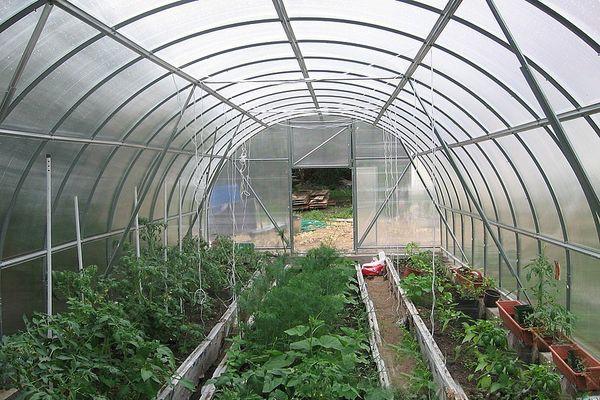
Watering and fertilizing aren't the only procedures that ensure healthy tomato growth and development. Proper spatial organization is the foundation, and it determines subsequent care. The optimal greenhouse size is 3 x 6 m. This allows for staggered and double-row planting. A combination of these methods is also used if desired.
Related posts:
 Growing and caring for tomatoes in a greenhouse from planting to harvest
 Description of the best varieties of black tomatoes for open ground and greenhouses
 At what distance should tomatoes be planted in a greenhouse? Diagrams and placement rules.
 What fertilizers and when to use for feeding tomatoes in a greenhouse
 What varieties of tomatoes are best to plant in a polycarbonate greenhouse?
 The best eggplant varieties for growing in a polycarbonate greenhouse: planting and care
 How to plant, grow, and care for tomatoes in a polycarbonate greenhouse
 Rules for growing grapes in a greenhouse at your dacha, planting and care