The Amur Tiger tomato's unusual coloring inspired its name. It has been listed in the State Register of Breeding Achievements of Russia since 2015, but it was first cultivated earlier, having been tested and zoned for use in areas with challenging climates. Amur Tiger tomatoes can be grown throughout the country.
General characteristics of the variety
Amur Tiger tomato plants are indeterminate. They are tall, reaching heights of 2 meters or more in a greenhouse. In the open ground, the main stem of the plant grows to 1.5-1.7 meters. To allow the last ovaries to ripen, the plants are artificially restricted in growth by pinching the tops of the stems approximately one month before the end of the season. This allows for a larger harvest of high-quality tomatoes that can ripen indoors.
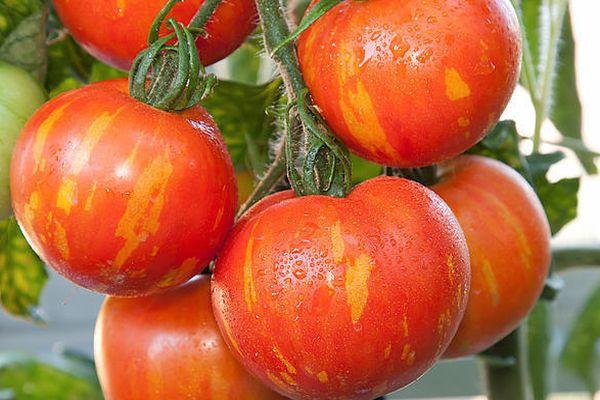
The first fruits of the Amur Tiger variety ripen approximately 110 days after germination. Fruiting is prolonged, and tomatoes can be harvested throughout the summer. Ovaries form on small clusters of 4-5 tomatoes each.
The average yield per bush is 3-4 kg of marketable produce per season. With dense plantings (4-5 bushes per square meter), gardeners can harvest a sufficient number of tomatoes per square meter.
The Amur Tiger variety is resistant to Alternaria and tobacco mosaic virus. In cold summers, it can be damaged by late blight. Before the fruit ripens, the bushes should be treated with fungicidal products, applying them strictly according to the instructions. To prevent disease, it is recommended to remove some of the lower leaves (up to 1/3 of the height), ensuring good ventilation of the plantation.
Tall Amur Tiger tomatoes require staking and training. To increase yield, it's recommended to grow the plants in 2-3 trunks, removing side shoots as they appear. These plants are easily tied to a trellis.

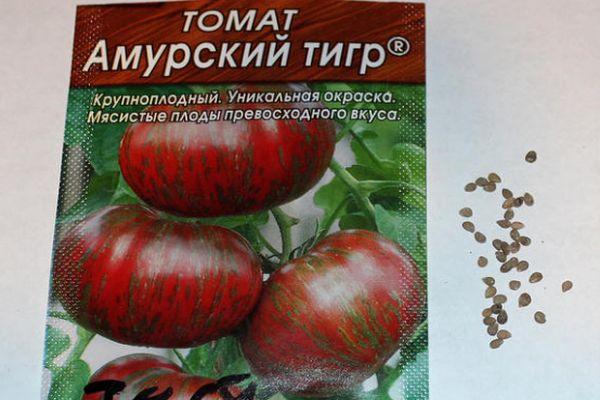
You can find a similar variety called Tigrenyok, distinguished by its very early ripening time, fruit shape, size, color, and flesh texture. The manufacturer "Aelita" sells similar seeds under the name "Amur Tiger." These tomatoes are classified as compact (determinate).
Description of fruits
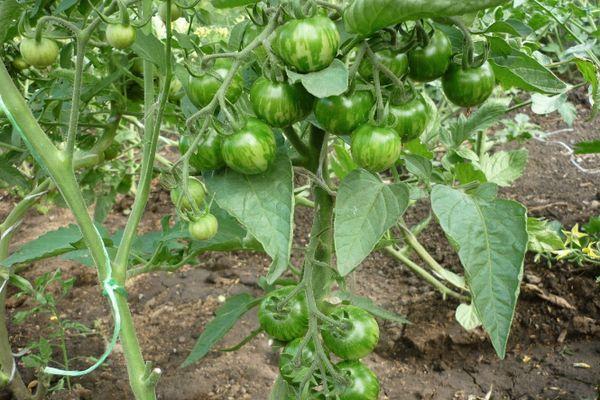
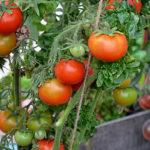
The Amur Tiger tomato variety's fruits are flat-round, with smooth ribs at the stem. The average weight of a single fruit is 150-200 g, but tomatoes on the lower clusters can be significantly larger (the record weight is 400 g). When ripe, the fruit is green with a darker, larger spot at the stem. As it ripens, it turns brownish-red with wide, dark green stripes, reminiscent of a tiger's skin.
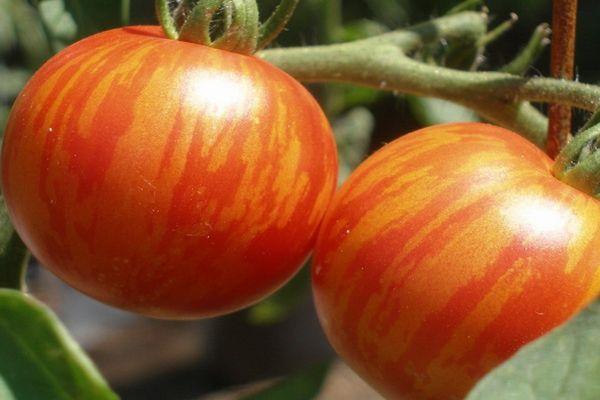
The skin of Amur Tiger tomatoes is thin. Reviews from those who have grown these tomatoes note their poor suitability for whole-fruit canning. Ripe tomatoes don't store for long, but they transport quite well, especially when unripe or blanched.
The tomato flesh is red, tender, and juicy. Tiger tomatoes are a type of beef tomato: the flesh is fleshy, with numerous small seed chambers.
The tomato's flavor profile highlights its high sugar content. The taste is sweet, without a noticeable sourness. Gardeners' descriptions of the variety indicate that in cold weather or when tomatoes are artificially ripened, the sugar content drops, and the flavor changes slightly, acquiring a more sour note. The most delicious tomatoes are those grown in a sunny, well-heated location.
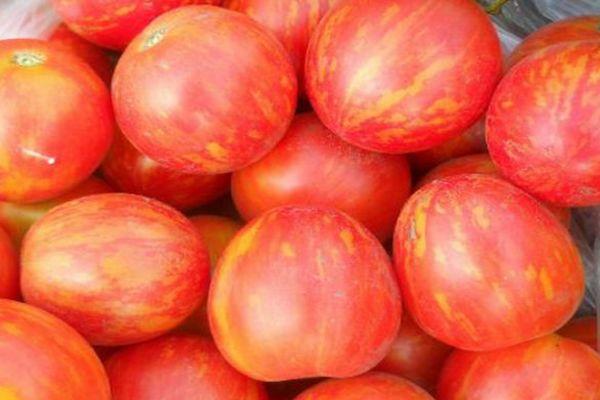
Amur Tiger tomatoes are versatile. They don't handle heat well when pickled, but they taste delicious when barrel-cured. The tomato skin retains its striped coloring no matter how it's preserved.
Tomatoes with a rich flavor and vibrant flesh are perfect for processing into juice or sauces. To more completely separate the pulp from the seeds and skin, choose very ripe tomatoes that are slightly soft. Tomatoes that have not lost their firmness can be heated while sliced and then pressed through a sieve.
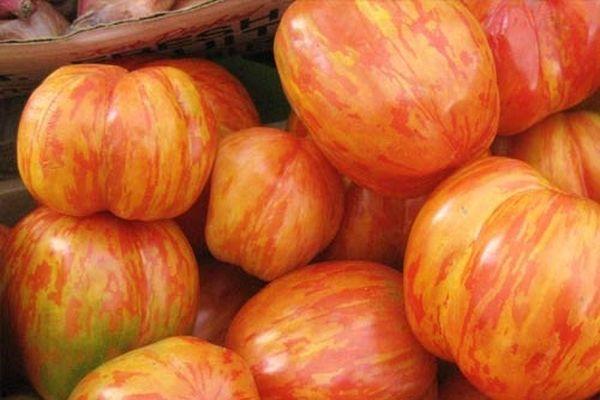
Striped tomatoes are best eaten fresh. Any salad or holiday platter will be enhanced by the addition of these unusually colored slices. Beef tomatoes are perfect for sandwiches, canapés, hamburgers, and beautiful, elegant appetizers. The pulp can be used in hot dishes and tomato-based sauces.
How to grow these tomatoes in your garden?
Sow seeds 60-70 days before planting. This heat-loving crop germinates quickly only when the soil temperature is at least +25°C (4-5 days), so the seeds should be germinated under these conditions. After germination, the temperature can be reduced to +20°C.

Plants are transplanted when they have 2-3 true leaves, spaced 7-10 cm apart. Seedlings do not require fertilizing, but if there is insufficient natural light on north-facing windows, a grow light may be needed. The duration of daylight during seedling cultivation should be at least 15 hours.
Tomatoes are planted in the garden when the soil warms up to 15°C. In a greenhouse, this can be achieved in early to mid-May, but in open ground, tomatoes should not be planted until the first ten days of June. One week after transplanting, feed the tomatoes with high-nitrogen mixtures (nitroammophoska, etc.).
When the first flower clusters appear, phosphorus-potassium mixtures (superphosphate, potassium nitrate) are added or ready-made complex fertilizers for tomatoes (Kristallon Tomato, Signor Tomato, Agricola, etc.) are used.
This feeding is repeated after 14-15 days. Organic or nitrogen fertilizers should not be applied during fruit ripening and maturation, as this encourages foliar growth at the expense of fruit formation, which in turn causes harmful nitrates to accumulate.
Related posts:
 Description and propagation of the Amur grape variety, planting and care
 Description of the best varieties of black tomatoes for open ground and greenhouses
 The best grape varieties for growing in the Urals, planting and care rules in summer
 The best eggplant varieties for growing in a polycarbonate greenhouse: planting and care
 Characteristics of the Amursky Shtamb tomato, cultivation of the variety and yield
 Description of the best tomato varieties for open ground in the central zone
 Characteristics of the Siberian Tiger tomato variety and its cultivation features
 Description and characteristics of the best varieties of plum tomatoes