
The Slavyansky Masterpiece tomato was developed by Russian breeders. It is intended for planting in private gardens and summer cottages, both in open ground and in greenhouses. However, since this type of tomato grows quite tall, requiring shoring to trellises or supports, farmers prefer to grow the plants in greenhouse blocks.
Technical data of the plant and its fruit
The characteristics and description of this tomato variety will be compared to the Slavyanin tomato, bred for greenhouses by Siberian breeders. The catalog descriptions for the Slavyansky Masterpiece tomato include the following parameters:
- The growing season lasts up to 120 days. Harvesting begins in June and ends in mid-September. Slavyanin has a growing season of 100 to 115 days.
- The bushes of the Slavic Masterpiece are 140-150 cm high, while the bushes of the Slavic Masterpiece rise to 1.3 m.
- The description of the varieties can be continued by comparing their fruits. The Slavyansky Masterpiece tomato has an average berry weight of 0.15 to 0.18 kg, while its counterpart averages 120 g.
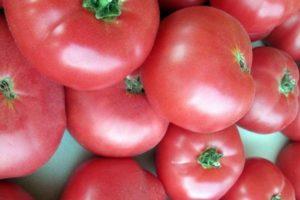
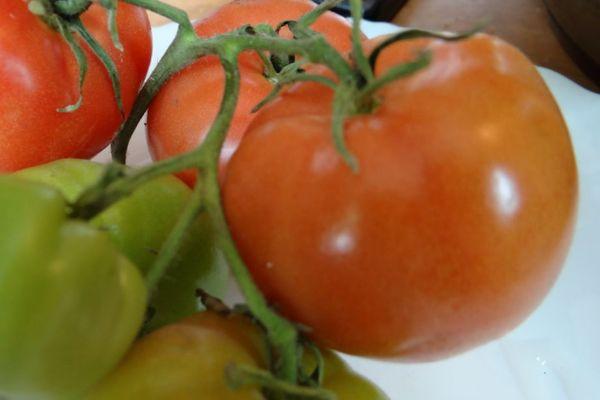
- The Slavyansky Masterpiece has round fruits, slightly flattened at the top and bottom, colored red. The Slavyanin variety produces berries that grow in the shape of elongated cylinders.
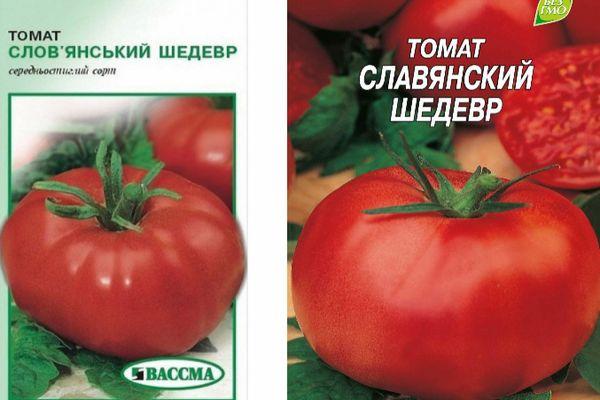
Gardeners' reviews indicate that when grown in greenhouses, individual fruits of the Slavyansky Masterpiece variety can weigh 350-400 g. The yield of this type of tomato reaches 7-8 kg of berries per bush. For the Slavyanin, this figure is 4-5 kg of berries per bush.
Both varieties are resistant to various fungal and bacterial infections. Tomatoes are used in salads, tomato paste, and canning. Because both varieties have thick skin that can withstand mechanical damage, they can be transported over long distances. Therefore, retailers purchase these fruits from farmers for sale at markets.
Take a look Also
How to grow a Slavic masterpiece in your own backyard?
The seeds are sown in boxes filled with soil mixed with peat and sand. Once the sprouts emerge and have developed 2-3 leaves, the plants should be pricked out. Hardening off is done using standard methods. Seedlings transplanted to the greenhouse should be at least 50 days old before being transferred to permanent soil.
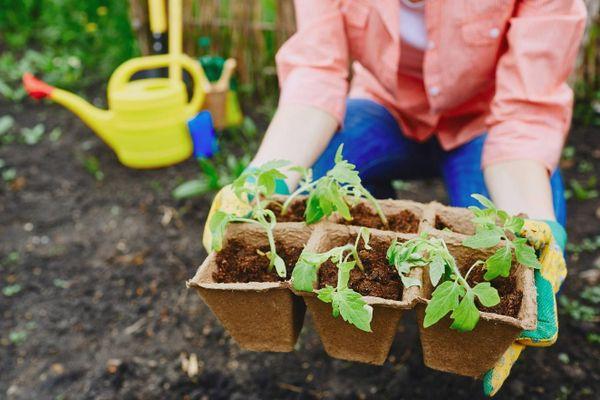
Before transplanting, the seedlings are hardened off for 15 days. During the first week after transplanting, it is recommended to cover the seedlings against sudden cold snaps. Bushes are formed into 1-2 stems. The planting format is 0.5 x 0.6 m.
Tomatoes of this type require abundant watering and soil loosening. During hot summers, this should be done daily, while during cool summers, watering and loosening are done once every 3 or 4 days.
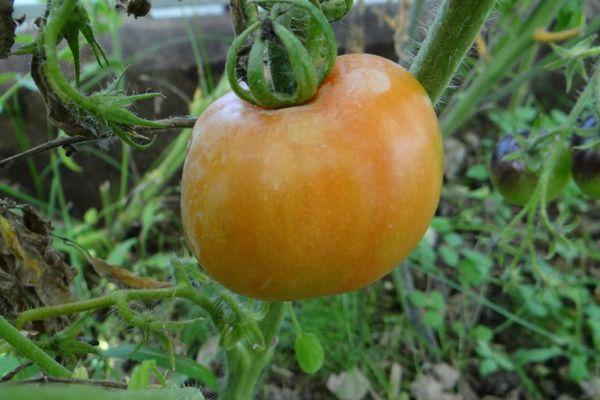
Plants are fertilized twice during the growing season. Organic and nitrogen fertilizers are applied initially, then phosphorus and potassium mixtures are added to the soil when the buds begin to set. Fertilizing should be done early in the morning or in the evening. If the weather is foggy, fertilizing should be postponed until another day.
To prevent the branches from breaking under the weight of the fruit, it is recommended to tie them to strong supports.
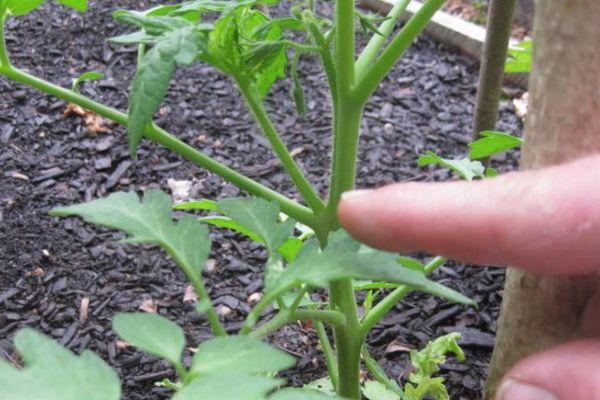
It's important to regularly inspect the leaves, stems, and berries for signs of disease. If the bush is infected, it's recommended to remove all diseased leaves and fruits, and treat the stem and healthy leaves with an appropriate chemical. Regular ventilation of the greenhouse is sufficient to prevent some diseases.
If signs of a garden pest infestation appear, treat tomato plants with chemicals that kill insects and their larvae. Loosening the soil will eliminate pests living on tomato roots, and adding ground ash to the soil beneath the plants will suppress slug proliferation.
Related posts:
 Description of the large-fruited tomato variety Altai Masterpiece and cultivation techniques
 Description of the domestically bred tomato "Shedevr" and recommendations for cultivation
 What fertilizers and when to use for feeding tomatoes in a greenhouse
 Rules for growing tomatoes in open ground, choosing a variety, planting and care
 Description of the best varieties of seedless tomatoes and cultivation technology
 What is the best way to feed tomato seedlings to make them plump?
 The benefits and harms of ginger for the female body, medicinal properties and contraindications
 Description and characteristics of the best seeds of pea varieties and types
