
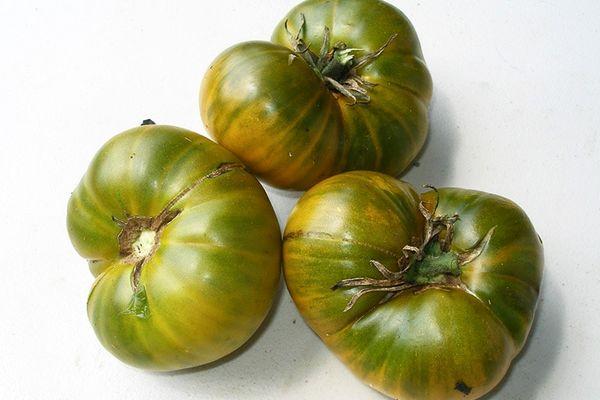
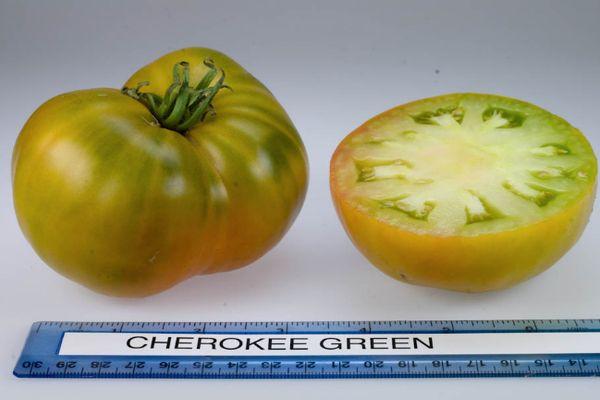
Cherokee Tomato Green Golden was bred by US breeders in 1997. This variety, quite rare in Russia, features brown, green, and gold colors. The Cherokee Gold tomato does not crack under mechanical stress, despite its thin skin.
It can be grown outdoors only in the southern regions of Russia, while in the central and northern regions of the country, greenhouses and hotbeds are required. This tomato variety is not suitable for transportation or long-term storage, so it is consumed fresh, used in salads, and produces tomato juice with an unusual color.
Technical data of the variety
The characteristics and description of the plant are as follows:
- Cherokee Green Gold is a mid-season tomato variety. Its vegetative growth period lasts up to 130 days, from germination to first harvest.
- The height of the plant's bushes ranges from 160 to 180 cm. The bush is formed from several stems, on which many green leaves are formed and evenly distributed along the trunk of the tomato.
- Cherokee Green has virtually no branches in width. All the plant's energy goes into growing the bush. Four to five clusters develop on the stem, each bearing five to six fruits.
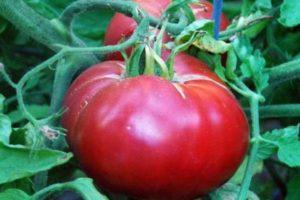
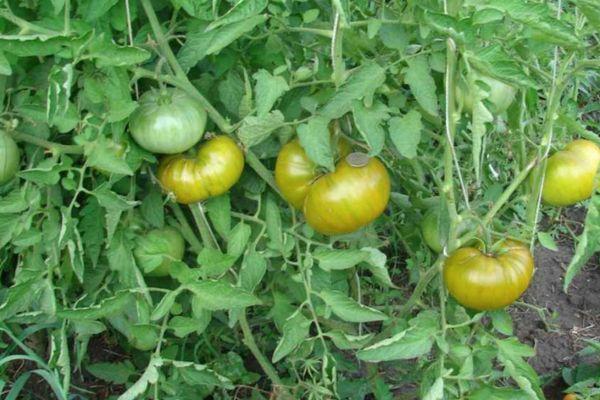
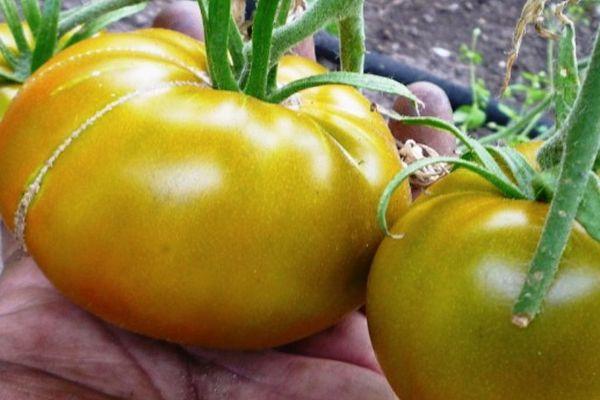
- Tomatoes of this variety are spherical, flattened at the top and bottom. Fruit weight ranges from 0.3 to 0.5 kg. Ripe berries are brown and yellow on the outside and green (emerald) on the inside, with a small number of seeds. The fruit's surface is shiny, with distinct ribs. The flesh is aromatic and rich in juice.
- The harvest can be collected throughout the summer. The first berries ripen approximately 117-127 days after the seedlings emerge, and the plant then bears fruit throughout the summer.
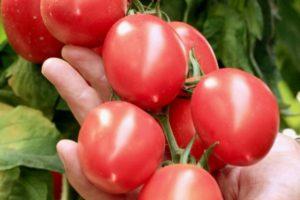
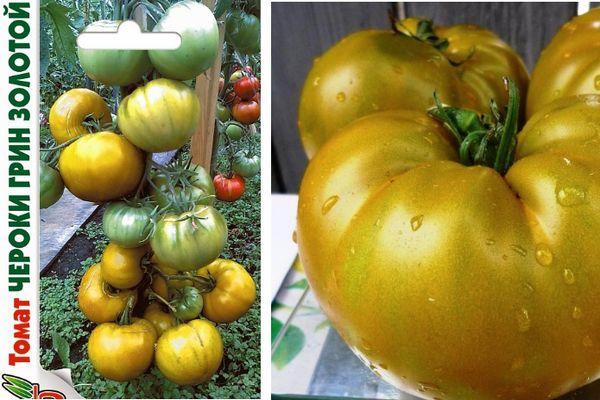
Reviews from farmers growing this variety indicate that the tomato yield ranges from 3 to 7 kg of berries per bush. Gardeners note that when planted outdoors, the first fruits can reach a maximum weight of 400-500 g, while subsequent berries weigh 0.15-0.3 kg.
When growing this tomato hybrid in a greenhouse, gardeners obtain uniformly sized berries, with an average weight ranging from 250 to 300 g. Farmers consider the need to remove side shoots and install supports under the plant branches to be a disadvantage of this variety.
Growing seedlings in a private garden
To obtain a high yield, proper biotechnology for planting and growing Cherokee Green must be used.
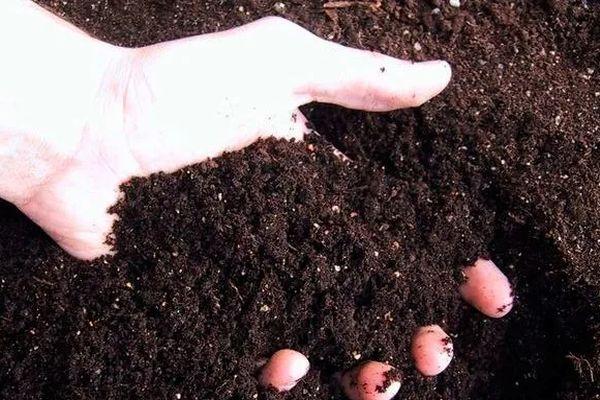
The seeds are disinfected in a potassium permanganate solution. They are then soaked in water to swell. Any that float to the surface are discarded. The seedlings are planted in boxes or individual cups filled with tomato soil. The containers with the seeds are placed in a warm, well-ventilated area.
When the first sprouts appear after 7 days, they are watered with warm water and fed with manure or peat.
Transplant the seedlings into a greenhouse or open ground in mid- to late May. Young plants should be at least 60 days old. It's recommended to monitor the bushes to ensure they don't die from the cold at night. It's best to cover the seedlings with a warm covering for the first week.
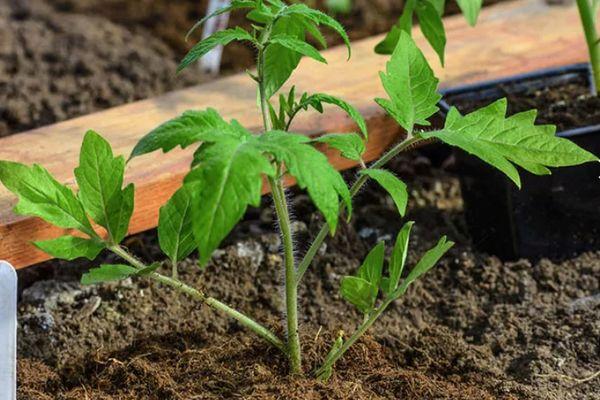
Before planting the seedlings, loosen the soil and apply a complex mineral fertilizer (no more than 1 tablespoon) to each bush. The planting format is 0.5 x 0.5 m, with each bush formed from 2-3 stems. Lower leaves should be removed, as they quickly begin to dry out.
Self-care for tomatoes
Plants are fed with superphosphate and potassium sulfate during flowering. During fruit formation, the bushes are fertilized with magnesium sulfate, pouring the solution under the roots.
Cherokee is watered only during severe droughts. Use room-temperature water. Care must be taken to ensure the liquid doesn't wash away the plant's roots, as this can result in a loss of up to 30% of the harvest.
Loosening is done 1-2 times a week. Mulching the soil can help retain beneficial micronutrients and moisture. Gardeners should weed the beds once every two weeks.
Although Cherokee Green is immune to all diseases, preventative spraying of the bushes with medicinal products is recommended. If the farmer has treated the seeds with pesticides, no further application is necessary. This measure will also protect the plants from damage by the Colorado potato beetle.
When aphids, mites, and caterpillars of various insects appear on tomato leaves, they are destroyed with toxic chemicals.
If a farmer wants to produce an environmentally friendly harvest, they should combat garden pests with a soap solution or herbal infusions. Slugs and parasites that infest tomato roots can be killed with wood ash, which is applied to the soil beneath the plant roots.
Related posts:
 Characteristics of the Cherokee Purple tomato (purple heart) and cultivation of the variety
 Description of the tomato variety Sushka f1 and growing using seedlings
 Description of the large-fruited tomato Bochonok and growing it using seedlings
 Characteristics of the Siberian Surprise tomato and its cultivation using seedlings
 Characteristics and description of the Sprut tomato variety, yield and cultivation
 Description of the unusual tomato variety Striped Chocolate and its cultivation using seedlings
 Description of the Canopus tomato and growing the variety using seedlings
 Description of the Kira cherry tomato and growing the hybrid using seedlings