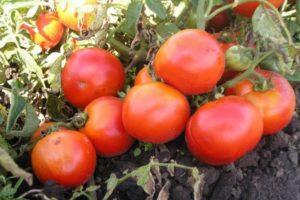
The Grozdevoy f1 tomato belongs to a group of early-fruiting hybrids. It can be grown outdoors only in the southern regions of Russia. In the central and northern regions of the country, this variety is grown exclusively in greenhouses. These tomatoes are used in salads, juice, and can be canned whole.
Technical data of the plant
The characteristics and description of the "Grozdevoy" variety are as follows:
- The vegetative period from the first shoots to the full ripening of berries lasts 100-105 days.
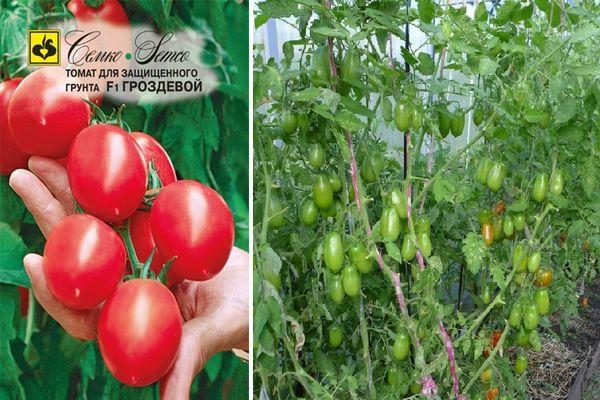
- In greenhouses, this variety can grow to 1.8-2.2 m. Therefore, breeders recommend tying it to trellises or supports. To reduce plant growth, remove any side shoots that appear.
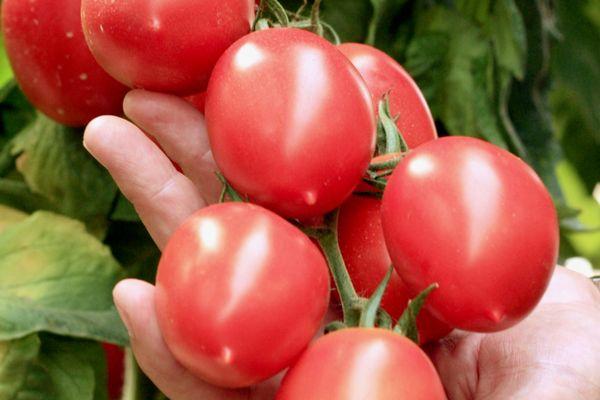
- Ripe fruits of the "Grozdevoy" variety are a rich red color. The berries are elongated in shape, with a pointed tip.
- At least 8-10 fruits ripen on each brush.
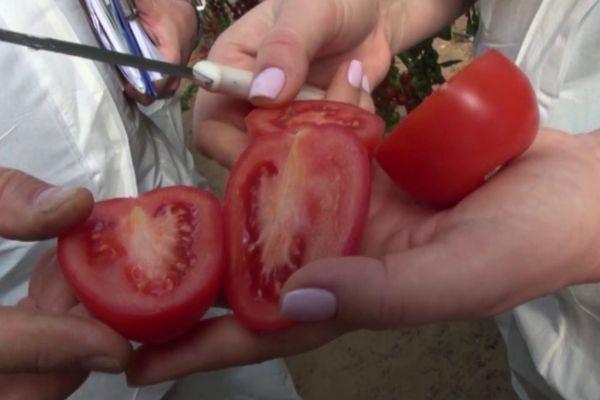
- The average tomato weight is 100-120 g. They keep well thanks to their thick skin. Retailers readily purchase this tomato variety because it can be transported over long distances without significant loss.
Reviews from gardeners who grow the "Grozdevoy" variety indicate that tomato yields reach 18-21 kg per plant. The yield and quality of the fruit remain consistent over several years.
Farmers note the need to train the plant into a single trunk due to the bush's strong growth in both height and width. To prevent plants from interfering with each other, plant no more than two per 1 m² of garden bed.
Gardeners all appreciate the high heat tolerance of the "Grozdevoy" variety. The plant has been noted to produce fruit at a consistent rate. The variety is resistant to diseases such as fusarium, verticillium wilt, and nematodes.
Cultivation of the described tomato variety
Seeds for seedlings are purchased from specialized stores. It is recommended to treat the seeds with potassium permanganate. This will prevent fungal infections, strengthen the seedlings' immunity, and ensure they emerge at the same time.
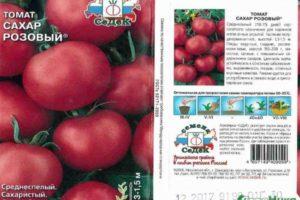
Sow the seeds in containers with tomato soil. First, add peat to the soil, then place the seed in the hole, cover with soil, and water. Seedlings will appear in 5-7 days. Plants should be pricked out when they have 2-3 leaves. Harden them off two weeks before transplanting them to their permanent location.
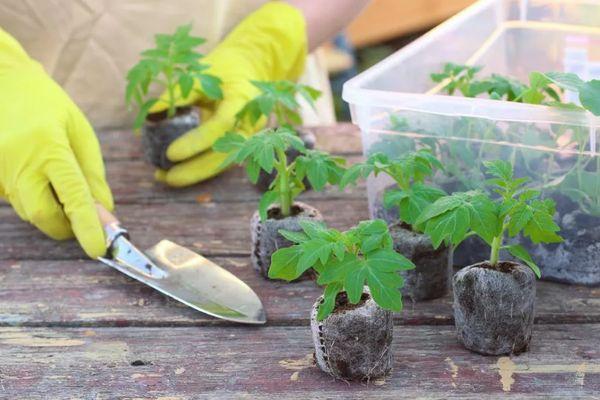
Seedlings are planted in prepared soil. Nitrogen fertilizer or manure is added to the soil for this purpose. The planting format is 1.0 x 0.5 or 1.0 x 1.0 m. Excess foliage and side shoots should be regularly removed.
Plants are fertilized three times during the growing season. The second fertilization uses nitrogen and potassium fertilizers, while the third fertilization recommends using mixtures containing potassium and phosphorus.
It is necessary to loosen the soil under the bushes in a timely manner, as this improves the passage of oxygen to the plant roots and allows you to get rid of insect larvae parasitizing the tomato root system.
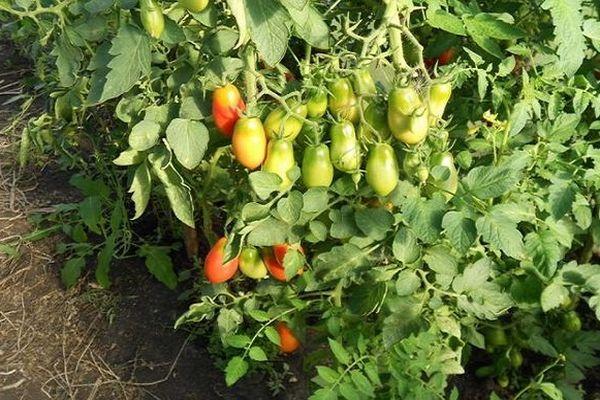 To obtain a high yield, you need to fight weeds by weeding the tomato beds 2-3 times a week. Water with warm water when the soil beneath the plants dries out. This is most often done early in the morning. The stems' height increases, causing the branches to droop significantly as they bear fruit. To prevent the fruit from breaking, support is necessary.
Although the plant is resistant to most tomato diseases, breeders recommend spraying the leaves of the bushes with preparations that prevent the development of fungal and bacterial infections.
Related posts:
 Description and characteristics of the best seeds of pea varieties and types
 What fertilizers and when to use for feeding tomatoes in a greenhouse
 Why potatoes aren't growing well in the garden, and what to do to ensure a bountiful harvest
 Description of the best varieties of seedless tomatoes and cultivation technology
 Rules for growing tomatoes in open ground, choosing a variety, planting and care
 The best grape varieties for growing in the Urals, planting and care rules in summer
 The benefits and contraindications of lentils for the human body
 How to choose a tomato variety for growing in Ukraine and when to plant seedlings