The Red Arrow F1 hybrid tomato, developed relatively recently by Russian breeders, has already established itself as a highly reliable variety among experienced vegetable growers and those new to tomato cultivation. In addition to its excellent taste, this variety boasts high yields and is resistant to various diseases. The Red Arrow tomato is also tolerant of light conditions and can grow in dark areas.
Main characteristics of the variety
The variety's characteristics and description include a number of features. Specifically, Red Arrow is a tomato that:
- It belongs to the early-ripening varieties, since the time period between sowing seeds and obtaining the first ripe fruits is on average 100 days;
- has semi-determinate bushes growing from 100 to 150 cm depending on the care methods used by the gardener;
- has 10 to 12 clusters on 1 bush, separated from each other by 1-2 leaves;
- characterized by a small amount of green mass;
- does not require pinching;
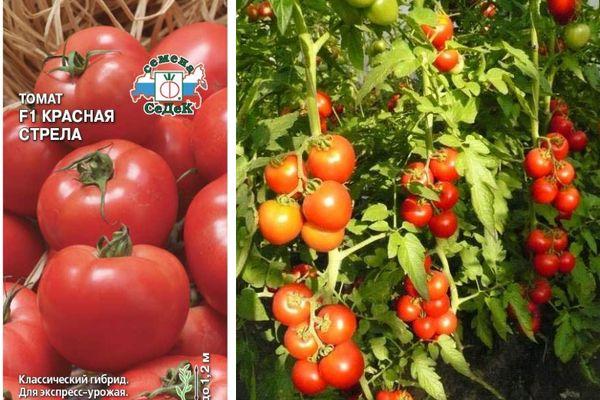
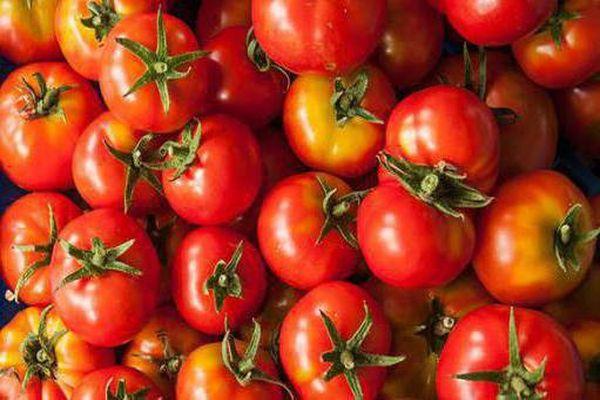
- has oval-shaped fruits of deep red color;
- characterized by the presence of a small spot at the base of the fruit, which gradually disappears as it ripens;
- weighs about 70 g (the maximum weight recorded was 130 g);
- fleshy inside, almost seedless, covered with a dense, strong skin;
- does not crack; however, transportation properties are average (it can be stored in the refrigerator for no more than 5 weeks).
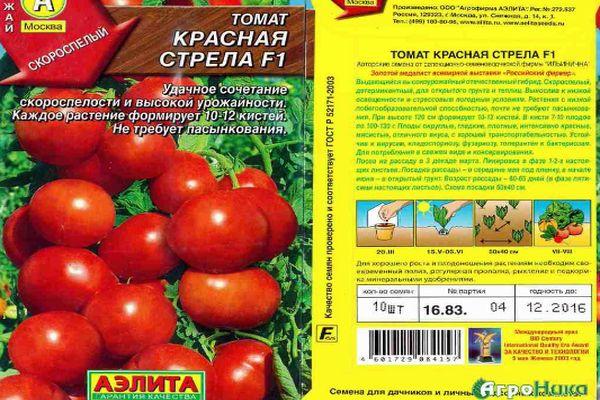
The average yield per bush is 3-4 kg; up to 27 kg of tomatoes of this variety can be harvested from 1 m². They ripen almost simultaneously.
Plants can be planted in different types of soil, as well as in greenhouses.
Tomatoes are versatile. Thanks to their excellent flavor, they are widely used as fresh snacks and are often pickled and preserved.
Some tips for growing
Tomato seedlings should be sown approximately two months before they are planned for transplanting into the ground (outdoors or indoors). Gardeners' reviews suggest that the second half of March is the best time.
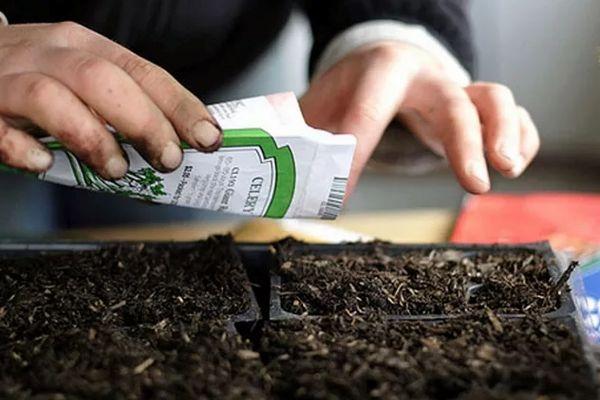
Use your finger to make 1.5 cm deep holes for the seeds. When the first leaves appear, the seedlings should be transplanted from the main container into individual pots. Harden off the plants 7-10 days before transferring them to the ground.
To avoid the effects of frost, young plants are planted in open ground a month later than in a greenhouse.
A distinctive feature of Red Arrow tomatoes is their shade tolerance, so they can be planted in areas of the garden that don't receive direct sunlight. These tomatoes are sometimes used to thicken plantings of tall tomato varieties. This method can save space in the greenhouse, since there will be up to 6 plant bushes per 1 m².
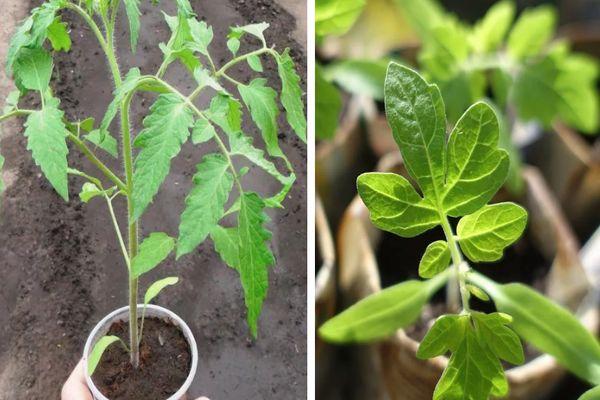
There are several features of growing the Red Arrow tomato:
- There is no need to remove side shoots after the primary inflorescence appears.
- After 6-7 brushes appear, the plant bush needs to be fed with a solution of boric acid and potassium permanganate (2.7-2.9 g of potassium permanganate and 1 g of boric acid are dissolved in 10 liters of cold boiled water).
- The growing season should be accompanied by regular weeding, loosening the soil and timely watering.
- While the 9-12th brush is forming, tomatoes require the application of mineral fertilizer.
- If you feed the plant with a small amount of organic fertilizer every day, the yield will increase.
The Red Arrow tomato variety is rarely susceptible to disease. Viruses and bacteria that typically attack this vegetable crop (tobacco mosaic, wilt of all types, root-knot nematode, fusarium, and cladosporiosis) are virtually immune to the Red Arrow.
To completely protect the plant from diseases, it is recommended to regularly ventilate the greenhouse. Twice a season, the soil around the tomato plantings should be treated with copper-containing products.
Every year, more and more Red Arrow tomatoes are appearing in vegetable gardens across the country. This is not surprising, as these delicious fruits, ripening in large quantities at the same time, become not only a beautiful addition to the table but also to the garden.
Related posts:
 Description of the Red Guard raspberry variety, planting technology and care
 Characteristics and descriptions of the 40 best red currant varieties
 Red currant health benefits, properties, and contraindications
 Description of the red currant variety Nenaglyadnaya, planting and care
 Description of the original Red Pear tomato and recommendations for growing the variety
 Description of the red currant variety Rovada, planting and care
 Description of the Red Riding Hood tomato variety, cultivation and care features
 Delicious recipes for quickly pickling red cabbage in jars for the winter