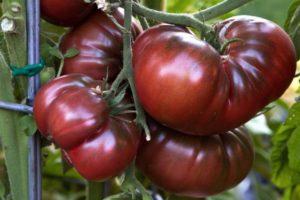
The high-yielding Prince Borghese tomato is distinguished by its small fruits, which cover the bush. These tomatoes are used in salads and as a garnish.
Advantages of the variety
The Prince Borghese tomato, also known as the Bourgeois Prince or Prince Borges, appeared in Italy at the beginning of the last century. Native to Tuscany, this tomato can be found in yards and farms across the country.
Tomatoes can be dried in bunches in the sun, or they can be dried on vines hanging from the walls of houses. These tomatoes are stored on racks in pantries.
This variety is suitable for both protected and open-field cultivation. This mid-season tomato begins bearing fruit 100-120 days after germination.
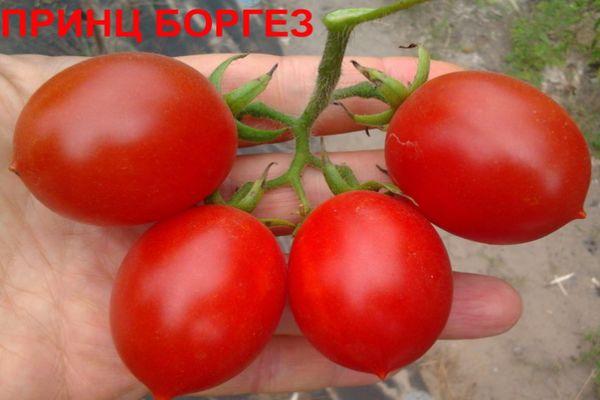
The tomatoes are uniform in size and plum-shaped. A distinctive feature is the pointed tip at the top. Each tomato weighs 15-20 g.
During the growing season, a voluminous bush develops, which is recommended to be grown with 2-3 stems. This tall, indeterminate plant grows unrestrained, producing 3-4 shoots and reaching a height of 150-200 cm.
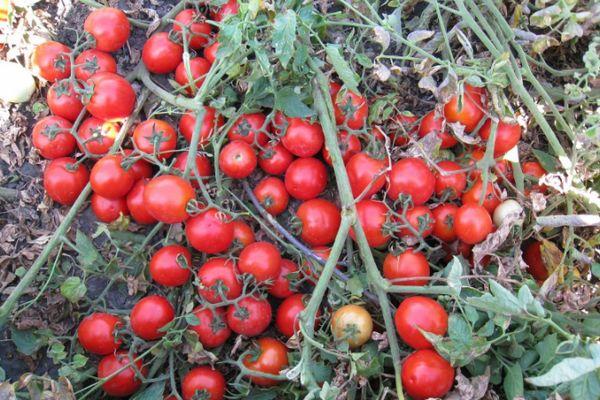
Tomatoes ripen in clusters of 7-10 fruits. A robust bush can yield up to 500 berries. Vegetable growers who cultivate the Prince Borghese variety highlight the crop's positive qualities. These include:
- high plant yield;
- resistance to fungal and viral diseases of nightshade crops;
- good taste;
- possibility of transportation over long distances;
- simultaneous maturation within the brush.
The small fruits are densely and evenly distributed throughout the bush. At the technical ripeness stage, the tomatoes become soft when squeezed and turn red. The fruits are used fresh, as an ingredient in vegetable platters, for garnishing dishes, and for canning.
When dried, tomatoes retain their aroma. Only the fruits of this variety are used to prepare this delicacy, recognized in many countries. They are cut into 2 wedges, drizzled with olive oil, baked until tender, and sprinkled with seasonings (basil, herbes de Provence, oregano).
The sweet fruits have a rich tomato flavor and dense, juicy flesh. When cut horizontally, three chambers containing seeds are visible. The tomatoes are resistant to cracking as they ripen.
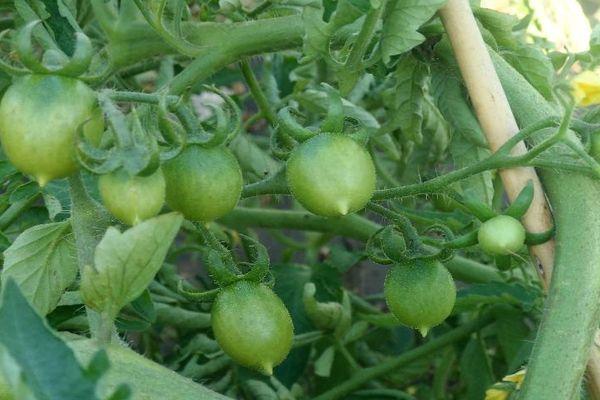
Ripe tomatoes are easily separated from the vines. Timely harvesting is recommended to prevent fruit drop and stimulate ripening of green tomatoes. Tomatoes can be picked at the first stage of reddening and ripened on the vine at room temperature without losing their flavor.
Agricultural technology for tomato cultivation
The Prince Borghese tomato is grown from seedlings. Sow the seeds 55-60 days before planting them in their permanent location. To do this, place the seeds 1 cm deep in a container with prepared soil or substrate.
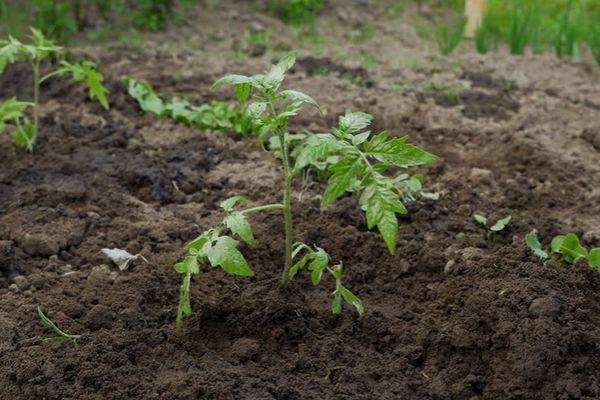
After watering with warm water using a spray bottle, cover the container with glass until the seedlings emerge. Before planting, it is recommended to treat the seeds with an aqueous solution of potassium permanganate and a growth stimulant.
When two true leaves have formed, transplanting is done. Peat pots, which are convenient for transferring seedlings to the ground, can be used for this purpose. Transplanting stimulates plant development and increases the plant's resilience to external factors.
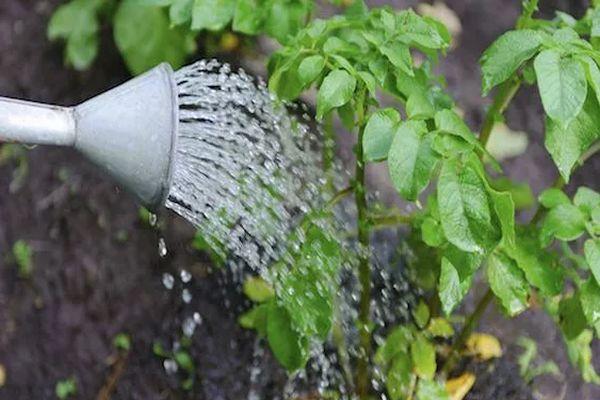
For normal plant development, humidity and temperature must be controlled. Watering is done as the surface soil dries. Seedlings are transplanted into the ground when the first flower stalk appears.
Vigorous bushes require staking, shaping, and removal of excess shoots. These measures stimulate fruit set, which can be harvested two months after planting.
Caring for the crop involves a series of agricultural practices. The plant requires timely watering with warm water. To ensure optimal moisture levels and prevent weed growth, it is recommended to mulch the soil.
Black non-woven fiber is used as mulch. Organic materials (leaves, straw, and wood shavings) provide additional nutrition for plants.
Normal crop development is ensured by the timely application of mineral fertilizers. Superphosphate, urea, and chicken manure are used for this purpose.
The composition is adjusted depending on the soil type and the stage of tomato development. Excessive fertilizers negatively affect the plant. After planting, additional nutrients are added two weeks after planting, during flowering, fruit set, and fruit ripening.
To prevent diseases, the bushes are treated with special preparations. The plant requires periodic loosening of the soil, which ensures the moisture and air balance necessary for root development.
Related posts:
 The best eggplant varieties for growing in a polycarbonate greenhouse: planting and care
 80 Best Eggplant Varieties for Different Regions with Descriptions and Characteristics
 Is it possible to soak treated cucumber seeds before planting and how to do it correctly?
 Methods for planting and propagating cherries at home
 The best grape varieties for growing in the Urals, planting and care rules in summer
 Description of the Red Early apple tree variety, agricultural technology and specific care
 Descriptions of the 20 best cherry varieties for the Moscow region, their planting and care
 How to properly plant peas in a greenhouse and open ground