
The Kangaroo Heart tomato is a proprietary variety. It's adapted to Russian conditions, although in the Non-Black Earth Region and Siberia it must be grown only in greenhouses. Even so, gardeners can reap a wonderful harvest of tomatoes of exceptional beauty and size.
General description of the plant
Kangaroo Heart tomatoes are mid-season varieties. The first ripe fruits appear on the plant only 110-120 days after sowing. Due to this long ripening period, even when growing mature seedlings outdoors, a harvest is only possible in the second half of summer. However, during this period, nighttime cold snaps begin, and prolonged rains sometimes occur. Under these conditions, tomatoes do not bear fruit very vigorously and are often susceptible to late blight. Therefore, it is better to plant mid-season varieties in a greenhouse.
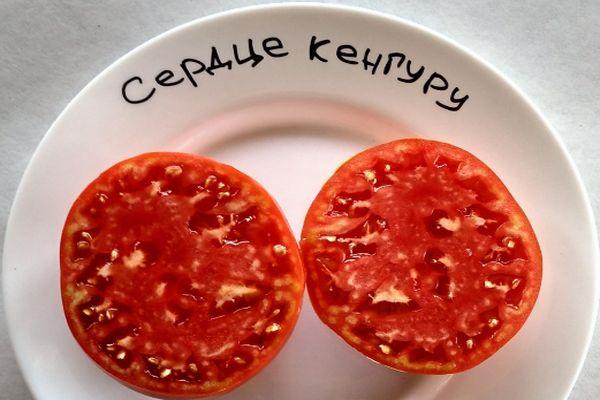
Kangaroo Heart tomatoes have indeterminate stems and can grow up to 2 meters or more. They require support. When growing these tomatoes, it is recommended to train them into 2-3 stems to increase the yield per plant. Remaining side shoots should be removed as they develop.
The average tomato yield is about 4 kg per bush. Growing 3-4 plants per square meter produces a sufficient amount of delicious produce. The Kangaroo Heart variety produces fruit throughout the season, setting fruit until the onset of sustained cold weather.
This tomato is easy to grow. Caring for the Kangaroo Heart variety is simple and involves fertilizing and watering regularly during extremely hot weather. This modern variety is relatively resistant to fusarium and macrosporiosis. To prevent late blight, it is recommended to remove some of the lower leaves on the tomato plants.
Characteristics of fruits
The Kangaroo Heart tomato is a prominent representative of the beefsteak tomato family, a term used to describe varieties with particularly large fruits. Among these, heart-shaped tomatoes hold a special place.
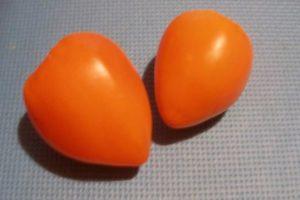
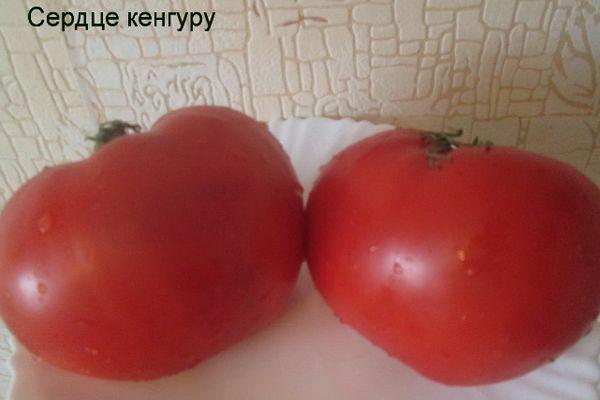
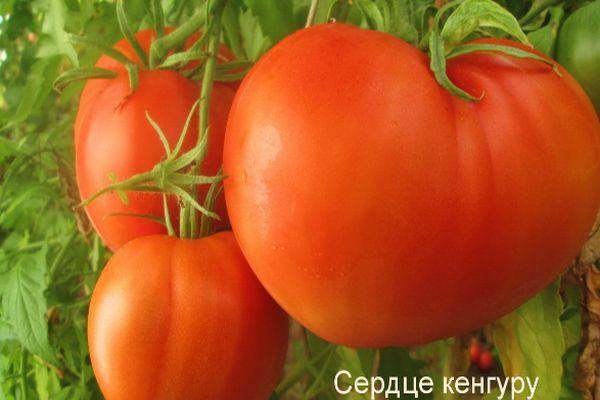
The description of the Kangaroo Heart tomato may seem somewhat fanciful. These tomatoes average 400-700 g in weight, but individual berries can reach 1 kg. The distinctive heart shape and deep red color make the fruit exceptionally beautiful. The tomatoes are borne in clusters of 4-6 berries.
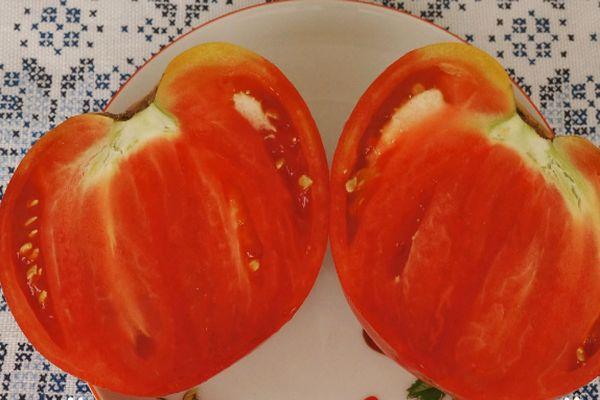
Gardeners describe the tomato's flavor as sweet, without any sourness. The flesh is almost seedless, and the chambers are small. The consistency is firm, and a ripe tomato retains its flavor for a long time.
The fruit skin is strong. No cracking is observed during fruit ripening. This allows for a larger harvest of excellent quality marketable fruit. Ripe fruits withstand transportation well, while unripe ones ripen easily at room temperature.
This variety is versatile. Large tomatoes make a stunning addition to a festive platter or summer salad. Slices of the fleshy flesh are perfect for sandwiches. Winter preservation methods for large-fruited varieties include processing them into juice or sauces. Sweet, large tomatoes make a delicious lecho. Smaller tomatoes can be preserved as slices or added to winter salads.
Agricultural technology of the variety
When growing in a greenhouse, seedlings can be planted when they are about two months old. This means you can sow the seeds approximately 65 days before the expected transplanting time. For sowing, use trays filled with seedling soil. This can be purchased at a gardening store or made yourself from equal parts garden soil, sand, and humus. To reduce soil acidity, add ground chalk or gypsum at a rate of 1 tablespoon per 1 kg of the mixture.
The prepared soil should be thoroughly soaked in a hot solution of potassium permanganate right in the container. Once the soil has cooled, begin sowing. Spread the seeds over the soil surface and cover them with a thin layer of sand. Place the seeds 0.5 cm deep. To retain soil moisture, cover the containers with glass and place them in a warm place (+25°C). Tomatoes will germinate within 4-5 days.

When 1-2 true leaves appear on the young tomatoes, transplant the seedlings into separate pots. As the plants grow, the pots should be moved further apart from each other when the leaves of the seedlings begin to close. Planting in a greenhouse can be done in mid-May.
Two weeks after transplanting, Kangaroo Heart tomatoes should be fertilized with a complex mineral fertilizer for nightshade crops (Signor Tomato, Agricola, Kemira). Prepare the solution according to the instructions and apply 0.5 liters per plant.
When flower clusters appear on the bushes, repeat the feeding, applying 1 liter of solution per bush, unless the instructions specify a different amount. The third feeding is done approximately two weeks later, when the first fruits begin to ripen.
Related posts:
 Description of the Ox Heart tomato variety, cultivation and care features
 Characteristics and description of the Bull's Heart tomato variety, yield and cultivation
 Description and characteristics of the Bull's Heart cherry variety, planting and care
 The best eggplant varieties for growing in a polycarbonate greenhouse: planting and care
 Description of the Beauty's Heart tomato and cultivation of the variety
 80 Best Eggplant Varieties for Different Regions with Descriptions and Characteristics
 The best grape varieties for growing in the Urals, planting and care rules in summer
 Description of the Loving Heart Red tomato and its varieties