
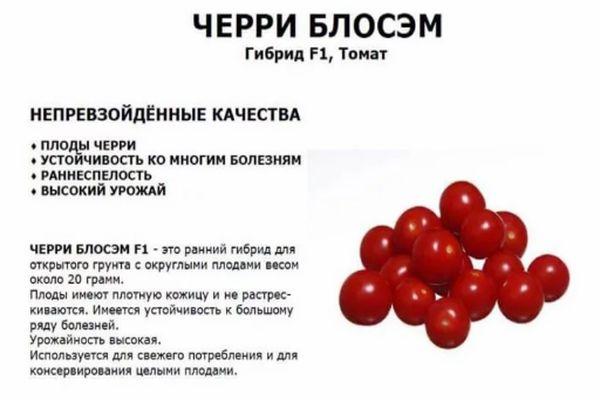
The Cherry Blossom F1 tomato is the work of Japanese agrobiologists and was added to the State Register of Breeding Achievements in 2008. It is a universal variety with excellent fruit flavor characteristics.
Advantages of a hybrid
This tomato variety is known as Cherry Blossom. During the growing season, it develops a determinate bush up to 110 cm tall. The tomato has medium-sized, green leaves and complex inflorescences.
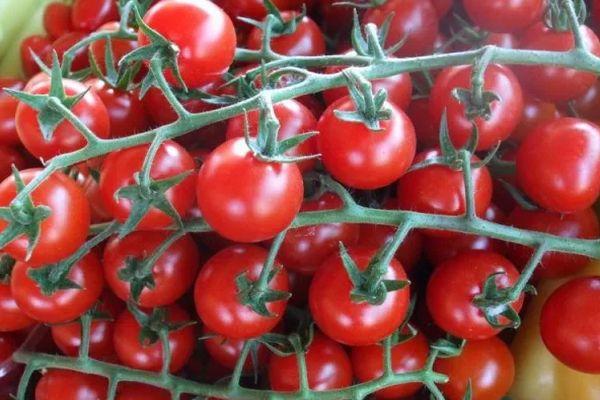
Cherry Blossom tomatoes are characterized by a mid-early ripening period. From germination to fruiting, it takes 90-100 days.
The variety's characteristics and description indicate that the plant can be grown both indoors and outdoors. The tomato adapts well to virtually all climates except northern ones. The plant requires support.
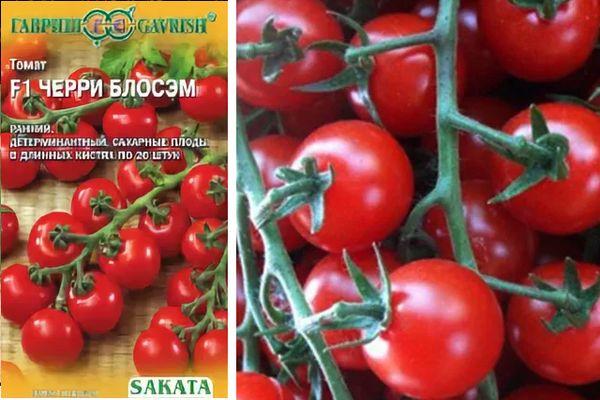
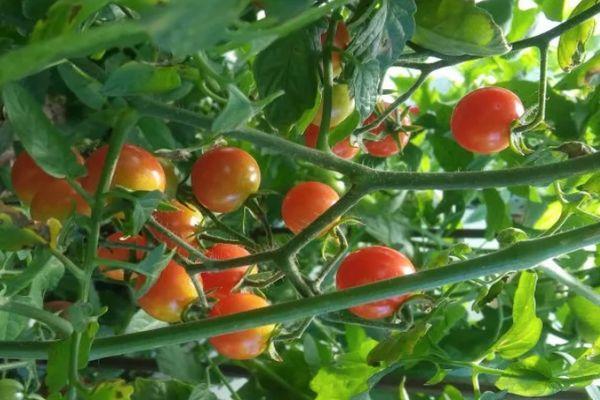
The fruits are small, round, weighing 20-25 g, and ripen evenly in clusters of 20 tomatoes. The average yield is 3.7-4.5 kg per square meter.
The description of tomatoes is based on the characteristics of the fruit. They are bright red, with a glossy surface and a small green spot near the stem. When cut horizontally, two chambers containing seeds are visible. The fruits are sweet in taste, with a dry matter content of up to 6%.
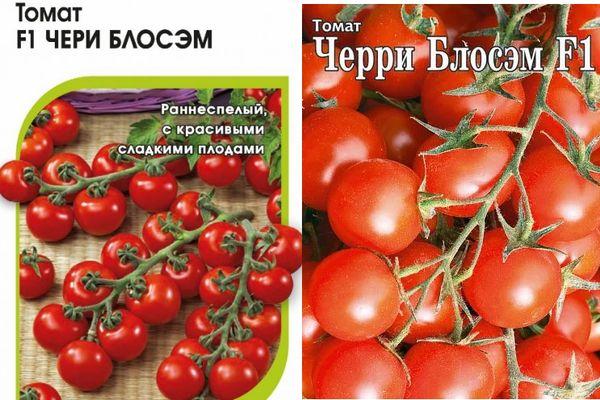
Tomato skin is quite thin and moderately dense, so the fruits can be stored in a cool place for up to 30 days. Once fully ripened, the fruits retain their shape and are not prone to cracking. Tomatoes can remain on the vine for 1-1.5 weeks, after which they lose their flavor.
In cooking, the fruits are used fresh, for decorating dishes, preserving vegetable assortments, and drying.
Vegetable growers' reviews indicate the plant's resistance to fungal and viral diseases of nightshade crops. Tomatoes are sensitive to temperature fluctuations.
Agricultural technology for growing tomatoes
It is recommended to cultivate this variety using seedlings. Seeds are sown for seedlings in early April. At least 35 days should pass from the emergence of seedlings to planting in the ground.
The climate of the southern regions allows for early sowing of seeds in the ground under temporary cover. Before planting, carefully prepare the soil mixture. A substrate can be used for planting.
Fill the container with soil, compact it lightly, and make furrows 1 cm deep. Place the seeds at a distance from each other and cover with a 1 cm layer of peat moss. Use a sieve to ensure even distribution. After watering with warm water using a spray bottle, cover the container with plastic wrap or glass and place it in a warm place.
When seedlings emerge, remove the cover and move the container to a well-lit area. For normal plant development, ensure timely watering and optimal air temperature.
During the seedling formation period, fertilize with complex fertilizers. When one or two true leaves form, transplant the seedlings. Peat pots filled with substrate are used for this purpose. These containers allow the seedlings to be transplanted to their permanent location without damaging the root system.
Pricking out weak plants allows for the selection of weak ones and ensures each bush receives adequate air and light. The seedlings are transplanted to their permanent location in May.
The bushes are planted at a distance of 40-50 cm from each other. Despite belonging to the determinate type group, the plant has thin stems that require tying to a support.
It is recommended to remove shoots below the first cluster of fruit. The plant requires regular watering and fertilizing with mineral fertilizers supplemented with organic components.
During the growing season, the composition of fertilizers is adjusted depending on the soil type and plant development stage. During fruit formation, mineral supplements containing phosphorus and potassium are added.
Despite its resistance to major diseases, this variety is susceptible to late blight, especially when grown indoors. As a preventative measure, treat the bushes with copper-based preparations and ventilate the area regularly.
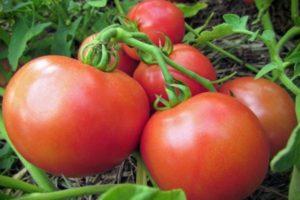
Among biological pests, this tomato variety is susceptible to whiteflies. They are controlled using special traps or approved insecticides.
The Cherry Blossom tomato is a small-fruited hybrid with a determinate bush. Its cultivation, when done correctly, results in a good harvest.
Related posts:
 The best grape varieties for growing in the Urals, planting and care rules in summer
 The best eggplant varieties for growing in a polycarbonate greenhouse: planting and care
 80 Best Eggplant Varieties for Different Regions with Descriptions and Characteristics
 What varieties of tomatoes are best to plant in a polycarbonate greenhouse?
 Descriptions of the 20 best cherry varieties for the Moscow region, their planting and care
 When and how to properly transplant tomato seedlings, the best days in 2025
 Description of the best varieties of black tomatoes for open ground and greenhouses
 Description and characteristics of the best indeterminate tomato varieties for greenhouses