
The Novogodniy tomato is a late-ripening variety, allowing for long-term storage during the winter. To ensure a good harvest, gardeners must follow the basic care and cultivation guidelines for this variety, as well as know the proper pest and disease control measures.
What is the New Year tomato?
Characteristics and description of the variety:
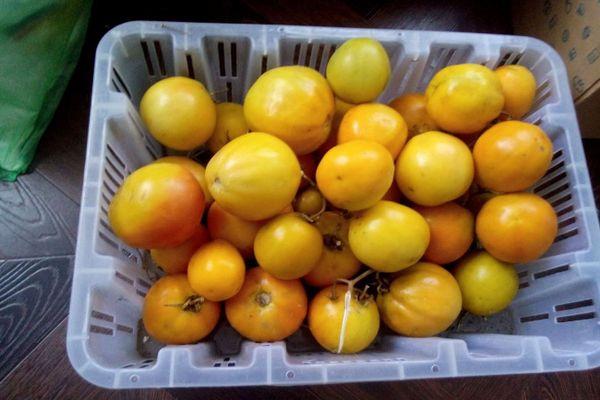
- The tomato is round in shape, slightly flattened on the sides.
- Dense and juicy pulp.
- Glossy and smooth skin.
- Rich orange color of ripe fruits.
- The average weight of fruits is about 150 g.
The bush's growth is virtually unlimited. The plant produces a moderate number of leaves and branches, but experts advise gardeners to consider staking and pinching the plant in advance. The richest harvest comes from a plant formed into a single stem.
The first inflorescence on the bush is formed approximately above the first 9 leaves, the rest are formed after every 2-3 subsequent leaves.
One Novogodny bush can yield a farmer around 3.5 kg of fruit—a fairly average yield among other tomatoes.
The Novogodniy variety has the following advantages:
- Large fruits of regular shape.
- Ability to withstand major adverse factors, including unstable climatic conditions.
- Widely used in cooking, the fruits of the New Year variety can be used for canning.
- Good immunity, which allows the plant to produce a large harvest.
- Ripe fruits can be stored for a long time (until the New Year).
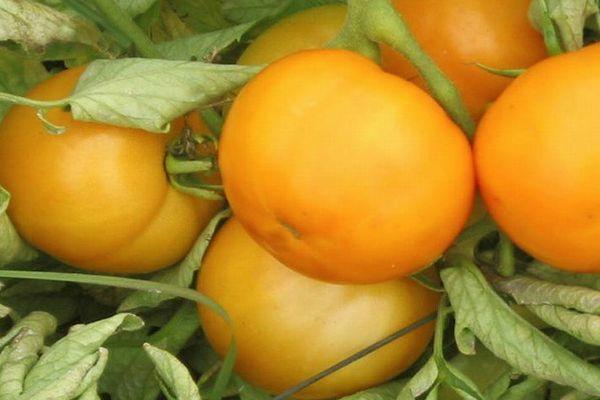
If you choose this variety of tomato, understand that the plant will take up a significant amount of your time: you'll need to carefully care for it. However, the yield is worth the effort—you'll get a large quantity of fruit that can be stored for quite a long time. The tomatoes have excellent flavor.
Tomatoes are used to make salads, juices, tomato paste, appetizers, and side dishes for meat dishes. They can be salted and pickled.
Growing conditions
The Novogodniy variety is typically grown in plastic greenhouses or open beds. Seeds are sown in late March, and transplanted when the first leaves appear on the seedlings. It is recommended to plant the seedlings in the ground in mid-May.

The plant should be trained into a single stem, removing other parts. The bushes should be tied to a support just a few days after they reach their permanent location.

Gardeners' reviews of tomato yields are positive. They claim that it's best to start seedlings in a plastic greenhouse, and only after some time, when the threat of frost has passed, can they be planted outdoors. When planting bushes in the ground, it is necessary to leave a distance of 40 cm between them.
Bush care includes weeding, watering, loosening the soil, and fertilizing the plants with the necessary fertilizers. The plant is resistant to a number of common infections, but breeders have not been able to protect it from all diseases, so it is necessary to monitor the plantings and, if signs of disease or insect infestation are detected, promptly treat the plants.
Related posts:
 What is the best way to feed tomato seedlings to make them plump?
 Description and characteristics of the best indeterminate tomato varieties for greenhouses
 Recipes for cold, hot, and original appetizers for the New Year 2020
 80 Best Eggplant Varieties for Different Regions with Descriptions and Characteristics
 Description of the best tomato varieties for pickling and canning
 What varieties of tomatoes are best to plant in a polycarbonate greenhouse?
 Growing and caring for almonds, planting and pruning rules at home
 The top 20 best DIY cake recipes for New Year's 2020