
The Snowdrop tomato, whose characteristics and description indicate its suitability for cultivation in regions with harsh climates, possesses a number of positive characteristics. This tomato is characterized by high yields, hardiness, and adaptability to open-field conditions.
Advantages of the variety
The Podsnezhnik tomato variety is the result of the work of Russian agrobiologists from Siberia and is included in the State Register of Breeding Achievements. The Podsnezhnik tomato is suitable for cultivation in greenhouses, heated hotbeds, and on open ground.

Despite its excellent adaptation to the region's climate, plants of this variety are adversely affected by drought and intense heat. This tomato is undemanding regarding soil composition and will bear fruit in any soil type and composition.
This semi-determinate, semi-standard plant reaches a height of 100-130 cm during the growing season. It is an early-ripening crop, beginning to bear fruit 80-90 days after emergence.
The tomato plant's leaves are small and light green. The bush's strong, massive, and sturdy stems can support the weight of ripening tomatoes.

The first flower stalk appears at the level of the 7th or 8th leaf, and then develops at intervals of every 1-2 leaves. This tomato is characterized by its uniform flowering and fruit formation.
Vegetable growers' reviews indicate that Snowdrop tomatoes require shaping without removing shoots. To increase productivity, the bushes are trained into three stems. This results in three clusters forming on each shoot, each containing five tomatoes.
This variety is characterized by high yields, with up to 10 kg of fruit per square meter. The tomatoes are round, with a uniform, intense red color. The average fruit weight is 90 g, with a maximum of 120-150 g. The tomatoes on the lower branches are larger.

The fruits have juicy, fleshy flesh and a sweet taste. When cut horizontally, three chambers containing seeds are visible. The dry matter content of the tomatoes reaches 5%, indicating their suitability for long-term storage and transportation.
Take a look Also

In cooking, the fruits are used fresh. Tomatoes are processed into purees and sauces. They can also be canned as part of vegetable platters.

Those who have planted the Snowdrop tomato note its good frost resistance. This allows the seedlings to be transplanted to a permanent location without fear of spring frosts.
The Snowdrop variety is drought-tolerant and resistant to diseases and pests. It is sensitive to the quantity and quality of fertilizer.
Cultivation techniques
To grow healthy plants, carefully prepare the soil mixture. It is recommended to treat the seeds with disinfectants before planting.
For this purpose the following are used:
- aqueous solution of potassium permanganate;
- copper sulfate;
- aloe juice;
- hydrogen peroxide solution;
- hot water (up to 50°C).
To strengthen the plant's immune system and promote uniform germination, treat the seeds with a growth stimulant. Place the seeds in a container with prepared soil at a depth of 1 cm, water with warm water using a spray bottle, and cover with plastic wrap until germination occurs.
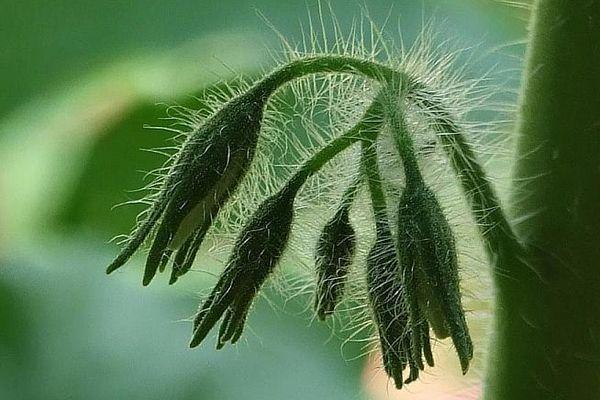
Growing seedlings in low-light conditions is done using a fluorescent lamp. When two true leaves form, transplanting is done. Peat pots with substrate are used for this purpose.
Transplant seedlings to their permanent location once they have formed 7-8 leaves and one flower stalk. It is recommended to plant 3-4 bushes per square meter. In northern regions, planting should not begin before early June. Before planting, disinfect the soil with an aqueous solution of disinfectant.
Add complex mineral fertilizers and compost to the holes. Fertilizers should be applied carefully, carefully selecting the right mineral composition and timing. Avoid adding fresh manure to the soil, as this stimulates the growth of green mass and significantly reduces crop yield.

Caring for the Snowdrop tomato
In harsh climates and short northern summers, where sunlight is insufficient, bushes are sprayed with a superphosphate solution. This causes the leaves to turn a deep green, accelerating photosynthesis and ripening. To prevent branches from being damaged by the weight of ripening fruit, tall bushes are tied to supports.

This tomato variety requires moderate watering. Excessive moisture can trigger late blight. Mulching is used to ensure drip irrigation and prevent the surface soil from drying out.

For this purpose, use black non-woven fiber or organic materials (straw, hay, sawdust, grass). Fertilizer should be applied at the root. Fertilizing is carried out 7 days after planting in the ground at the stage of ovary formation.
During the developmental stage, tomatoes require phosphorus and potassium, and during ripening, they require nitrogen. With proper agricultural practices, the crop is rarely susceptible to root rot.
For preventative purposes, a one-time treatment with special preparations is carried out. Harvesting should be done promptly and regularly to speed up the ripening of the remaining fruits.
Related posts:
 The best eggplant varieties for growing in a polycarbonate greenhouse: planting and care
 80 Best Eggplant Varieties for Different Regions with Descriptions and Characteristics
 The best grape varieties for growing in the Urals, planting and care rules in summer
 Description of the best varieties of black tomatoes for open ground and greenhouses
 Descriptions of the 20 best cherry varieties for the Moscow region, their planting and care
 Description of the best varieties of onions, planting and care in open ground
 Description of blight-resistant tomato varieties for open ground and greenhouses
 Description and characteristics of the best seeds of pea varieties and types