
President tomatoes underwent extensive testing and research before being included in the State Register of Agricultural Crops of Russia. The President F1 tomato is a hybrid, so it boasts excellent characteristics. Vegetable growers are increasingly choosing this variety due to its extensive list of advantages. Reviews indicate it's easy to grow, and the yield is always impressive in quality and quantity. The President 2 F1 tomato requires standard care, but there are some special considerations.
Description of the variety
The description indicates that the President variety belongs to the early-ripening group of plants. In unprotected beds, the fruits ripen in 98 days; in a greenhouse, the harvest can be harvested even earlier.
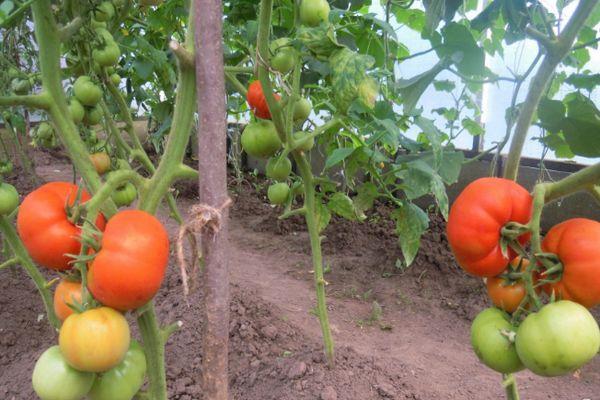
The President tomato variety has an indeterminate growth pattern, meaning the stem never stops growing. The bush reaches 2.5 meters in height. The bush is trained based on the height of the greenhouse or any existing support.
The plant's stems and branches are strong and sturdy, but they must be tied to a support structure. This will prevent damage to the bush and ensure free access of oxygen and light to the lower portion of the plant.
The bush has medium foliage. The leaves are small and dark green. The first flower cluster forms above the sixth leaf. Subsequently, clusters appear every two leaves. This variety produces few side shoots, but they should be removed promptly.
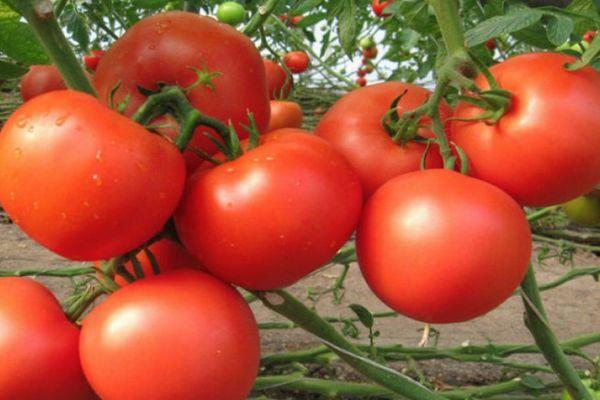
The President variety has a high yield. When all cultivation practices are followed, a single greenhouse bush can yield up to 8 kg of ripe fruit, while in open fields the yield is slightly lower—5–6 kg.
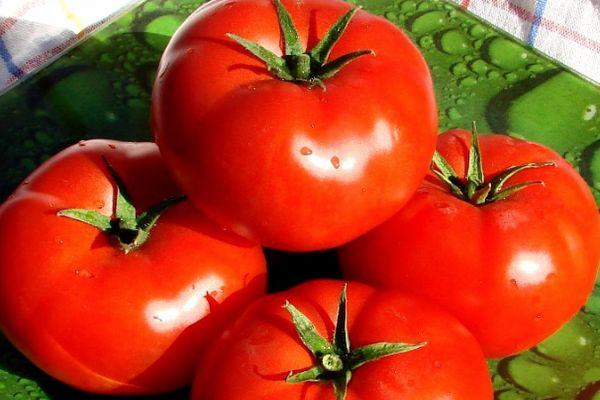
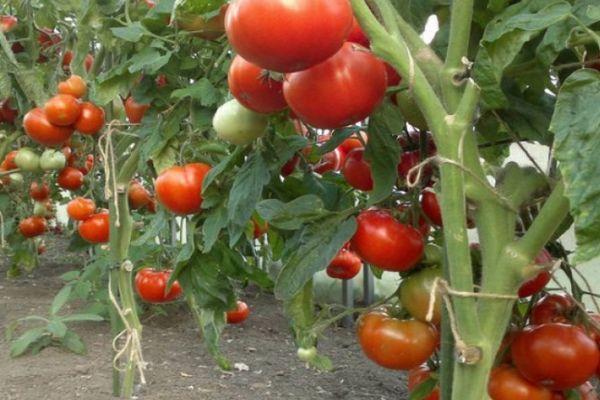
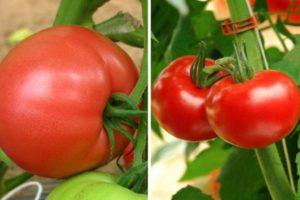
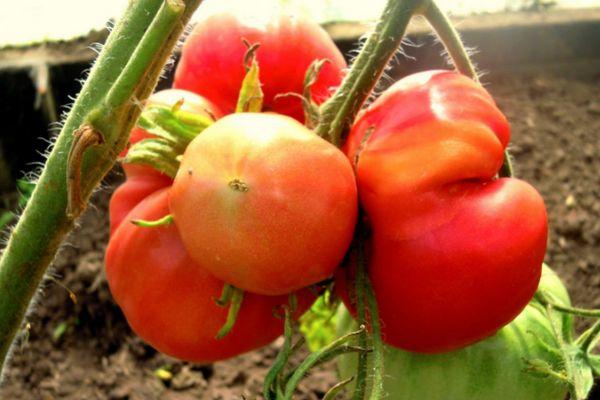
Each cluster produces 5-6 equally sized fruits. The variety description indicates that each tomato averages 300 g. The tomatoes are round, slightly flattened at the base, and smooth in surface. When ripe, they turn a reddish-orange color.
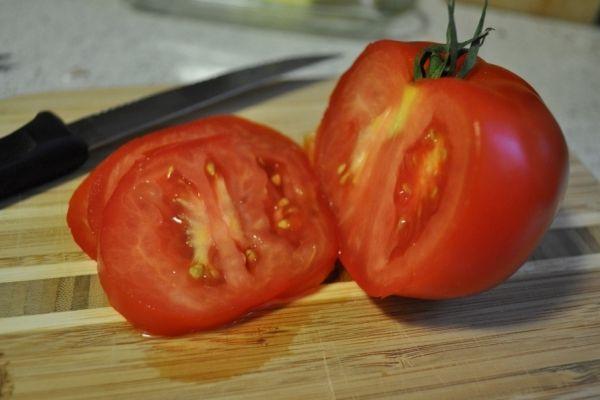
The fruit's skin is thick, preventing cracking. The harvested fruit can be stored for a long time, maintaining its marketable appearance and flavor. The flesh is dense, juicy, meaty, and aromatic.
Growing
This is an easy-to-grow crop, but some preliminary preparation of the planting material and the soil is still required. It's best to grow the President tomato variety from seedlings. Seeds are sown 1.5 months before transplanting to a permanent location.
For an early harvest in a greenhouse, sowing begins in mid-February or early March. If the crop is to be grown in open beds, sowing begins in mid-March or early April.
Planting material must be pre-selected and processed. Only dense and large specimens are suitable for sowing. Selection is done manually or using a saline solution. The seeds are immersed in salt water for 10 minutes. Only those that remain at the bottom have a good germination rate.
It's then helpful to disinfect the seeds. To do this, soak the planting material in a weak solution of potassium permanganate for 20 minutes. Experienced vegetable growers soak the seeds in solutions containing plant growth stimulants.
All tomato varieties, including the President variety, prefer light, loose, and fertile soil with good aeration. Shallow wooden boxes are chosen for planting. The seeds are planted 1.5 cm deep and covered with plastic wrap. The room temperature at this stage should be 26 degrees Celsius.
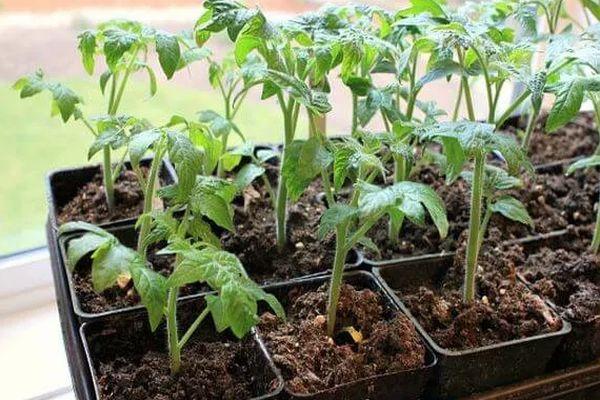
Once most of the seedlings have emerged, remove the film. To ensure strong and healthy growth, the seedlings require at least 10 hours of daylight. Once the first two true leaves have unfurled and the stems have reached 7 cm in height, transplant them into individual containers holding up to 500 ml.
Two weeks before transplanting, harden off the President tomato seedlings. To do this, take the seedlings outside daily, provided the weather is dry and sunny. On the first day, just 10 minutes is enough to expose the young shoots to the outside air, gradually increasing the time.
Care Features
Transplanting to a permanent location begins only when four pairs of leaves have unfurled on the stem. Transplanting into open ground begins in late May or early June.
To plant the President variety, choose a well-drained site protected from strong winds. The best predecessors for the President tomato variety are cabbage, onions, melons, peas, and corn. Avoid planting tomatoes after potatoes, peppers, eggplant, or tobacco.
The distance between rows should be 80 cm, and the interval between bushes in a row should be at least 30 cm. Wood ash, superphosphate, or humus should be added to each hole before planting.
Further care requires fulfilling certain requirements:
- to increase yield, formation into two stems is carried out;
- Stepchildren need to be removed regularly, their length should not exceed 3 cm;
- It is essential to install supports;
- as a result of the formation of the bush, up to 7–8 fruit clusters should remain;
- During the entire growing season, at least three additional fertilizing sessions are carried out (it is recommended to alternate organic matter with mineral components);
- It is important to establish a watering regime (the President tomato loves frequent and abundant watering; on hot days, water once every 2–3 days);
- the soil in the beds is loosened after each watering, this will prevent a dry crust, and air and warmth will freely penetrate to the roots;
- To reduce the risk of fungal infection and rot, it is useful to mulch the soil around the bushes (straw, peat, and sawdust are suitable as mulch).
During the first month of plant growth, it's beneficial to apply nitrogen fertilizer. This promotes the development of green mass. During fruiting, potassium and phosphorus fertilizers should be added. During flowering and at the end of fruiting, foliar treatments, such as with boric acid, are applied.
If you follow all these recommendations, there will be no problems during cultivation, and at the end of the growing season you will be able to harvest tasty, large tomatoes.
Advantages and disadvantages
The variety has a long list of advantages:
- one of the main positive aspects of the variety is its high yield;
- attractive appearance of fruits and high taste qualities;
- the harvest is stored for a long time, accumulating flavor and benefits;
- the dense skin prevents cracking and allows the harvest to be transported over long distances;
- The President variety is highly resistant to diseases, especially late blight and alternaria;
- Tomatoes do not have any special requirements for soil composition and can withstand bad weather;
- fruits of general purpose;
- The plant can be grown both in open beds and in a greenhouse.
Because the President variety is unpretentious and tolerates both heat and cold, it can be grown in both northern and southern regions of Russia. Those who have planted this variety in their gardens report good yields in any conditions. The plant rarely gets sick and tolerates adverse weather conditions well.
Judging by reviews, vegetable growers cite only a few care considerations as disadvantages of this variety. The stem grows tall, and each cluster produces several large fruits, so providing support for tying is essential. Staking is essential not only for the stem but also for the side branches.
Pests and diseases
The President variety is rarely attacked by insect pests or infected with infectious diseases, but as a preventative measure, it would be a good idea to treat the bushes with copper sulfate, wood ash, or a soap solution.
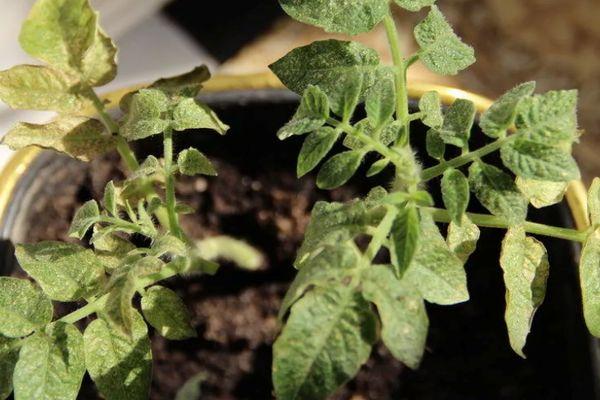
The most common pests that attack tomato plants are whiteflies, slugs, and spider mites. To combat these pests, use a soap solution, hot pepper infusion, or tobacco dust.
If cultivation is accompanied by timely application of fertilizers, soil mulching, regular and proper watering, and preventative spraying, the plant will develop correctly, without problems.
Harvesting and storage
The first harvest takes place after 82 days, but with proper care, it can be harvested even earlier. The President tomato variety bears fruit for a long time – until the end of September or even early October.
To increase the sweetness of tomato pulp, you need to know one secret. It is recommended to pick the fruits slightly unripe.
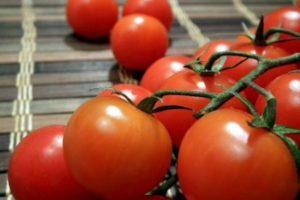
The harvested fruit is placed in wooden crates and left in a dark, dry place for 7–9 days at a temperature of 20°C (68°F). During this time, special enzymes are formed in the fruit, which impart sugar content.
The fruits of the President variety are rich in vitamins and amino acids. They are eaten fresh, added to salads, preserved, and pickled. The fruits are also used to make pastes, sauces, and juices.
Gardeners' reviews
Experienced gardeners' reviews of the President variety are generally positive. Everyone notes the good germination of seeds after planting and the ease of subsequent care. The harvest is always abundant and high-quality.
The disadvantages are minor and are mainly related to the need to install a support for tying, forming the stem and pinching out the side shoots.
Related posts:
 Description and pruning group of clematis President, cultivation and care
 Description of the President plum variety, growing and care instructions
 Description and characteristics of the columnar apple tree President, planting and care
 Description of the 30 best plum varieties for the Moscow region, planting and care
 80 Best Eggplant Varieties for Different Regions with Descriptions and Characteristics
 Description and characteristics of the 60 best sea buckthorn varieties, how to choose depending on the region
 The best grape varieties for growing in the Urals, planting and care rules in summer
 Description of the 90 best varieties of beans for open ground with names