
- History of plum breeding
- Pros and cons of the variety
- Climate and regions of cultivation
- Characteristic
- Description of the tree and fruits
- Pollinators
- Ripening times and harvesting of plums
- Yield and application of berries
- Winter hardiness and drought resistance
- Resistance to diseases and pests
- Planting and caring for the President plum
- Deadlines
- Required soil composition
- Selecting a site
- Preparing the seedling and planting hole
- Step-by-step process of planting a plant
- Watering mode
- Fertilization
- Trimming
- Preparing for winter
- Protection from rodents
- Whitewash
- Methods of reproduction
- Gardeners' reviews
Thanks to its 100-year cultivation history, the President plum variety has gained immense popularity among gardeners, farmers, and vegetable growers. Easy to care for, drought- and frost-resistant, and a high-yielding fruit, it is grown not only in home gardens but also on vast tracts of land for industrial use. Its long shelf life allows for long-distance transport.
History of plum breeding
The first mentions of the President plum variety date back to the late 19th century. This new variety was developed by English amateur breeders. By the early 20th century, this new hybrid plum had spread throughout Europe.
Pros and cons of the variety
To obtain a bountiful harvest of healthy, tasty fruits, it is necessary to familiarize yourself in detail with all the advantages and disadvantages of a varietal fruit crop.
Pros:
- Annual, high yield rates.
- The variety tolerates heat and drought well.
- Sudden temperature changes do not affect the flowering and fruiting of plum trees.
- Frosty winters do not have a negative impact on the growth and yield of fruit crops.
- Due to the dense skin, the fruits can easily be transported over long distances.
- Ability to bear fruit independently.
- Excellent taste and presentation of fruits.
Note: This easy-to-grow fruit tree does not require additional pollination, but planting other plum varieties nearby significantly increases the fruit tree's yield.
Flaws:
- Actively growing and developing trees require annual pruning and shaping.
- Weak branches often cannot withstand the abundant fruit harvest and break.
- Fruit crops have weak natural immunity to diseases and harmful insects.
But even such shortcomings cannot overshadow the main advantages of the President plum variety.
Climate and regions of cultivation
Plum trees are adaptable to any climate. Therefore, the President plum is grown both in the harsh Siberian climate and in the sunny gardens of Ukraine and Moldova.
Characteristic
The President plum variety differs from its peers in its rapid growth, with annual shoot growth reaching 40-50 centimeters.
Trees are prone to overload, which often results in damage to fragile branches.
Description of the tree and fruits
Mature trees rarely reach 3-3.5 meters:
- The trees have a dense crown, oval or round in shape. Young branches and shoots grow rapidly upward, and only when ready to bear fruit do they assume a horizontal position relative to the trunk.
- The main conductor and branches are covered with grayish-green bark. The leaf blades are rounded, pointed, and dark green in color.
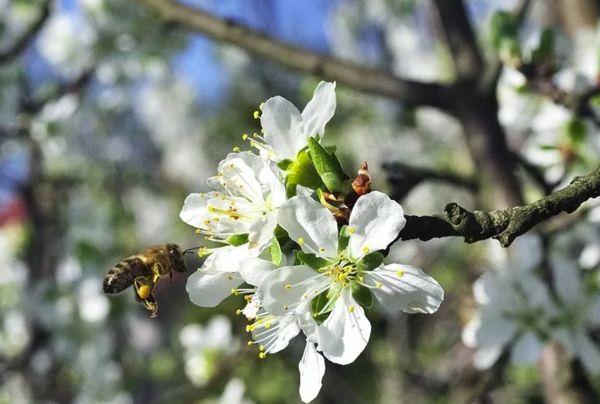
- During the flowering period, the tree produces inflorescences with 3 large flowers, shaped like a rose and snow-white in color.
- Future fruits are formed on special bouquet branches.
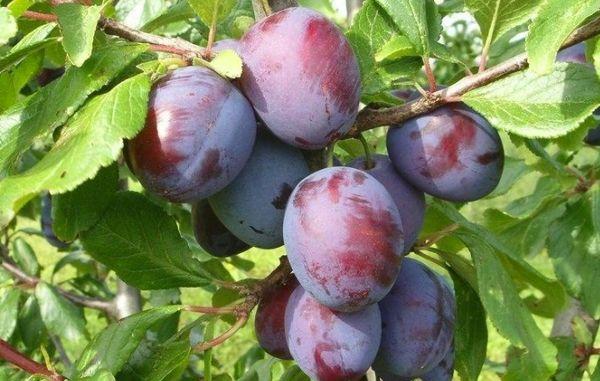
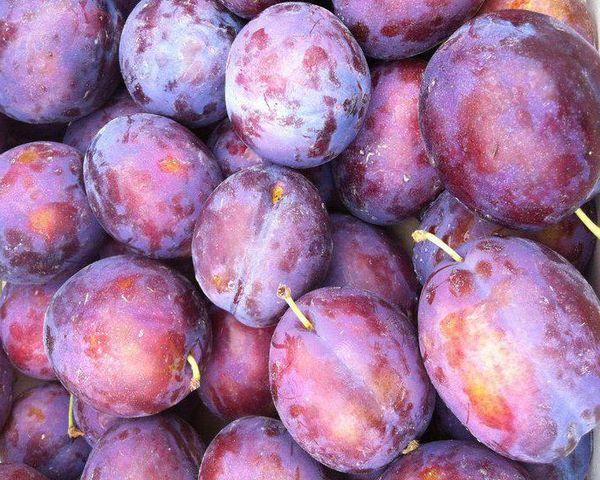
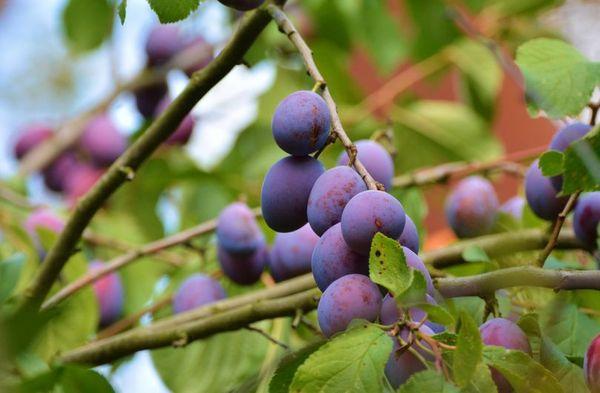
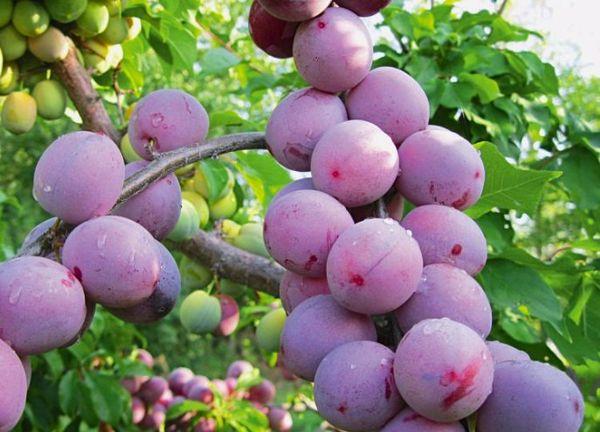
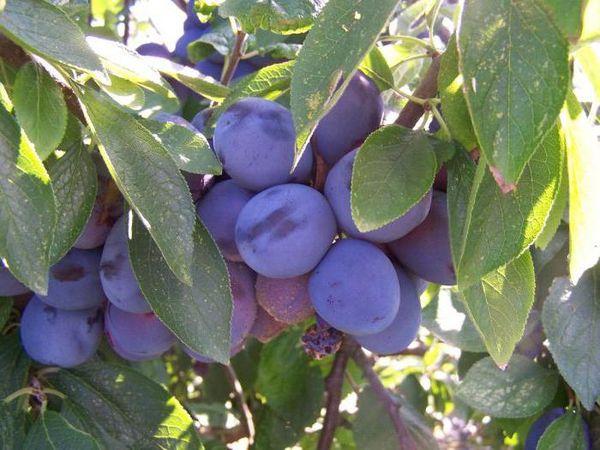
The President plum variety is characterized by large fruits of blue and purple hues:
- Ripe fruits weigh up to 70 grams.
- The skin of the fruit is dense, with a clear waxy, protective coating.
- As they ripen, the fruits change color from green to dark blue with a purple tint.
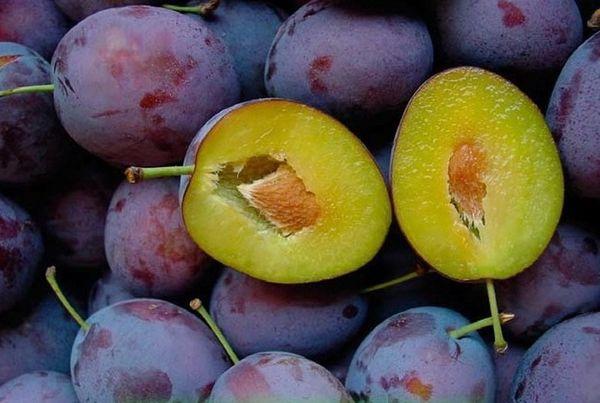
- The seeds are medium-sized and easily separated from the ripe pulp.
- The color of the pulp ranges from greenish to bright yellow shades.
- The pulp is juicy, with a predominantly sweet taste and a slight sourness in the aftertaste.
Fact! Plums contain a huge amount of beneficial acids and fruit sugars.
Pollinators
To increase the fruiting and yield of the President plum, fruit varieties with similar flowering times are planted nearby. The best varieties to plant next to the President plum are Skorospelka Krasnaya, Kabardinskaya Rannyaya, and Renklod Altan.
Ripening times and harvesting of plums
The President plum is a late-ripening variety. The trees enter their active flowering phase in the second half of May, and the fruit ripens in September. In Siberia and the Urals, harvesting occurs only in late September. In southern regions, ripe fruits are harvested in the second half of August.
Yield and application of berries
Trees begin bearing fruit in the fifth to sixth year of growth in open ground. The younger the plant, the smaller the yield. While trees under ten years of age yield no more than 15 kilograms of ripe fruit, mature plum trees, with proper care, produce 40 to 70 kilograms of ripe, healthy fruit annually.
The President plum has a versatile use. The fruit is eaten fresh, made into preserves, jellies, marmalades, dried, and frozen. It is also used to make juices, compotes, sauces, nectars, homemade wines, and liqueurs.
Interesting! The English queen eats two plums, grown for the royal court in the gardens of Scotland, every day before her first meal.
Winter hardiness and drought resistance
Thanks to long-term observation of the fruit crop, the main characteristics of resistance to low and high temperatures were identified.
President plum trees easily tolerate both hot, dry weather and harsh winter frosts, allowing them to be grown in regions with varying weather and climate conditions.
Important! Plum trees are also not susceptible to spring frosts.
Resistance to diseases and pests
However, fruit trees lack resistance to diseases and pests due to a lack of natural immunity. Therefore, annual preventative treatments are necessary.
Planting and caring for the President plum
To grow a healthy, fruitful plum tree, it is necessary to create suitable conditions for the plant and accurately determine the timing of planting the planting material.
Deadlines
The timing of plum planting depends directly on the intended growing region. While in the south, seedlings will quickly establish and root after autumn planting, in Siberia and the Urals, it is recommended to transplant plums to open ground in the spring, when the soil warms up to 10 degrees Celsius.
Required soil composition
Although this fruit crop is easy to care for and grow, it prefers fertile, loose soil with low acidity and neutral moisture. Groundwater levels should be between 1.5 and 2 meters above the soil surface.
If the site has predominantly heavy, clayey soil, add sand and humus. Sandy soil is mixed with peat and a small amount of clay. Four to six weeks before planting, the selected area is dug, cleared of weeds, and fertilized with organic matter and minerals.
Selecting a site
For growing plums, choose level, well-ventilated, yet draft-free, sunny areas. The more sunlight the fruit receives, the more sugars it will accumulate.
Preparing the seedling and planting hole
It is recommended to purchase plum varietal seedlings from proven and reliable nurseries.
Landing:
- A day before planting in open ground, the plant roots are placed in a mixture of water and clay, then the roots are trimmed and treated with a solution of potassium permanganate.
- Planting holes are dug in a prepared area with fertile soil.
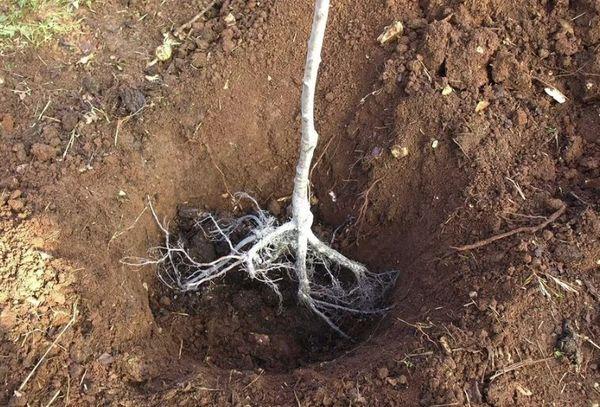
- The hole should not exceed 50-60 centimeters in depth and 70 to 80 centimeters in diameter.
- The distance between seedlings should be at least 2-2.5 meters, and the row spacing should be 3 to 4 meters.
- A 10-15 cm drainage layer consisting of small stones is placed at the bottom of the holes, and a mound of fertile soil mixture is poured on top.
To support the young seedling, a wooden or metal stake is driven into the planting hole.
Step-by-step process of planting a plant
Before planting, the seedling is examined again for damage and transferred to open ground.
- The plant is placed in the center of the planting hole, on top of the mound.
- The roots are carefully laid out in the hole, covered with soil, and compacted on top.
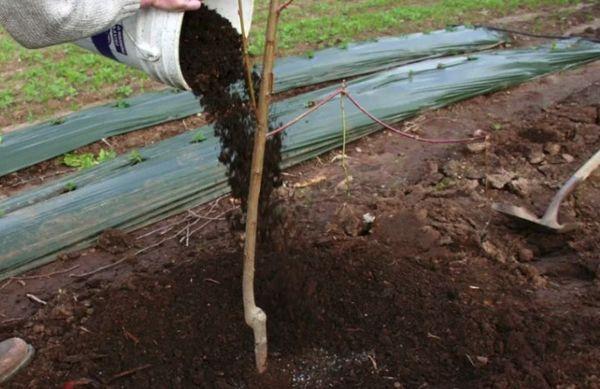
- The planted plant is watered generously, and the trunk circle is mulched with straw or compost.
- After completing the planting work, the tree is tied to a support peg.
Important! When planting a seedling, there should be no gaps between the soil and the rhizomes. Otherwise, these gaps will create a favorable environment for the growth of fungi, viruses, and pests.
Watering mode
The President plum variety is undemanding when it comes to watering; the trees easily tolerate prolonged heat and drought. However, for full growth and fruiting, plum trees require generous watering 2-3 times during the growing season.
At the end of summer, watering stops, but before winter dormancy, up to 100 liters of water are poured under each tree.
Fertilization
Timely feeding and fertilization will not only help plants grow and develop properly, but will also protect fruit crops from unwanted diseases and pests.
If seedlings are planted correctly, fertilizing begins in the 3rd year of tree growth in open ground:
- In early spring, plums are fertilized with urea.
- Before flowering and during the period of fruit formation, the plant needs mineral fertilizers.
- In spring and autumn, organic matter, humus and compost are added to the soil under the tree.
In late autumn, the plum is fed with a balanced mineral complex and organic matter.
Trimming
The President plum is prone to rapid growth and overload, which negatively impacts fruiting and yield:
- The plum tree's crown is formed during the first three years of growth. To achieve this, one new tier of 3-5 skeletal branches is left on the main tree each year, and the branches and shoots that have grown long during the growing season are pruned back to the same level.
- Rejuvenation pruning is performed on mature trees, removing abnormally growing and deformed branches. Young shoots and branches are also shortened, giving the tree's crown a neat, regular shape.
- Plum trees are pruned twice a season. In the spring, damaged, frost-bitten, and weak branches are trimmed. In the fall, after the harvest, all old, broken, and diseased branches and shoots are removed.
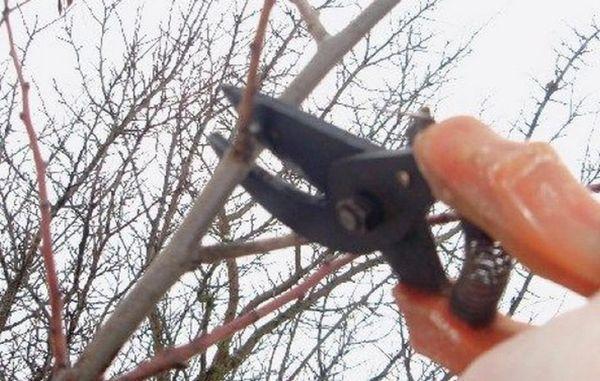
Important! Timely and proper pruning of fruit trees will help improve the quality and quantity of the fruit harvest.
Preparing for winter
The President plum is not susceptible to freezing in extreme cold. This fruit tree requires no additional insulation for winter dormancy; it only requires ample watering and proper care around the trunk.
Protection from rodents
To protect against rodents, a box made of roofing felt or metal mesh is built around the trees, and the trunk is wrapped in agrofibre, spruce branches or thick burlap.
Whitewash
Whitewashing tree trunks and branches is done in late autumn. This will help prevent the spread of diseases, pests, and attacks by small rodents on fruit crops.
Methods of reproduction
To propagate the plum variety President, vegetative methods of cuttings, air layering, and grafting of cuttings onto old rootstock are used.
With the seed propagation method, the hybrid fruit crop loses all varietal properties and characteristics.
Gardeners' reviews
Antonina Nikolaevna. Moscow region.
"I've been growing the 'President' plum in my garden for many years, and only twice, due to cold summers, have the fruits not had enough warmth to fully ripen. The trees are easy to care for and delight with abundant harvests every year."
Nikolai Petrovich. Novosibirsk
"In our climate, it's difficult to grow quality berries and fruits. But the 'President' plum easily survives harsh winters and ripens before the first frost. And even if it's a little underripe, my wife makes delicious jam and homemade wine or liqueur."
Related posts:
 Description and pruning group of clematis President, cultivation and care
 Description and characteristics of the Yakhontovaya plum variety, pollinators
 Description of the President tomato variety, cultivation and care features
 Description and characteristics of the 30 best yellow plum varieties, planting and care
 Description and characteristics of the columnar apple tree President, planting and care
 Description of the Renklod plum varieties and cultivation technology
 Description and varieties of plum variety Ternovka, planting and care technology
 Description of the 30 best plum varieties for the Moscow region, planting and care