
Those who have grown the Rabotyaga tomato have consistently positive reviews of this variety. This variety was bred in Siberia, making it suitable for central Russia, the Urals, and the Far East.
General characteristics of the variety
The Rabotyaga tomato variety was developed specifically for challenging climates. It tolerates both mid-summer cold snaps and daily temperature fluctuations in August. Rabotyaga's yield remains stable even during cold, rainy seasons.
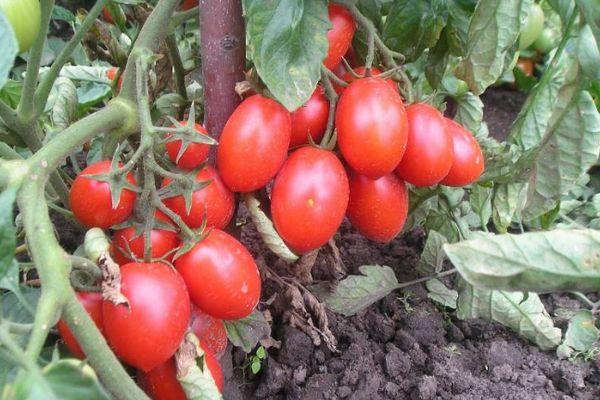
The plant is determinate; stem growth stops after several flower clusters have formed. This allows the last few fruits to ripen well. Fruiting is spread out, but tomatoes from each cluster ripen almost simultaneously, allowing gardeners to harvest large quantities of tomatoes ripened on the vine. During sudden cold snaps, unripe tomatoes can be harvested, as they ripen well indoors.
The Rabotyaga tomato is versatile and can be grown in greenhouses, under plastic covers, or in the open ground. The bushes are medium-height, reaching 1.2 m, but require staking and pinching. To increase yield, it is recommended to train the bush into 2-3 stems.
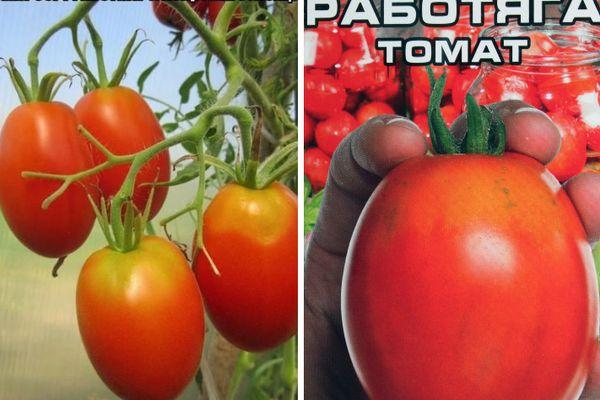
The characteristics and description of the variety in the catalogues particularly point out the uniformity of the tomatoes in the cluster.
Description of fruits:
- Up to six smooth, slightly elongated fruits are formed, each weighing approximately 130 g.
- The skin is thick and strong.
- Even under unfavorable conditions, tomatoes are virtually free of cracking. This increases the shelf life of the harvest and further protects against macrosporiosis.
- Tomatoes are excellent for transporting when ripe.
The taste qualities are obvious: the sugar content of the fruit is 4.5-5%, the tomatoes have a sweet taste with a slight sourness and a distinct aroma.
The Rabotyaga is a versatile tomato. The fleshy, dense pulp lends itself well to sauces and pastes. These small tomatoes are excellent in pickles and marinades, retain their shape well, and do not burst during cooking. The juice and puree are vibrantly colored, a rich red. These fleshy tomatoes, with their very small seed chambers, are suitable for sun-drying.

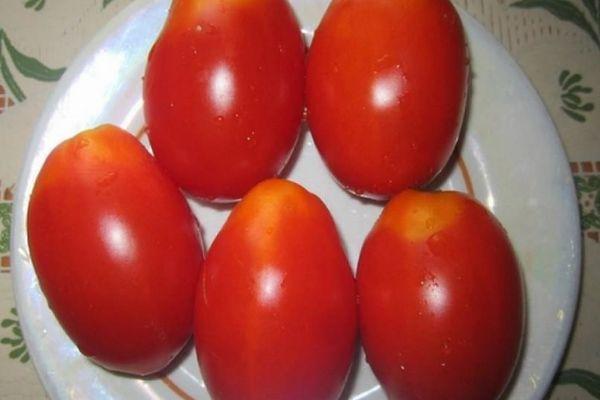
Obtaining an early harvest (100-110 days after sowing) allows Rabotyaga tomatoes to be used for preparing summer salads, appetizers, and sandwiches; the thick, durable skin can be easily removed.
Agricultural technology of the variety
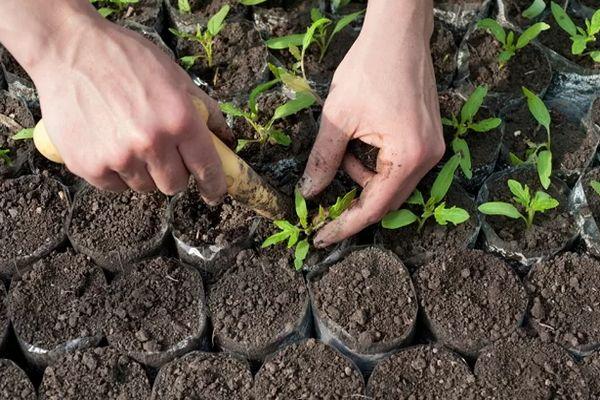
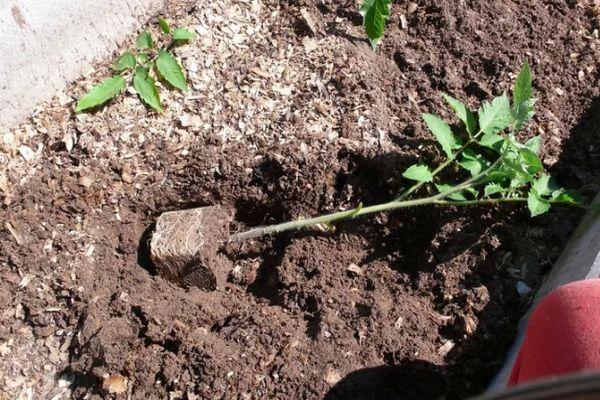
Rabotyaga tomatoes are easy to grow. Seedlings are sown 60 days before planting, and pricked out when they have 2-3 true leaves. They can be planted outdoors after the end of spring frosts, and grown under cover or in a greenhouse from early May.
To increase yield, apply mineral fertilizers, adding nitrogen mixtures (nitrophoska, nitroammophoska) one week after planting, and potassium-phosphorus mixtures after flowering begins. Fresh organic fertilizers should not be used.
Once the transplanted bushes begin to grow, they need to be shaped. With a single-stemmed plant, side shoots are removed continuously, starting from the axils of the lowest leaves.
Formation of 2-3 stems implies 1-2 stepsons on the lower tier and removal of all subsequent ones on the main stem. They are tied to a support under the first brush, and then continue tying as they grow.
Reviews from gardeners
Pavel Petrovich, Kemerovo: "I first planted Rabotyaga about five years ago, and I'm not planning on giving up on the variety. You can harvest almost a bucket's worth of tomatoes from each plant, even though they're relatively small. And they make a beautiful winter preserve."
Marina Vitalievna, Perm: "I planted Rabotyaga tomatoes in the greenhouse. I'm very happy with them. My grandchildren were especially happy—they're such sweet and delicious tomatoes, you can't buy them even at the market. They're easy to can, as they're just the right size to fit tightly into jars. The only downside is that there aren't many seeds, so I have to leave a few."
Svetlana, Barnaul: "I'm new to gardening and don't have much experience yet, but I was pleasantly surprised by the Rabotyagas: they require almost no maintenance, just watering at least once a week if there's no rain. Here, they grow well right in the open ground and even have time to ripen. I only have to pick the last few when they're brown. But they ripen gradually in the box until October."

Ksenia Petrovna, Vologda: "I'm happy with the variety; it lives up to its name. The bushes aren't particularly tall, but they produce a lot of tomatoes. They're especially good for pickling: they're smooth, with strong skins; not a single one has burst."
Related posts:
 Description of the best varieties of black tomatoes for open ground and greenhouses
 What varieties of tomatoes are best to plant in a polycarbonate greenhouse?
 The best tomato varieties for growing in the Leningrad region for greenhouses and open ground
 How to propagate and grow peas, cultivation technology, and care in open ground
 The best eggplant varieties for growing in a polycarbonate greenhouse: planting and care
 Description of the best tomato varieties for open ground in the central zone
 Description of varieties of sowing peas and cultivation, to which family they belong
 The best and most productive tomato varieties for greenhouse cultivation in the Urals, with descriptions