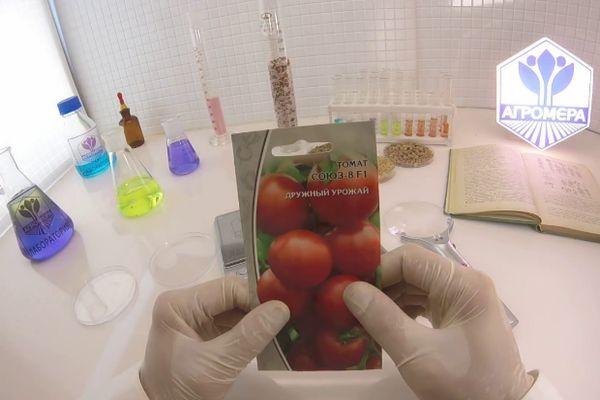
The modern hybrid tomato Soyuz-8 F1 was developed by Russian breeders for industrial vegetable production and early vegetable harvests. This early-ripening variety is suitable for greenhouse cultivation, but Soyuz-8 also demonstrates its best qualities in open ground.
Plant characteristics
The Soyuz-8 F1 variety is a determinate bush. The main stem naturally tops at a height of about 1 m, and further growth occurs through the formation of lateral shoots. Compact bushes can be grown indoors without side shoots, but it is advisable to tie them to a support to prevent the stems from collapsing under the weight of the fruit and intertwining with neighboring bushes.
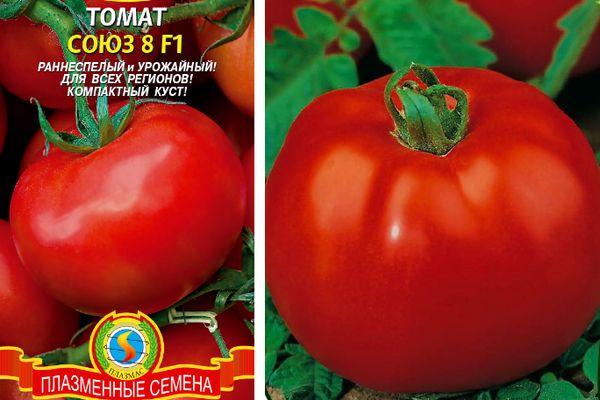
Soyuz-8 tomatoes begin bearing fruit 90 days after sowing. Five to six clusters form on the stem, each with ovaries of uniform size and weight. The fruits ripen simultaneously on the cluster, with a short gap between the ripening of individual pods. The bush grows rapidly and produces a harvest just as quickly, finishing the growing season approximately one month after the onset of fruiting.
These varieties are reluctant to be planted in a home greenhouse, as they take up space for long-bearing tomatoes. However, for early vegetables, you can plant several vines, later replacing them with green crops.
Reviews from vegetable growers familiar with the Soyuz-8 hybrid note that the tomatoes produce well even in open ground. They adapt to temperature fluctuations and are resilient to cold snaps and prolonged rains. A single bush can yield approximately 4 kg of marketable produce. The variety's yield is most often affected by excessively hot weather during flowering. At temperatures above 35°C, tomatoes stop setting fruit, and some of the harvest may be lost.
Among the variety's shortcomings, the characteristics and description highlight its susceptibility to late blight. When grown in greenhouses, this disease is virtually unaffecting the Soyuz-8 tomato variety, as the fungus only spreads in cool, damp weather.
In an open plot, tomatoes usually manage to yield a harvest before the disease appears, but in unfavorable seasons, infection can damage the plantings.
To prevent its spread, it is advisable to remove the lower leaves on the stems and tie up the tomatoes. In severe cases, treat the tomatoes with fungicides, applying them strictly according to the instructions until the first berries ripen.
Consumer properties of fruits
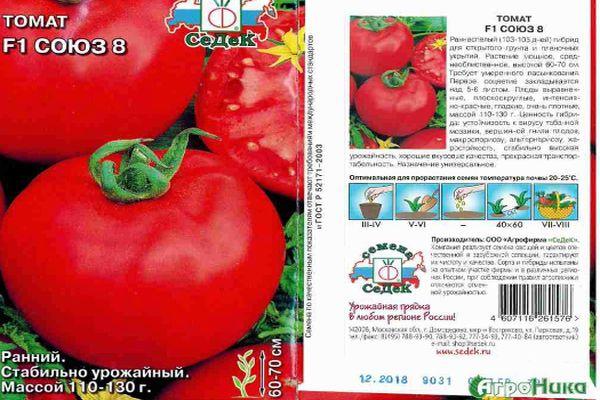
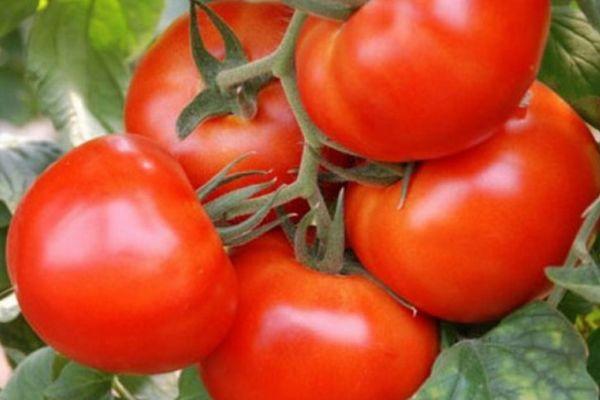
Tomatoes grow and ripen almost simultaneously on simple clusters, each bearing 5-7 berries. The average weight of a single tomato is 90-110 g. They are round, slightly flattened at the ends, with smooth ribbing at the stem.
The skin is thick, and the tomatoes do not crack when ripe. Ripe tomatoes withstand long-distance transportation well and can be stored for long periods without losing their appearance or quality. When harvested in the technical and blanching stages, they can ripen at room temperature. The color is bright red at biological maturity; unripe tomatoes are light green, without dark spots.
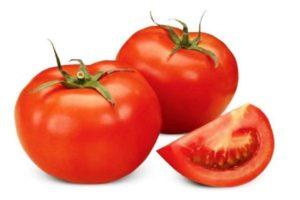
The flesh is fleshy, uniformly reddish-pink in color, with no light spots in the center. The core contains 4-6 seed chambers. The fruit walls are thick, up to 0.7 cm. The consistency is firm and juicy; even slightly underripe, the flesh of the Soyuz-8 retains its firmness. The flavor is average: traditional tomato flavor with balanced acidity and a characteristic tomato aroma.
Their primary purpose is to be eaten fresh. Tomatoes are convenient as a base for appetizers, and they can be cut into slices or rounds for adding to sandwiches and hamburgers. Tomatoes are easy to prepare in a wide variety of salads and summer dishes with fresh vegetables. The pulp of the Soyuz-8 is ideal for hot sauces, soup dressings, and vegetable caviar.

In Russia, surplus tomatoes are traditionally preserved for the winter. Small, calibrated tomatoes are conveniently included in pickled vegetable platters or canned separately. Tomatoes can be processed into tasty and healthy tomato juice. By boiling the pulp until it thickens, a vegetable grower can create a sauce or dressing for canned appetizers and lecho, as well as a decent tomato paste. If desired, Soyuz-8 tomatoes can be dried and cured, but their flavor is not particularly suited for these purposes.
Agricultural technology of early varieties
Hybrid plant seeds will have to be purchased annually from the store if a gardener wants to plant Soyuz-8 the following season. Hybrid tomatoes do not retain their parent's characteristics, so leaving your own seeds for propagation does not guarantee a good harvest.

To prevent seedlings from becoming too tall, early varieties are sown 50-60 days before planting them in their permanent location. Growing seedlings begins with preparing the soil: mix equal parts fertile soil, sand, and humus, adding 2 tablespoons of dolomite flour or ground eggshells per 10 kg of the mixture. Place the soil in containers and soak it in a hot solution of potassium permanganate. After the mixture has cooled, you can sow the seeds.
Spread the seeds over the surface and cover with a layer of sand or dry soil. The layer should be no more than 0.5 cm thick, as the seeds are small. Cover the containers with plastic film with 2-3 holes and place in a warm place (+25°C) for germination. Once the seedlings emerge, remove the film.
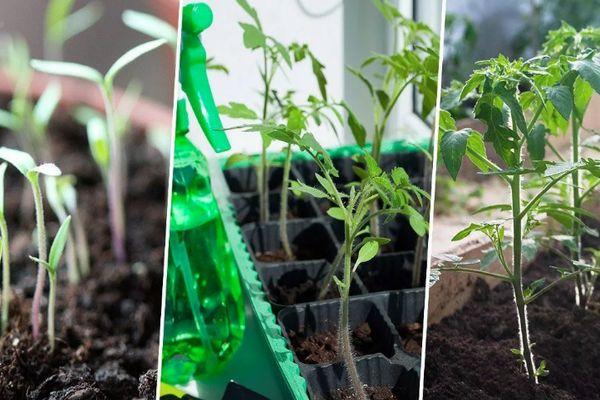
Soyuz-8 tomatoes should be pricked out when they have 2-3 true leaves. The seedlings should be transplanted into individual pots no larger than 0.5 liters. Care for the seedlings consists of timely watering.
Tomatoes should be planted outdoors when the soil in the greenhouse or garden warms up to 20°C. In open beds, tomatoes are planted after the end of spring frosts, around the first ten days of June. In a greenhouse, they can be planted much earlier. Planting pattern: 40x70 cm (3 bushes per 1 m²).
It's best not to overcrowd the tomatoes to ensure they ripen properly. If blossom-end rot appears, pour at least 1 liter of ground chalk or gypsum under each plant (1 cup per 10 liters of water).
Related posts:
 Description of the best varieties of black tomatoes for open ground and greenhouses
 The best eggplant varieties for growing in a polycarbonate greenhouse: planting and care
 Delicious recipes for canned tomatoes with honey for the winter, preparation steps
 TOP 17 recipes for pickled sweet tomatoes for the winter
 11 Best Recipes for Preserving Tomato Slices for Winter
 Step-by-step technology for growing tomatoes on the balcony, the best varieties with descriptions
 How to grow cherry tomatoes on a balcony: suitable varieties and planting and care guidelines
 15 simple recipes for pickling tomatoes in jars for the winter