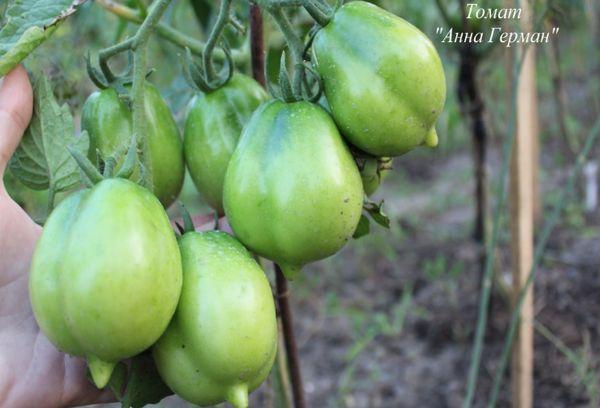
Tomato Anna The German variety is the work of Moscow breeder Igor Maslov. The tall bushes, which produce lemon-shaped, yellow fruits when ripe, are very attractive. These tomatoes are distinguished by their flavor and versatility.
Advantages of the variety
Tomatoes are a cluster tomato with a medium ripening period. From sprouting to fruiting, they take 110-115 days. They require light and warmth, so they are recommended for cultivation in greenhouses and open ground in southern regions.
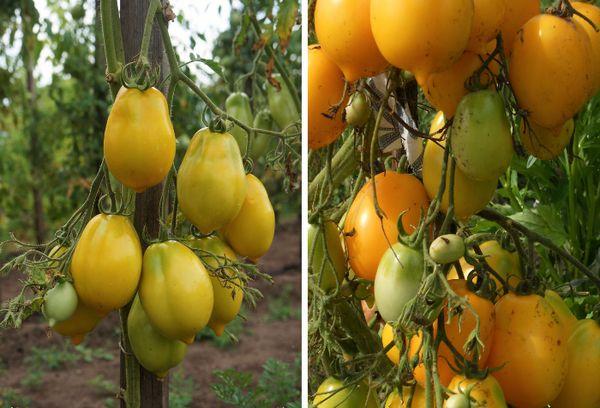
The variety's characteristics and description classify the plant as indeterminate. During the growing season, the main stem reaches a height of over 200 cm. To increase yield, it is recommended to plant the bushes in 1-3 stems, remove shoots, and tie them to a support.
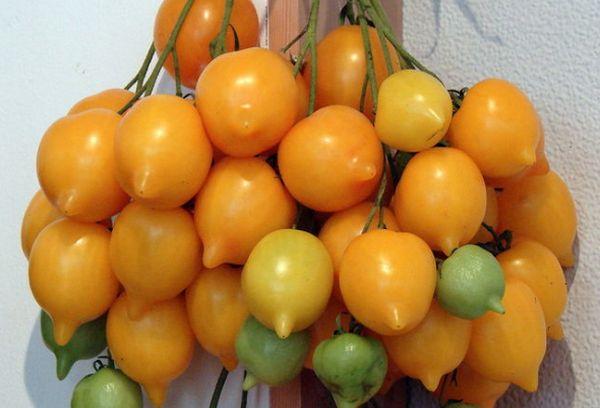
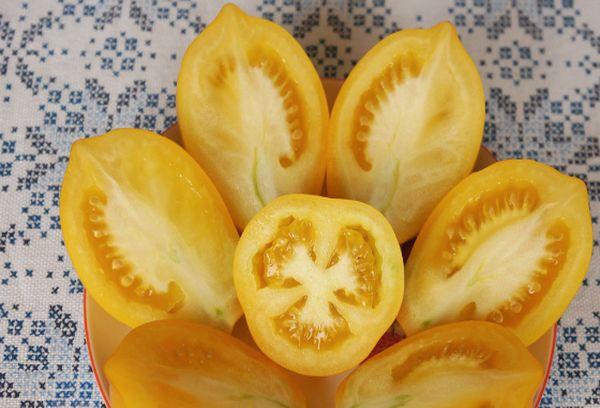
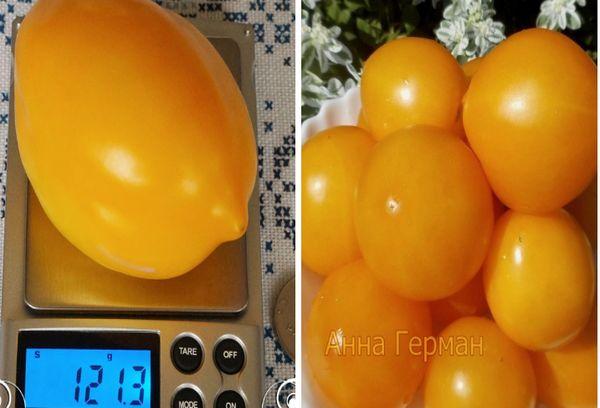
This variety produces high yields, with bunches of ripe tomatoes harvested before the first frost. A cluster can contain up to 40 ripe tomatoes, weighing 50-100 g. The yellow, oval-shaped tomatoes resemble lemons in appearance, and retain their flavor and appearance long after harvest.
These small, fleshy tomatoes have a slightly tart note. They are used in cooking for canning and fresh consumption.
Reviews from vegetable growers indicate the variety's resistance to nightshade diseases and the excellent taste of the tomatoes.
Cultivation techniques
Sow seeds for seedlings 60-65 days before the expected planting date. Place the seeds in containers with prepared and compacted soil and cover with a 1 cm layer of peat moss.
After watering with a spray bottle, cover the container with plastic wrap. Maintain a warm temperature to ensure uniform germination. After the seeds emerge, provide the sprouts with maximum light using a fluorescent lamp.
When two true leaves have formed, transplant the seedlings into individual containers filled with soil. Before planting in their permanent location, harden them off for 7-10 days.
To develop additional roots and strengthen the seedling, the plants are planted 5-10 cm deep. The bushes are placed in the hole lying down, with the lower part of the stems covered with soil. This variety is characterized by rooting shoots from vine-like trunks.
Vegetable growers recommend bending the lower shoots down to the ground to increase nutrient availability and ensure proper development. When grown outdoors, the Anna German tomato variety requires protection from strong winds.
Greenhouse cultivation requires constant access to fresh air. During the growing season, indeterminate plants require periodic feeding with mineral and organic fertilizers.
To prevent excessive leaf and shoot growth, water moderately at a rate of 0.5 liters per bush. Moisten the soil as the top layer or mulch dries. When the fruits reach 3 cm in diameter, add up to 2 liters of water at the base of the bush.
When planting in a permanent location, 4 bushes are placed per 1 m², because dense planting complicates the care of the crop and can cause slow ripening of tomatoes.
The first flower cluster of the Anna German tomato variety begins at the 9th to 11th leaf level. A side shoot develops under this flower stalk in the leaf axil. At the end of May, it is recommended to remove all the lower leaves, completely clearing the stem down to the brush. This event ensures access of nutrients to the ovaries.
No more than three leaf blades should be removed at a time to avoid stopping fruit formation. Side shoots are removed once every 10 days. A single Anna German tomato vine produces 5-7 full-sized clusters per season. With proper cultivation practices, a single plant can yield up to 13 kg of tomatoes.
Related posts:
 Characteristics and description of the Queen Anna potato variety, planting and care
 Description of the best potato varieties of domestic and foreign selection
 How to propagate and grow peas, cultivation technology, and care in open ground
 What varieties of tomatoes are best to plant in a polycarbonate greenhouse?
 Description and characteristics of the best seeds of pea varieties and types
 The best eggplant varieties for growing in a polycarbonate greenhouse: planting and care
 Characteristics and properties of Donna Anna tomatoes, recommendations for growing the variety
 50 Best Carrot Varieties with Descriptions and Characteristics