
The Money Bag tomato belongs to a group of early-ripening hybrids. Therefore, the variety is not susceptible to the destructive effects of late blight. If the farmer adheres to all agricultural practices and follows the breeders' recommendations, the Money Bag variety's germination rate approaches 96-97%.
Tomatoes of this type are eaten fresh and used in salads. The "Denezhny Meshok" variety is preserved whole for the winter due to its small diameter. The tomatoes do not crack, making them suitable for long-distance transport.
Some technical data
The characteristics and description of the variety are as follows:
- From the emergence of seedlings to the development of fruits it takes from 90 to 100 days.
- The bush continues to grow throughout the growing season, reaching a height of 1.7-1.8 m. To prevent the tomato branches from breaking under the weight of the fruit, they are tied to stakes or trellises.
- The stem bears a medium number of leaves, which are light shades of green.
- Fruit formation occurs on clusters. Six to seven clusters develop on the stem, each bearing 10 to 15 berries.
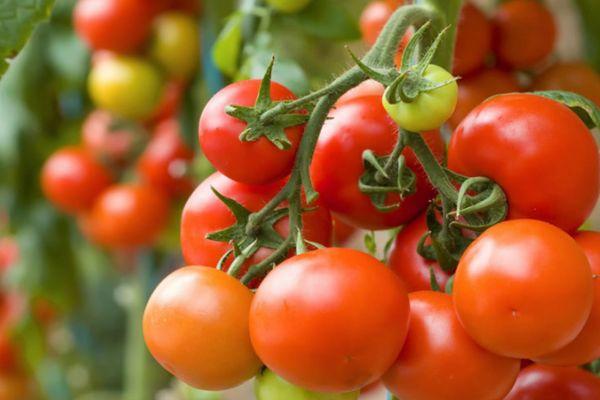
- The fruit is shaped almost like a perfect sphere. The weight of a single berry ranges from 90-100 g. The tomatoes are red in color. The fruits appear almost simultaneously, allowing for a quick harvest.
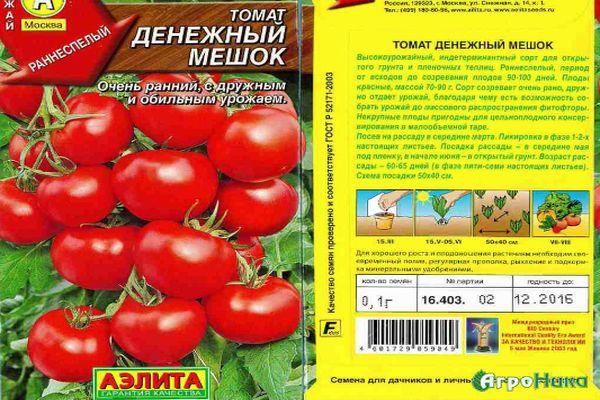
Farmer reviews indicate that the "Denezhny Bag" variety yields 9-11 kg of fruit per square meter of garden bed. This tomato can be grown outdoors in the southern parts of the country and in the vast expanses of the central part of the country. In Siberia and the Far North, the plant is grown in greenhouses and hotbeds. Farmers note that removing side shoots is necessary to form the bush.
How to grow seedlings in your own backyard
The seeds and soil need to be prepared. To do this, soak the entire seed bank in water; discard any seeds that float. Treat the remaining seeds with potassium permanganate. Disinfection can also be accomplished with hydrogen peroxide. This procedure will strengthen the immunity of future plants.

The soil can be made from a mixture of soil, sand, and peat (all components used in equal parts) or special tomato soil can be purchased. If the soil is homemade, it is disinfected with potassium permanganate before planting the seeds. Organic and nitrogen fertilizers are added to the soil before sowing the seeds.
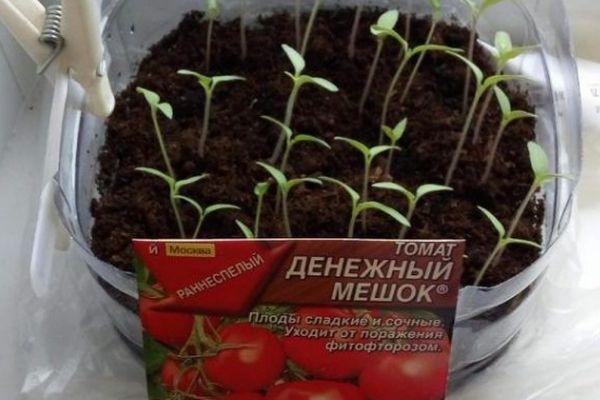
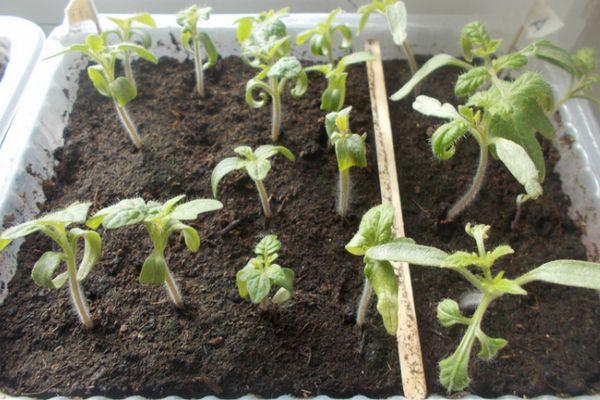
It is recommended to sow the seeds at a depth of 15-20 mm. After sowing, water the soil with warm water. Sprouts will appear in 7-10 days. When 2-3 leaves appear, it is recommended to transplant the plants. Harden them off 7 days before transplanting them to the garden.
Transplanting to permanent soil occurs when the seedlings are 60-65 days old. If the farmer has a heated greenhouse, the process is carried out in the first ten days of April. When transplanting seedlings to open plots, the time for this operation shifts to mid-May. Plants are planted in a 0.5 x 0.5 m grid. No more than four stems are planted per 1 m² of bed.
Before transplanting, potassium and organic fertilizers are added to the soil. The bushes are covered with plastic film for the first 10 days after transplanting.
Caring for plants during growth and fruiting
Tomatoes need to be fertilized three times throughout the season. Complex mineral and organic mixtures are used for this purpose. Breeders recommend using Aelita Vegetable fertilizer for this tomato.
It's important to loosen the soil under the tomato plants regularly. This should be done 1-2 times a week. This should allow oxygen to reach the roots freely. Loosening the soil helps eliminate some garden pests whose larvae nest in the tomato plant's root system.
Weeding the beds is done once every 12-14 days. This helps eliminate the risk of fungal or bacterial infections.
The bushes are watered twice a week. If the weather is hot, increase the frequency of watering depending on the ambient temperature. This should be done using warm water that has been left to stand in the sun. Ideally, water early in the morning or late in the evening.

To avoid tomato diseases, preventative measures are taken. Bushes are treated with medicinal products, such as Fitosporin. If chemicals are unavailable, farmers use traditional methods to combat the disease.
If insect larvae or caterpillars, Colorado potato beetles, or aphids are found on tomato leaves, it is recommended to kill them with pesticides. If these substances are unavailable, treat the plants with copper sulfate or a soap solution. Root parasites and slugs can be repelled by applying ground ash to the underside of the plants.
If plants are placed in a greenhouse, the room must be ventilated regularly to maintain the required humidity parameters.
Related posts:
 80 Best Eggplant Varieties for Different Regions with Descriptions and Characteristics
 Description of the best varieties of black tomatoes for open ground and greenhouses
 The best eggplant varieties for growing in a polycarbonate greenhouse: planting and care
 The best grape varieties for growing in the Urals, planting and care rules in summer
 Descriptions of the 20 best cherry varieties for the Moscow region, their planting and care
 Characteristics and description of pepper-shaped tomato varieties, yield and cultivation
 Description of the best varieties of onions, planting and care in open ground
 What varieties of tomatoes are best to plant in a polycarbonate greenhouse?