
The Kapia Pink tomato, reviews of which indicate that its fruits can be used for various dishes, frozen, and canned in their own juice, can be grown both in greenhouses and outdoors. This tomato variety is distinguished by its unusual shape, intense pink color, and excellent flavor.
Characteristics of the variety
The Kapiya Rozovaya tomato variety is a mid-season variety. Its description relates to its growing conditions. The plant is grown in open ground and under plastic covers. In areas with short summers, tomatoes are grown in greenhouses.
The variety yields up to 10 kg per square meter. Given the plant density per unit area, an average of 4 kg of tomatoes can be harvested per bush. The fruits ripen 110 days after the first shoots emerge.
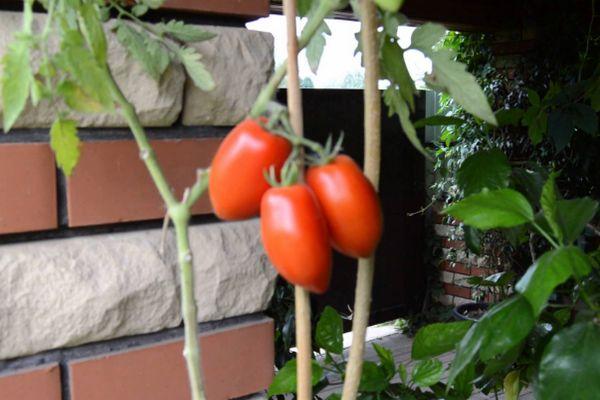
Seedlings grown from seedlings form vigorous bushes, reaching 2 m in height. High yields are achieved by forming 2-3 branches from the main stem.

As you can see in the photo, the tomatoes grow in clusters, and the load is distributed evenly across the plant. Tall bushes require additional support and staking, otherwise the stems may become deformed under the weight of ripe tomatoes.
The leaves of this tomato variety are elongated and serrated. The foliage is a rich green. This variety is distinguished by its resistance to diseases.
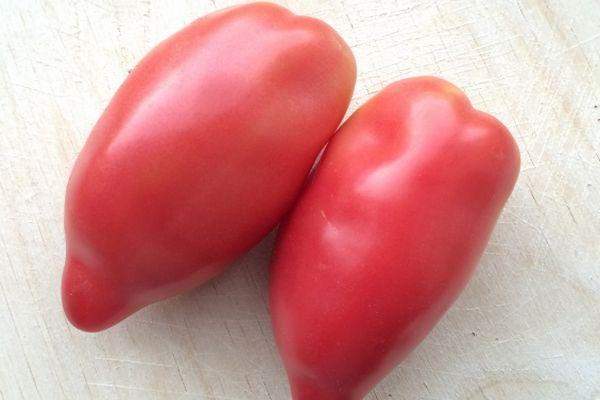
The fruit's characteristic features include its elongated, teardrop-like shape. The tomatoes' surface is slightly ribbed, and when cut horizontally, five seed chambers are visible.
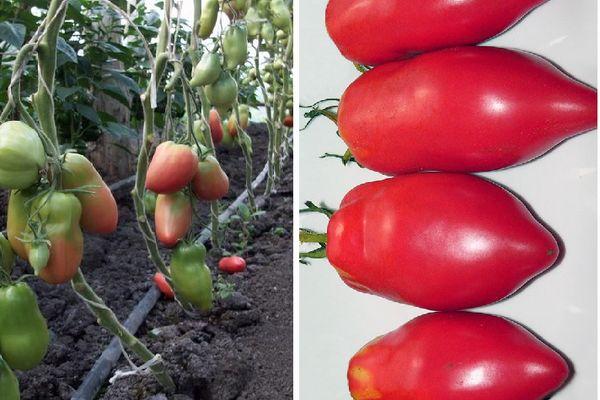
The variety's color is bright pink, with no spot near the stem. Each tomato weighs up to 150 g, with up to 10 fruits per bunch. The flesh is juicy, soft, and pleasantly flavorful.
In cooking, the fruits are used for canning and fresh preservation. When frozen, the tomato retains its flavor.

Agricultural technology of cultivation
Seeds for seedlings are sown two months before the planned planting. Growing seedlings requires maintaining a consistent temperature, timely watering, and fertilizing.
When two true leaves have formed, transplanting is done. Choose well-lit locations for planting the seedlings. It's recommended to consider crop rotation when choosing a location for tomatoes.
The best predecessors of culture are considered to be:
- zucchini;
- cucumbers;
- dill;
- carrot.
Before planting, the soil is loosened, weeds are removed, and organic fertilizer is added to the holes. The timing of planting and the cultivation method for the variety depend on the regional climate.
The plant is intended for growing in open ground, but in northern regions it is better to plant it in greenhouses.
High yields are achieved by following proper care. With the right approach, you can enjoy fresh tomatoes throughout the entire fruiting season.
Recommendations and opinions of vegetable growers
Those who have planted and grown Kapia Pink tomatoes leave positive reviews about the taste of the fruit, the possibilities of processing, canning, and freezing fresh.
Antonina Kozlova, 52 years old, Saratov:
"I bought the Kapia Pink variety at a specialty store. I was drawn to the teardrop-shaped pink tomatoes. I grew them from seedlings. The seeds are 100% identical. Until the weather gets warm, I keep the seedlings indoors on a windowsill, and after the frost period ends, I transplant them to a greenhouse. Then I transfer them to the open ground. Over the course of a season, the bushes grow up to 2 meters in height, so I create additional support for the stems, tying the plant to it with fabric tape. I harvest half a bucket of tomatoes from one bush per season. I make juice from the fruits and salt the whole ones. I was pleasantly surprised by the ability to freeze the tomatoes."
Vasily Ilyin, 61 years old, Voskresensk:
"Last season, I decided to plant the Kapiya Rozovaya variety in a greenhouse. The variety's description and flavor profile caught my attention. The bushes grew very tall and vigorous, each producing clusters of tomatoes. I'd like to highlight the high tomato yield and the ability to periodically harvest the fruits. The tomatoes are delicious, very aromatic, pink in color, and slightly elongated in shape. I was also surprised by their disease resistance."
Related posts:
 Descriptions of the 20 best cherry varieties for the Moscow region, their planting and care
 What is the best way to feed tomato seedlings to make them plump?
 80 Best Eggplant Varieties for Different Regions with Descriptions and Characteristics
 Description and cultivation of the Bryansk pink cherry variety, pollinators
 The best eggplant varieties for growing in a polycarbonate greenhouse: planting and care
 Description and characteristics of the best indeterminate tomato varieties for greenhouses
 Description of the best varieties of black tomatoes for open ground and greenhouses
 Description of the best tomato varieties for open ground and greenhouses in the Krasnodar region