
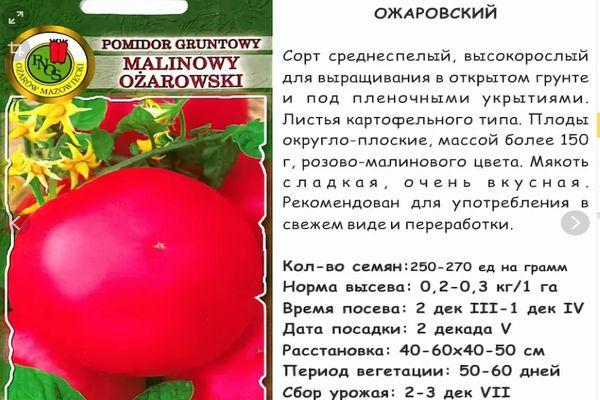
The high-yielding, early-ripening Raspberry Ozharovsky tomato boasts a pleasant flavor, meaty flesh, and high yields. This variety is highly resistant to temperature fluctuations and pollinates well in all weather conditions.
Benefits of Tomatoes
The Ozharovsky variety was bred by Russian agrobiologists and is intended for cultivation in greenhouses and open ground in warm climates. This early-ripening variety develops a bush reaching 2 meters in height during the growing season.
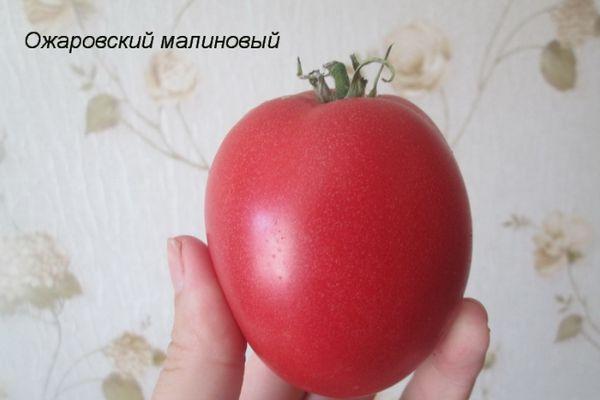
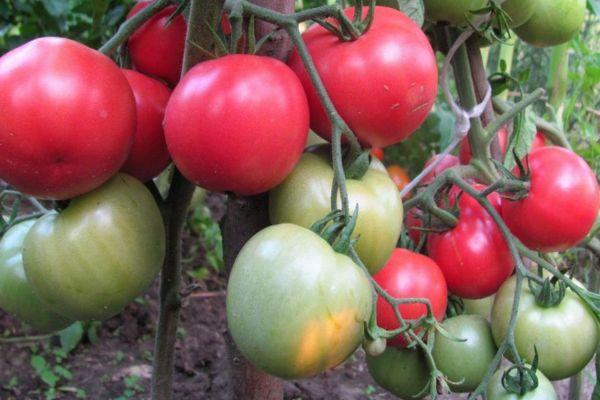
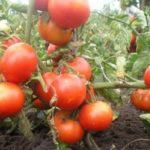
The plant's large, dark green, potato-like leaves are characteristic. The variety's description indicates that the fruits ripen evenly in clusters, which can contain 9-12 tomatoes. Particularly large clusters can contain up to 14 tomatoes weighing 100-300 g.
Large fruits ripen on the lower branches of the bush. The tomatoes are round, slightly elongated, with slight ribbing near the stem and no green spot. Yields reach 6-7 kg per bush. The Ozharovsky tomato produces fruit over a long period. Harvested tomatoes can be stored for 1-1.5 months and withstand long-distance transportation well.
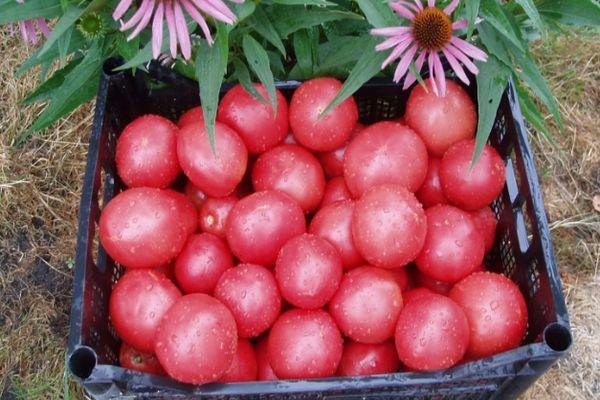
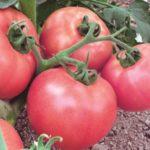
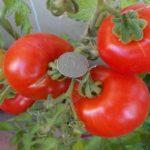
The fruit is pink with a raspberry hue. The thick skin prevents cracking. The moderately juicy, pleasantly sweet flesh contains a small number of seeds. When broken, the tomato has a sugary texture.
The nutritional content of these tomatoes makes them suitable for use in baby and dietary nutrition. In cooking, tomatoes are used fresh, in paste, juice, puree, and canning.
Vegetable growers' reviews indicate the crop's resistance to major diseases. The plant easily tolerates cold and drought. During the growing season, the bushes require shaping, tying to supports, and removing excess shoots.
Cultivation techniques
The Ozharovsky Raspberry variety can be grown from seedlings or from seeds, planted in a permanent location. Sowing seeds for seedlings should be done 60 days before the expected planting date, taking into account the region's natural conditions.
The seeds are planted at a depth of 1 cm in a prepared soil mixture consisting of garden soil with humus, sprayed with warm water using a spray bottle and placed in a warm place.
To ensure uniform germination, seeds are treated with a solution of hydrogen peroxide or aloe vera. Normal seedling development is ensured by treating the seed with a growth stimulant.
When two true leaves have formed, transplanting is performed. Before planting in the ground, it is recommended to harden the plants for 10 days. To do this, place the seedlings outside, gradually increasing the time spent outside from 10 minutes to 8 hours.
By growing early seedlings, you can harvest the first ripe fruits as early as early July. To increase yield, plants are trained into 1-2 stems. Tomatoes are very sensitive to soil composition, so before planting, carefully prepare the soil and add compost.
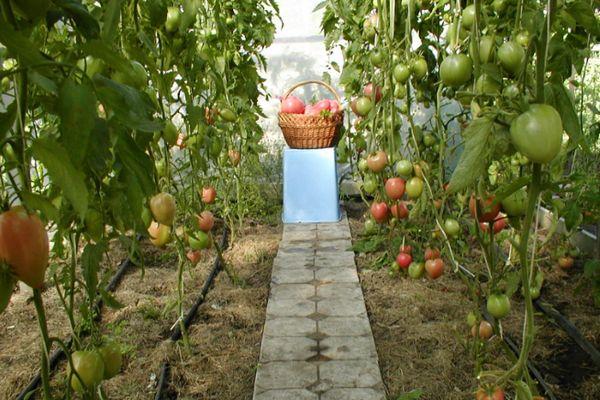
During the growing season, it is necessary to regularly apply mineral and organic fertilizers, control humidity and lighting. Special agents are used for preventative treatment against fungal diseases and biological pests.
Crop care includes mulching the soil with black non-woven fiber. Using grass and straw as mulch provides an additional source of organic nutrition for the crop.
Related posts:
 The best grape varieties for growing in the Urals, planting and care rules in summer
 Description of the best tomato varieties for pickling and canning
 Description and characteristics of the best indeterminate tomato varieties for greenhouses
 Description of the best tomato varieties for greenhouses in the Kirov region
 Description and characteristics of non-stepsoning tomato varieties for open ground and greenhouses
 Description of the best varieties of black tomatoes for open ground and greenhouses
 Description of blight-resistant tomato varieties for open ground and greenhouses
 A review of the best tomato seed varieties for open ground in the Rostov region
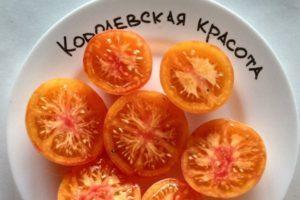
This is an excellent variety: meaty, tasty, and sweet. It's perfect for both salads and canning. To ensure the tomatoes grow well and are disease-free, I use a plant growth bioactivator. BioGrow.