
The Paradise Delight tomato is resistant to many nightshade diseases. It is recommended to grow it outdoors and in greenhouses. Paradise Delight tomatoes can be transported over long distances because their skins do not crack. The fruits are eaten fresh and used to make tomato juice. Adjika made from this variety of tomato is a great treat for those who enjoy spicy foods.
Characteristics and description of the variety
The characteristics and description of the Paradise Delight tomato variety are as follows:
- The first harvest is obtained 115-120 days after seedling germination.
- The Paradise Delight bushes reach a height of 180-200 cm. Therefore, the stems and branches need to be tied to strong supports or trellises.
- The inflorescences are simple. The bushes have quite a few leaves, which are the standard tomato green color.
- The plant's fruits are juicy and have a good flavor. The pulp is fleshy, but the fruit contains a moderate number of seeds.
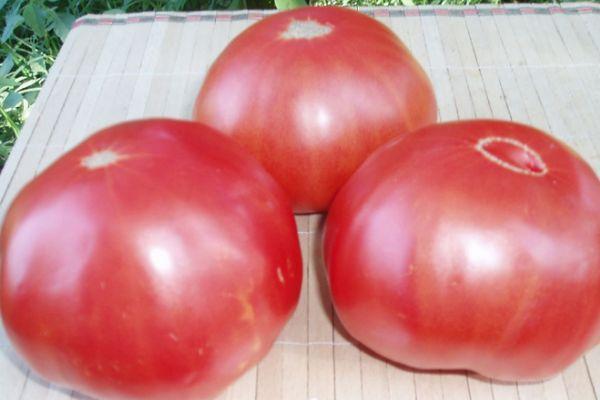
- The fruits (colored in bright shades of red) are spherical, slightly concave on the underside. The sides of the fruits are ribbed.
- The fruits weigh between 0.4 and 0.5 kg. Their skin is strong enough to withstand mechanical damage during transportation.
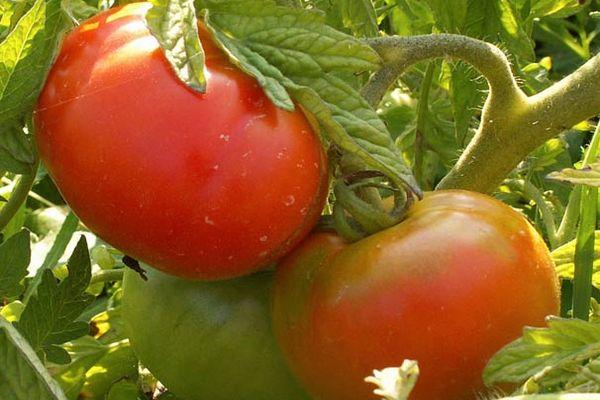
Reviews from farmers who have planted and grown this tomato show that the Paradise Delight variety yields between 8.0 and 10 kg of fruit per bush.
To grow a normal harvest, it is recommended to promptly remove side shoots from each bush and water the plants at least twice every 5-8 days.
This heavenly delight requires soil preparation before planting the seedlings in the beds. The average fruit weight depends on the quality of the mineral and organic fertilizers used.
This tomato variety can be planted in open areas in the southern regions and throughout the central part of Russia. In the northern regions, it's best to grow tomatoes in plastic greenhouses, hotbeds, or heated greenhouse complexes. A drawback of this variety is the inability to obtain seeds from the harvested crop. Farmers must purchase new seeds every year.

Growing a plant in your own backyard
Seedlings are germinated at home from store-bought seeds. They are first prepared by soaking them in a weak solution of potassium permanganate for up to 20 minutes. This procedure strengthens the future seedling's immunity and increases the germination rate of the seeds themselves.
The seeds are then placed in special soil to a depth of 10-15 mm. For this purpose, boxes are prepared and filled with tomato soil mixed with manure and peat.
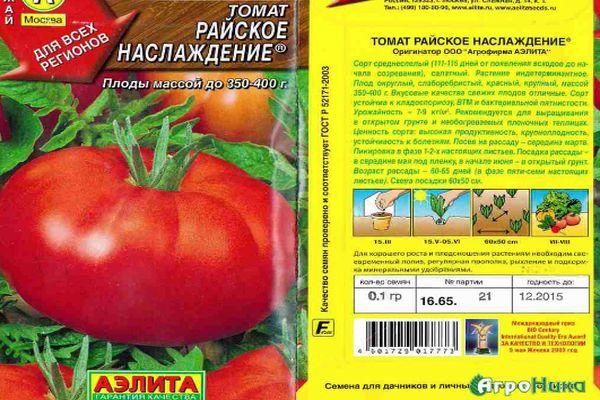
Each container is covered with plastic film, which is removed after the seedlings have sprouted. During this time, nitrogen fertilizer is added to the soil, and the sprouting plants are watered with warm water. Then, after one or two leaves appear on the sprouts, they are pricked out. Before planting in a permanent location, the seedlings are hardened off.
The most robust seedlings with strong immunity are planted in greenhouse beds. The planting format is 0.4 x 0.5 or 0.5 x 0.6 m. The bushes should not shade each other.
It is recommended to tie seedlings to a support immediately. If planted in open ground, cover them with plastic to prevent freezing due to temperature fluctuations. Keep the cover on for 10-12 days until the weather stabilizes.
Caring for planted tomato bushes
To ensure a good harvest, all agricultural practices must be carried out in a timely manner. Fertilize growing plants three times per season. Initially, nitrogen and organic mixtures are added to the soil, and then, during flowering, potassium fertilizers are added. After fruiting, feed the tomato plants with complex fertilizers containing nitrogen, potassium, and phosphorus.
It is recommended to water the bushes after sunset or early in the morning. Use warm, settled water. Apply the liquid under the roots of the plants after the soil underneath them has completely dried. Watering is typically done 1-2 times a week. Increase the frequency during hot weather.
Loosening the soil under tomatoes helps prevent certain diseases and increases oxygen supply to the roots. This procedure also kills some of the parasites that infest the tomato's root system.
Weeding the beds reduces the risk of late blight and fungal infections. However, to prevent the risk of various tomato diseases, it is recommended to treat them with appropriate treatments.
To kill garden pests (Colorado potato beetles, various insect caterpillars, aphids, etc.), use chemical pesticides. If these are unavailable, treat the bushes with a soap solution. To kill slugs and root parasites, add ground ash to the soil under the tomatoes.
Related posts:
 80 Best Eggplant Varieties for Different Regions with Descriptions and Characteristics
 Description of the best varieties of black tomatoes for open ground and greenhouses
 The best grape varieties for growing in the Urals, planting and care rules in summer
 How to propagate and grow peas, cultivation technology, and care in open ground
 Characteristics and description of pepper-shaped tomato varieties, yield and cultivation
 Description of the 23 best pear varieties for the middle zone, planting and care rules
 The best and most productive tomato varieties for greenhouse cultivation in the Urals, with descriptions
 What varieties of tomatoes are best to plant in a polycarbonate greenhouse?