
Rarely does a gardener regret choosing the Alsu tomato. An early harvest of large, sweet tomatoes is always welcome. Alsu is just that: it ripens early, has a good flavor, and is easy to care for.
Description
The Alsu tomato variety can be considered new, yet proven; it was added to the State Register in 2007. Importantly, Alsu tomatoes are successfully grown throughout Russia. Excellent results are achieved both in greenhouses and open ground. These tomatoes ripen early.

Description of all the important characteristics of a tomato bush:
- determinate type;
- height in open ground 80 cm;
- height in the greenhouse from 100 to 130 cm;
- the number of leaves is average;
- the leaves are medium in size and light green in color;
- The trunk is fragile and requires tying to a support.
Fruit
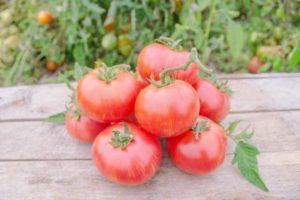
This variety is usually chosen after reading the description of the fruit's key characteristics. Lovers of fleshy, large tomatoes cannot resist the pleasure of growing specimens weighing up to 700 g. The 6-celled fruits are flattened and round with subtle ribbing.

The flesh is juicy, medium-firm, and sweet. At technical maturity, the fruits are green with a distinct dark green spot near the stalk. Upon reaching biological maturity, the spot disappears, and the skin and flesh turn red.
The fruits are recommended for disease prevention; the pulp contains antioxidants and is high in lycopene. The yield of the Alsu tomato is noteworthy: 7 kg/m². Not every variety can produce such a large quantity of fruit. Those who have planted Alsu note that yield is weakly dependent on weather conditions.
The fruits are intended for salads. They are unsuitable for whole-fruit canning due to their large size. They are typically used to make light summer salads, appetizers, juice, sauces, and borscht dressings.

Advantages and disadvantages
The main advantage of the variety is the characteristics of the taste of the fruits and their size, in addition, the advantages include:
- good adaptation to sudden changes in weather conditions;
- drought resistance, which allows the variety to be grown in southern regions where there is constant heat in summer;
- productivity;
- strong immunity to common tomato diseases and pests.

There are few disadvantages, but they are worth mentioning. The first drawback is the thin central shoot, it requires mandatory garter, as do the lateral shoots. The fruits aren't universally used, which can also be considered a drawback. However, any shortcomings are outweighed by the early ripening of the fruits, their ability to be eaten in early summer, and their excellent taste.
Features of cultivation
Alsu tomatoes are early-ripening, so there's no need to rush sowing seeds for seedlings unless you have a spring greenhouse. If you do have one, you can sow the seeds in early March. Seedlings ready for transplanting should be 55–60 days old. Overgrown seedlings (over 60 days old) are bad for growing, but too-young seedlings also have their drawbacks:
- bears fruit later;
- gets sick more often;
- pollinates worse.
What should be taken into account when sowing seedlings?
Experienced gardeners believe that growing seedlings in soil from your own garden is preferable to growing them in store-bought soil. Reviews indicate that this variety adapts better to outdoor conditions if the seedlings were grown in garden soil. This is debatable, but with proper care and disinfection of the garden soil before planting, you can expect strong, viable seedlings by early May.

It's difficult to pinpoint any specific aspects of seedling care. All care is standard:
- watering at least once a week, if the soil contains a lot of peat or coconut fiber, up to 3 times a week, before watering, feel the soil with your finger, water if the top layer has already dried out;
- If you need additional fertilizer, it is convenient to use Zdraven complex fertilizer for seedlings. It is produced in liquid form, which is very convenient when preparing a working solution. The kit includes a measuring cap, which makes it easy to maintain the correct dosage;
- At the stage of 2 true leaves, the seedlings are pricked out, preferably into separate containers with a capacity of 0.5 liters. By the time of transplantation into a greenhouse or open ground, the plants have formed a well-developed root system, planting is painless, and the plants adapt to the new location within a few days.
Transfer
Transplanting healthy seedlings is easy. Water them thoroughly the day before, which makes it easier to remove them from their cups. Prepare the seedbed at least a week before planting. Fertilizers (urea, superphosphate, potassium sulfate) should be applied during tillage or directly into the holes.

The holes can be spaced in a 40x50 cm pattern. A dense planting of 5 plants per square meter is acceptable for Alsu tomatoes. This is possible because the plant is a determinate variety with compact bushes that need to be trained into 2-3 stems. Stake the bushes for tying them in the center of the hole. The plants can be tied to the supports immediately or a few days after transplanting into the ground (greenhouse).
Care
Standard care procedures include watering, loosening the soil to prevent crusting, weeding, removing side shoots, staking, and fertilizing. Watering is done 2-3 times a week in a greenhouse, and at least once every 7 days in the open ground, depending on the weather.
There are at least three types of feeding:
- the first - 10 days after transplantation with an infusion of grass, mullein or chicken manure;
- the second - before flowering with any complex fertilizer for tomatoes;
- the third - during the formation of fruits, also with a complex fertilizer with a predominance of phosphorus and potassium.

Reviews
Angelina, Volgograd:
"I liked the variety's characteristics and planted several bushes in the greenhouse. I wasn't particularly particular about caring for them. I removed all side shoots and watered them twice a week. I trained the bushes into a single stem, although 2-3 is recommended. The fruits were medium in weight and size, weighing between 300 and 400 g. The taste and quality of the fruit were pleasing; we ate them with pleasure. The bushes were delicate in appearance and didn't make a great impression. In the future, I'll plant 2-3 bushes for early consumption."
Alena, Novosibirsk:
"I have a lot of respect for the Alsu variety. With average care, it produces good fruit. It bears fruit consistently, regardless of weather conditions. The fruit is tasty, and its appearance and shape match the manufacturer's description. The largest fruits (the first ones) weigh 500g, while the others weigh around 300g."
Olga, Chelyabinsk:
"I grew Alsu in a greenhouse. It was difficult to control the temperature, and perhaps because of the heat, there were few ovaries. The fruits grew large and sweet. I'll try planting them again, but if the yield is low again, I'll abandon the variety."
Tatyana, Izhevsk:
"I planted them in open ground. The bushes were short, 75-80 cm, but sturdy, which belies the description. There were a lot of tomatoes, the largest weighing about 600 g, the others were smaller, but there were no small fruits. The tomatoes pleased me with their sweet, fleshy flesh; they're perfect for salads."
Related posts:
 80 Best Eggplant Varieties for Different Regions with Descriptions and Characteristics
 What are standard tomatoes, description of varieties and cultivation
 The best grape varieties for growing in the Urals, planting and care rules in summer
 Description of blight-resistant tomato varieties for open ground and greenhouses
 The best eggplant varieties for growing in a polycarbonate greenhouse: planting and care
 Description and characteristics of the best tomato varieties for outdoor cultivation in the Urals
 What varieties of tomatoes are best to plant in a polycarbonate greenhouse?
 Description of the best varieties of black tomatoes for open ground and greenhouses