
Recently introduced to the seed market, the Khan tomato was developed by Russian breeders with local growing conditions in mind. The plant is well suited for outdoor cultivation in the Moscow region, the Urals, and southern Siberia.
General characteristics of the variety
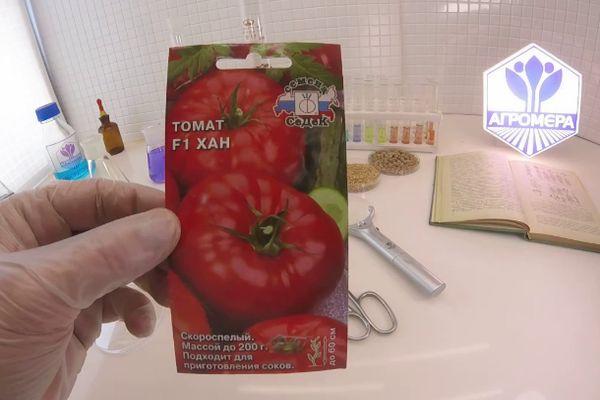
Khan tomatoes are considered first-generation hybrids. This can be identified by the F1 marking on the package label. When purchasing, keep in mind that you can't use your favorite tomatoes for seed production, as their properties are not preserved in the next generation.
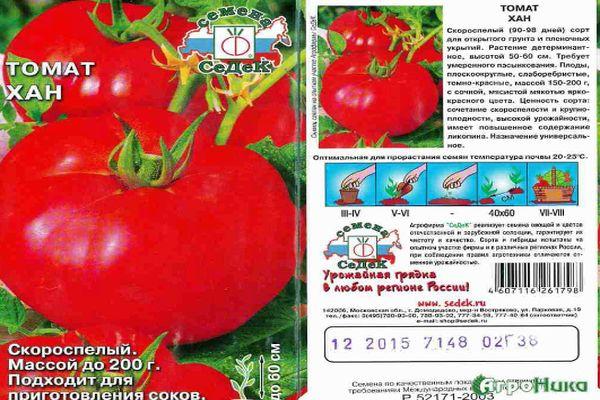
Khan tomato bushes are determinate, topping after 4-5 clusters. Plant height rarely exceeds 60 cm. Despite their small size, they require staking and training into a single stem. This allows for dense planting, with 5-6 bushes per square meter. This type of planting yields up to 20 kg of marketable produce per unit area.
This early-ripening variety takes about 90 days from germination to harvesting the first ripe fruits. After about a week, the vegetables begin to ripen en masse. The ovaries formed on the cluster ripen almost simultaneously, and the gap between ripening tomatoes on the vine is small. Therefore, almost the entire harvest can be harvested within 2-3 weeks.
Khan tomatoes are resistant to tobacco mosaic and fungal diseases. The harvest is usually completed before late blight appears and spreads, so these tomatoes are immune to fungal attack. Weather conditions also have virtually no impact on yield: those who have planted these tomatoes for several years in a row report that fruit sets well both in cool summers and during dry seasons.
Khan tomatoes are rarely planted in greenhouses. Their short stature and rapid yield don't justify the space they take away from plants with a longer fruiting season. However, for very early tomatoes, you can plant a few Khan plants in a greenhouse and harvest fresh tomatoes as early as June.
When planted in plastic greenhouses and open ground, harvesting begins 2-2.5 weeks later. Although the Han hybrid is recommended specifically for these growing methods, it can be combined with greenhouse cultivation. This will allow you to get early tomatoes, which can then be harvested directly from the garden.
For those who don't have their own plot, compact bushes will allow them to grow their own tomatoes right on the balcony. A resourceful gardener from Krasnoyarsk explains: "I grow Khan tomatoes in buckets "Right on the balcony. They ripen like in a greenhouse."
Fruit characteristics
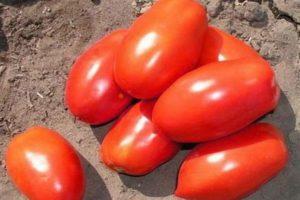
A tomato plant produces 4-5 clusters, each bearing 5-7 ovaries. The fruits are uniform in size and ripening time. They are round, slightly flattened vertically, with smooth ribs at the base. Tomatoes are small, averaging about 150 g in weight. Some can reach 200 g.
Tomato skins are thick. They don't crack even with excess moisture during the rainy season. This helps preserve most of the harvest, even if it's unripe. Their ability to ripen immediately after picking and their excellent shelf life make them ideal for homesteads and small farms.
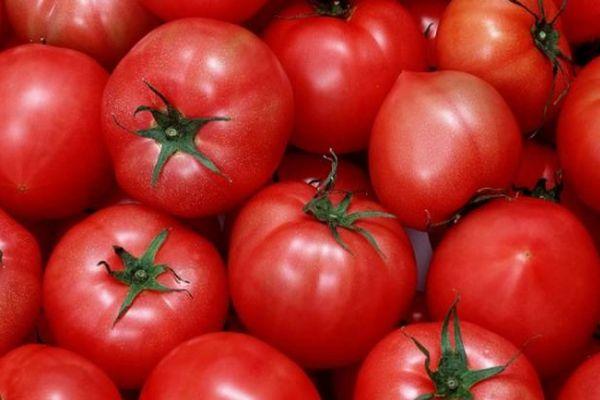
At biological maturity, the fruit is bright red, without a green spot near the stalk. At technical maturity, the berry has a uniform light green color and shiny skin.
The description of the Khan variety's flavor profile suggests that the tomato may be more tart in cool summers. However, tomatoes grown in sunny areas have a fairly high flavor profile: they are sweet and sour and very aromatic. The fruits contain large amounts of lycopene and other beneficial substances.
A versatile variety. Early-harvest tomatoes are eaten fresh, and when they're in full bloom, they can be canned whole and processed into juice and sauces.
How to grow the Khan variety?
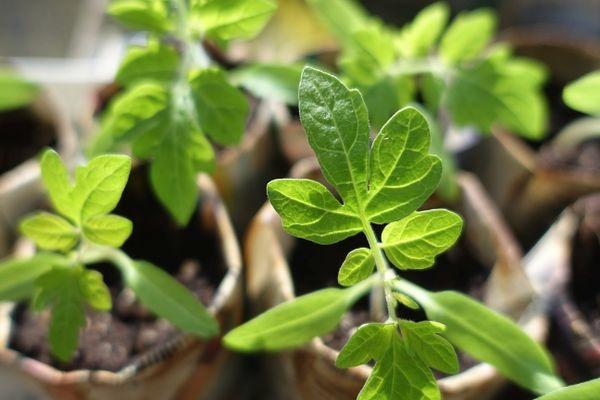
You'll need to buy Khan tomato seeds annually from the store. They should be sown 50-60 days before planting. To ensure high-quality seedlings, the soil should be disinfected and well-watered. The seeds are placed on the substrate and covered with a thin layer of dry soil (0.5 cm). Cover the trays with plastic wrap and germinate in a warm place.
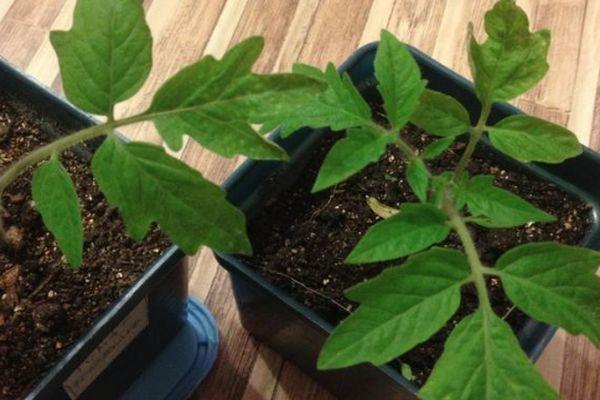
When the plants have 2-3 leaves, transplant the seedlings into individual pots 5-7 cm in diameter. The plants are undemanding in terms of light and care, but the soil should not be allowed to dry out. They can be planted in a greenhouse in mid-May, and outdoors in early June.

For tomatoes, only the main stem is left, tying it to a support. If dense plantings are not carried out, then the plants are placed at a distance of 40-45 cm from each other, and are not tied up or side-sonned. With this type of planting, care for tomatoes will be minimal.
Related posts:
 Description of the best varieties of black tomatoes for open ground and greenhouses
 TOP 17 recipes for pickled sweet tomatoes for the winter
 Delicious recipes for canned tomatoes with honey for the winter, preparation steps
 11 Best Recipes for Preserving Tomato Slices for Winter
 Recipes for amazing tomatoes in jelly for the winter, with and without sterilization, you'll lick your fingers
 How to make marinated tomatoes in jars for the winter using a Bulgarian recipe
 The 14 Best Tomato and Aspirin Recipes for a 3-liter Jar for the Winter
 How to grow cherry tomatoes on a balcony: suitable varieties and planting and care guidelines