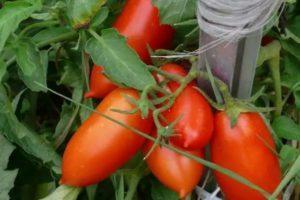
The tall tomato "Kolibri" is an early-ripening variety. It was developed by French breeders. Despite its southern origins, it has proven itself in temperate Russia. It is a subspecies of the well-known "Slivok" variety, which has strong stems and tightly spaced clusters. With proper cultivation practices, the plant can bear fruit until the first frosts of autumn.
Interminate hybrid
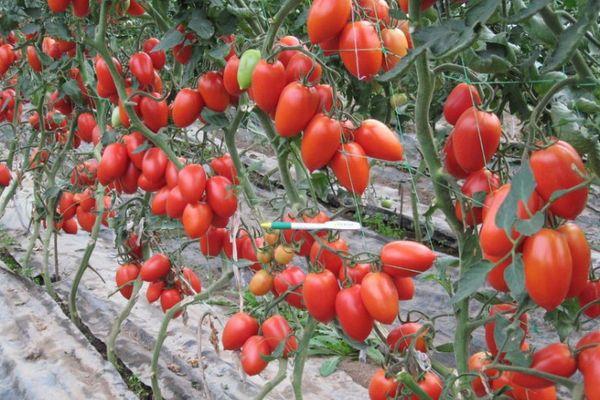
The Kolibri f1 tomato is a tall plant. It is resistant to late blight thanks to its strong immune system. The green mass is formed by two stems, which typically produce 8 to 10 ovaries. The small space between the nodes creates a ledge, which facilitates harvesting. Therefore, the bush must be regularly tied to a stable support and excess green shoots must be removed.

The agronomic characteristics of this vegetable's development are determined by the bush's height, which reaches 2 meters. Its foliage is medium-sized and green to dark green. The leaf blades correspond in thickness and development to the stem. A strong root system securely supports the entire aboveground portion.
The description of the hybrid fruit describes it as a vegetable with a unique sweet and sour flavor and remarkable properties. These include:
- versatility of use;
- dense and thick-walled pulp;
- significant weight - one tomato reaches 160 g;
- absence of immature stem and veins inside;
- short maturation period - 3 months.

This plant belongs to the group of heat-loving varieties and is suitable for growing in greenhouses and hothouses. Its size allows it to be eaten raw, baked, or canned. The tomato skin is so dense that it does not burst when heated with boiling water when placed in glass jars. The fruits have a good shelf life, making them suitable for delivery to remote regions.

Despite all the positive qualities, the plant also has its downsides. The main drawback is the need for frequent side shoots. This is due to the vigorous growth of lateral shoots, which, if left unpruned, produce excess foliage. Tomatoes also require regular staking. Vigorous growth leads to brittle branches. The heavy weight of the fruit can cause them to break if not tied to a secure support.

Planting seedlings and caring for the plant
You can begin planting seeds in the soil in late February or early March. The soil should be prepared in advance, enriched with organic and mineral fertilizers. Humus and peat should be the main components. The soil in which the tomatoes will grow during the fruiting period should contain 1/3 of the total organic matter.
This soil is ideal for seeds. Before planting, treat the seeds with a weak solution of potassium permanganate. Sow to a depth of 2 cm and water thoroughly. Cover the tray with plastic wrap and place in a warm, well-lit area.
The appearance of the first two leaves is a signal to thin the seedlings. The least viable and diseased shoots are removed. Before transplanting into the garden, the seedlings should be fertilized a couple of times with a weak solution of mullein and mineral fertilizers.
Young shoots are hardened off if they will grow in soil that is not protected from the cold. The result is a strengthened plant immune system and increased yield.

To do this, the following phases of the procedure must be observed:
- taking young shoots out into the fresh air in the first days for several minutes - from 15 to 20;
- after 5 days the hardening period reaches 1-2 hours;
- After 10 days, hardening is carried out throughout the day.
Planting Kolibri F1 tomato seedlings in a plot or greenhouse begins 55 days after the first shoots emerge. This coincides with mid-June, when the last morning frosts have passed. To disinfect the soil, water it with a light solution of potassium permanganate.

It wouldn't hurt to treat the plant's root system against pests like mole crickets, and the foliage against aphids. Reviews of transplanting seedlings into a greenhouse earlier (about a month) compared to unprotected soil indicate this method's effectiveness and accelerates the first harvest.
Related posts:
 Description of the large-fruited tomato Fidelio and cultivation of the variety using the seedling method
 Description of the hybrid tomato Malika and propagation by seedling method
 How to plant walnuts, care for them, and grow them at home
 Description of the Bull's Eye tomato and growing the mid-early variety using the seedling method
 Description and rules for growing Solaris grapes
 Description of the Madonna F1 tomato and tips for growing it using seedlings
 Description of 30 varieties and types of Muscat grapes, planting, cultivation and care
 Description of the Hugo tomato, growing the hybrid variety using seedlings and further care