
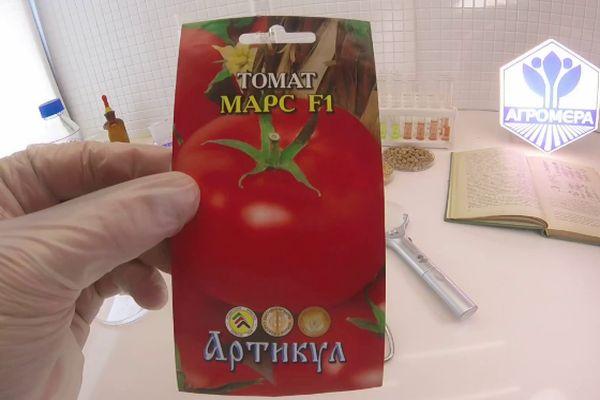
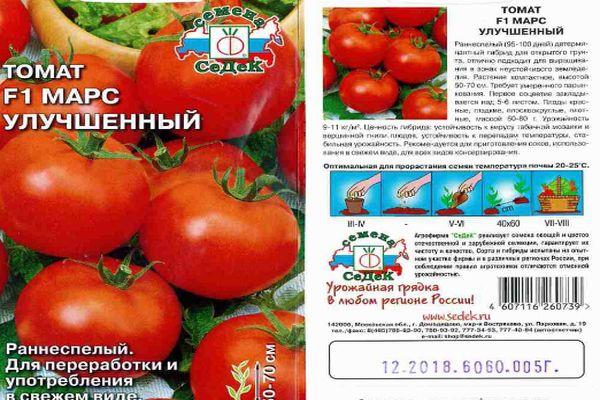
The Mars F1 tomato is an early-ripening hybrid variety. The bush is determinate, meaning it has a short height of 50-60 cm. Those who have planted this variety note the appearance of the first ripe fruits 100 days after germination.
Main characteristics of the hybrid
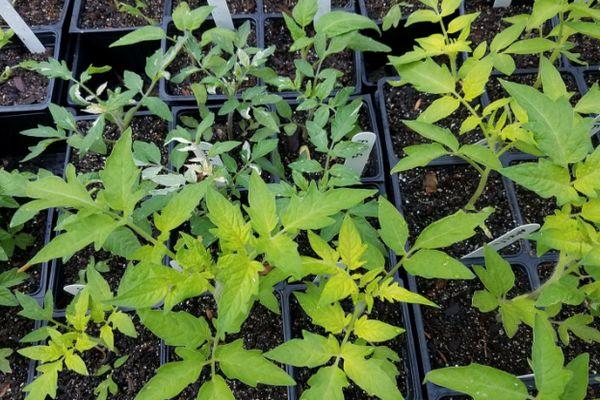
No matter how you plant tomato seeds, you shouldn't expect the first shoots to appear until mid- to late March. Plant the seeds at a depth of 20-30 mm. Thinning should begin when the seedlings have 1-2 true leaves. Hardening off the seedlings is recommended 10-14 days before transplanting them to their permanent location. This involves gradually acclimating the seedlings to cold temperatures by gradually increasing the time they spend outdoors—from 20 minutes to several hours.
A detailed description of any plant variety, including tomatoes, helps you choose the right one, taking into account the following factors:
- local climatic conditions;
- type of soil on the site;
- growing method - in open soil or in a greenhouse;
- methods of planting, care and harvesting.
In an open area, it's best to plant seedlings after the threat of night frost has passed. The seedlings need to be transplanted at 55-70 days. Plants should be spaced 40x70 cm apart. No more than 5 plants should be planted per square meter.
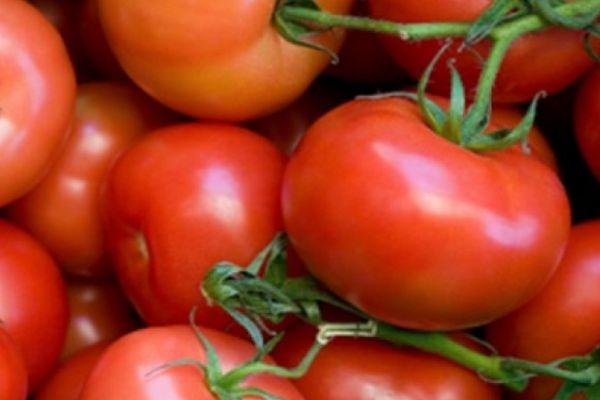
The first inflorescence forms between the 6th and 7th leaves, with subsequent inflorescences appearing 1-2 leaves apart. The fruit's characteristics ensure high yields, profitability, and excellent taste. The berries are bright red, juicy, and fleshy. Each fruit weighs up to 80 g. Outdoor cultivation yields up to 6 kg of vegetables per square meter, while greenhouse cultivation yields up to 7 kg.
The variety is resistant to late blight and blossom-end rot. The downside is that it's impossible to obtain seeds for next year's cultivation.
Plant care
Gardeners' reviews are unanimous in stating that this hybrid is completely unpretentious and requires no special treatments for normal growth. Regular watering and two to three applications of complex fertilizers, including nitrogen, potassium, and phosphorus, will ensure excellent yields.
Take a look Also
Like all tomatoes, Mars F1 appreciates loose soil. This enhances gas exchange between the soil and roots. Timely weeding and removal of weeds will preserve the nutrient composition. To ensure stability, the plants should be tied to stakes.
Hybrid tomatoes produce consistently high yields. One hectare can yield between 17 and 40 tons of vegetables. The flavor characteristics of Mars F1 tomatoes are determined by the following parameters:
- dry matter - 5%;
- fructose - 3.4%;
- ascorbic acid compound - 26 mg;
- acidity coefficient - 0.5.
Mars F1 tomatoes are resilient to fluctuations in humidity and temperature. The yield depends on the quality of the soil. Therefore, to achieve maximum results, choose fertile and light soil. If there is excess moisture, the plant's root system begins to rot.
Taking this into account, watering is done when the top layer of soil becomes dry. Water used for irrigation should be warm and settled. To prevent rapid evaporation and soil drying out, mulch the soil, for example, with well-rotted straw.
It retains moisture well and improves air circulation. A mullein solution is most effective as a fertilizer. It can be supplemented with mineral fertilizers.
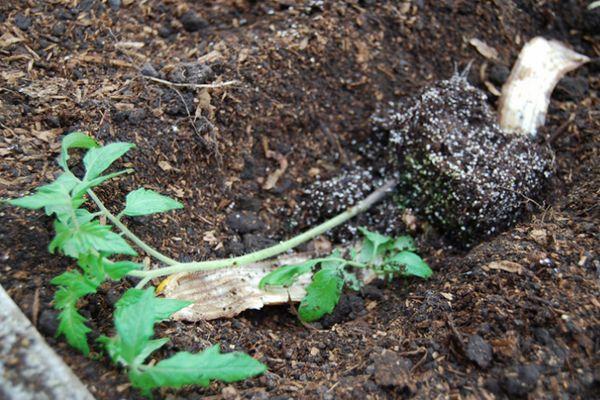
Protecting tomatoes from pests begins from the moment the seedlings are planted until harvest. Small seedlings are often attacked by mole crickets. Control is difficult, but possible. A special poison is applied to the holes made by the insects. The Colorado potato beetle is also a threat to tomatoes during early growth.
Adult pests and their larvae are destroyed after manual harvesting if the tomato planting area is small. Otherwise, pest control is accomplished by spraying with pesticides.
Related posts:
 The best grape varieties for growing in the Urals, planting and care rules in summer
 Description of varieties of sowing peas and cultivation, to which family they belong
 The best eggplant varieties for growing in a polycarbonate greenhouse: planting and care
 How to properly plant peas in a greenhouse and open ground
 Methods for planting and propagating cherries at home
 How to propagate and grow peas, cultivation technology, and care in open ground
 The best and most productive tomato varieties for greenhouse cultivation in the Urals, with descriptions
 Descriptions of the 20 best cherry varieties for the Moscow region, their planting and care

The tomato grows quite quickly, as a fertilizer for seedlings I use only the product BioGrowI like it the most. The fruits are very tasty, and I haven't encountered any diseases yet.